
By Invitation Only
When we bought the farm, we barely imagined a humble flock of chickens
“Shield your eyes”.
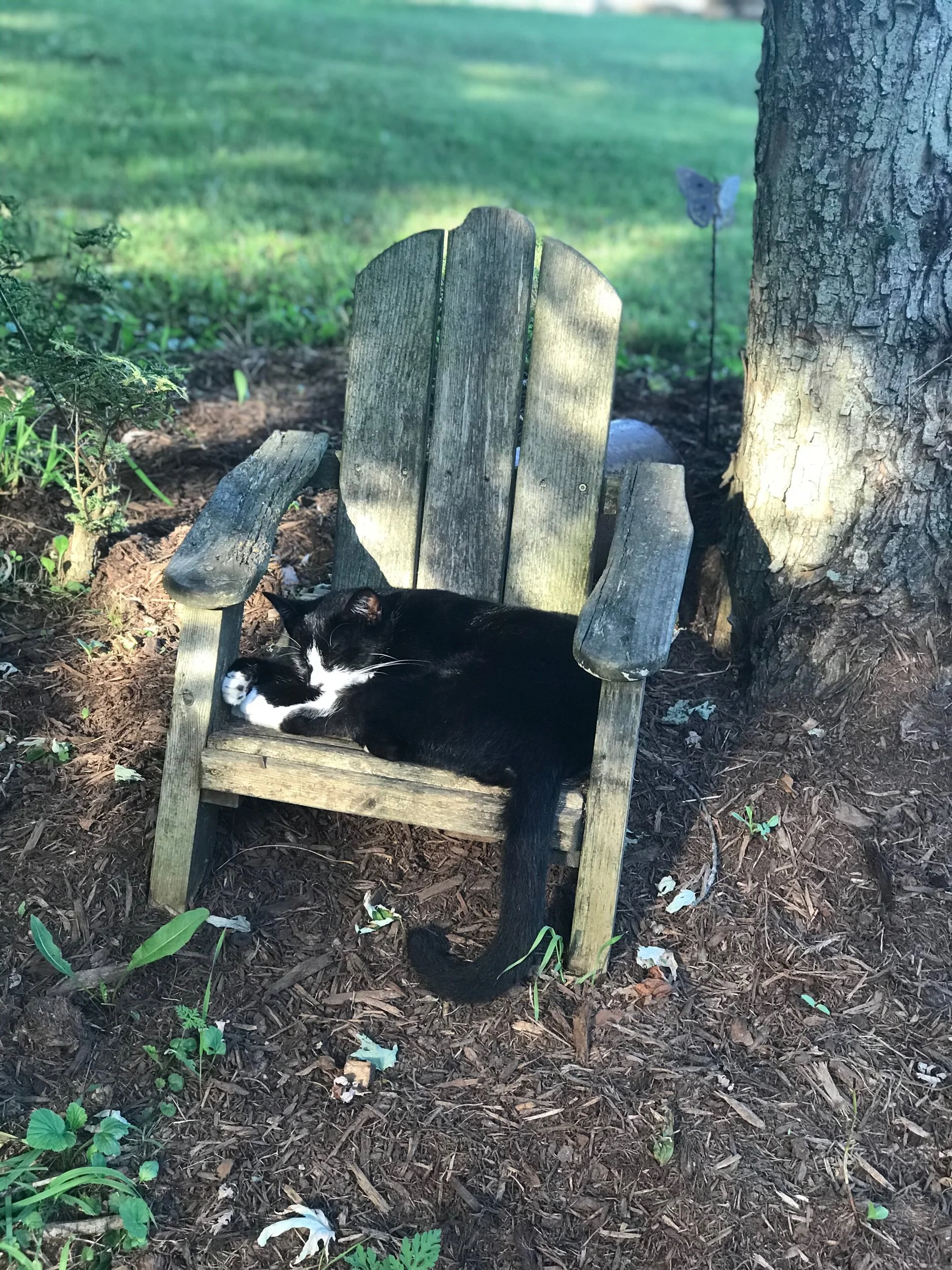
Patrick’s voice came through the rich darkness that enveloped our bedroom. I pulled the navy blue sheet up past my forehead and waited for the glare of the overhead light to come through, though I didn’t know why. Wasp in the sheets? He’d have been a bit more, um, colorful with his words had that been the case. But when I heard the familiar fallumph of eight little paws landing on the uncarpeted floor from about bed-height, and the grating of the doorknob connecting with its doorframe hardware after that, I filled in the rest of the story while Patrick finished ushering the kittens downstairs and out the front door. Apparently, they’d snuck upstairs and climbed in with us, ensconced themselves in the lap of supreme luxury while we dozed unawares. Bed-sharing with the felines doesn’t happen in our house. They know it, and must have felt like they’d pulled off the ultimate midnight indulgence.
We’re outnumbered, four to two, by these soft-footed and cunning additions to the family, and still scratch our heads as to how such a circumstance came to pass, given that neither of us had pets growing up or any urgent affinity for cats in particular. When we bought the farm, we barely imagined a humble flock of chickens, and that took some coaxing from a friend wanting to cull his own Golden Comets, along with ample reassurance that they would not claw at our bare legs in the summer when we arrived at the coop with a scoop of grain to scatter. Eventually our city/suburban-bred ignorance gave way to informed sensibility, and within two years, we needed a larger basket to collect the daily bounty as we added Americaunas, Buckeyes, Silver Laced Wyandottes and Austrolorps to our collection.
There were barn cats on the property when we first moved in, and they’d pretty much expanded their definition of “barn” by finding their way into the crawl space beneath the house through a dug-out gap in the foundation’s cinder blocks. But once we claimed this little tottering bungalow as our own, they slowly retreated back to the barns and the meadow and eventually all points west. We were cat-free for two months until a friend asked if we’d be interested in “watching” her tuxedo female, Sunshine, for the summer.
(Important historical context: in the early days, as our city friends and acquaintances learned we’d acquired some land, we found ourselves on the receiving end of a steady stream of “will you take my _________?”, or “I caught the groundhog that was burrowing under my house. Can I release him at your place?” requests that took us well into autumn that first year. People we barely knew would ask to “come out and see the place, bring the kids?”, and in our snarkier moods, we were tempted to reciprocate, asking if we could come over to their house to watch the game on their big screen tv or take a long dip in their hot tub. We declined them all, and gently took hold of the teachable moments each ask presented. This was our home, not a nature preserve, wildlife rescue operation, chicken petting zoo or KOA campground. Relationship defined the possibility of an invitation, not simply the novelty of contrast between our respective living arrangements. Over time, such requests disappeared like the original barn cats).
And speaking of cats, back to our friend and what sounded like a temporary offer of summer Sunshine. She was a dear little thing, and we wanted to be helpful, so agreed to take in a four-legged housemate. On the day of the handoff, as our friend headed back down the long gravel driveway and across the bridge, the words “oh, by the way, she’s pregnant” rang through the air and sealed our fate for the next eighteen years. That was the last time we saw our friend, and Sunshine delivered three separate litters that summer. The first two met untimely ends at the hungry mouths of whatever predators found them in the middle of the night. The last batch of three were born wisely under the rotting floor of the potting shed out back, and I’d probably not have noticed if, at two weeks, they hadn’t poked their tiny heads out from where the floor met the bottom plank of wood on the north-facing wall of the shed. Sunshine tended to them for another week and then disappeared, and who could blame her? Enough of this Fertile Crescent, she probably muttered to herself, and for all we knew, made the long trip back to Coshocton some 55 miles away.
The result of our innocence and hospitality was the tuxedo runt of her last litter, named Scout after the character in To Kill A Mockingbird. He had us charmed and captivated for seventeen years until cancer claimed him. He was the last one with bedroom sleeping privileges, and now rests his bones beneath the shade of the mulberry sapling that grows up through center of the an old dead apple tree trunk situated seven feet from the front porch.
In our twenty years here, stray dogs have crisscrossed the fields looking for permanent residence, but we’re just not dog people (friends, believe me, we’ve tried), and the local no-kill shelter insisted they’d find homes with plenty of room to rabbit-chase their little hearts out. The night we found a Rottweiler and a golden Labrador parked comfortably on the welcome mat, we put the shelter warden’s phone number on speed dial. She’d come and collect another seven dogs in as many years before the traffic across the land settled down.
We’ve grown to understand that such events are literally part of the landscape that has welcomed us. Wild lives and not-so-wild ones live as they do side by side, feeding off of each other and pulling our curiosity onto the porch in the middle of the night, straining our ears to follow unknown sounds making their way across the sky or through the creek bed. We’ve humbly found our place among them, wondering if our shared desire to move so far from a sidewalk-and-postage-stamp-lawn existence was really the RSVP to a much bigger Invitation. I’m glad we accepted, eyes wide open and unshielded for the last twenty years.
May we please stay at least another twenty?
Untouched
Twenty years on forty-one acres, and there are still places we’ve never left our mark.
Right after a good and loud summer storm, two deer are browsing in the eastern field, their smooth tawny fur a distinct exclamation point against the backdrop of lush emerald green that surrounds them. They move inches at a time, slowly, trying this leaf, peeling bark from that young maple sapling, chewing and strolling and thinking about whatever young deer think about an hour before sunset.
The soil beneath their hooves has never been pressed under the weight of my own feet.
Twenty years on forty-one acres, and there are still places we’ve never left our mark. Acres of mysteries and unknowns, the undersides of sassafras and sycamore leaves we haven’t rubbed with our curious fingertips. Stones in the creek, smoothed by the steady flow of its waters, and we don’t know just how smooth they feel. Birds we haven’t met or fed, coyotes we can hear yipping and howling through the meadow when all is dark, but have never seen.
In the first dozen months we settled in, learned the seasons, saw the summer give way to the autumn’s undressing and stood looking up into the bare arms of maples and oaks and buckeyes, we were determined to walk every inch of this land. Under the heading of “get acquainted”, our to-do list grew long and ambitious, but respectfully so. Even with the paperwork from the closing bearing our signatures, and the bank ready to sip at our income for monthly mortgage payments over the next thirty years, we still felt like tourists intruding on a sacred grove where the ancients continued to worship (actually, we were right about that). With city street concrete and suburban lawns the size of a postage stamp as our primary land experience before we moved here, our view was understandably—and forgiveably—narrow, and our expectations naive. One trip down the driveway with the realtor in the late winter of ‘99 blew the doors off that perspective.
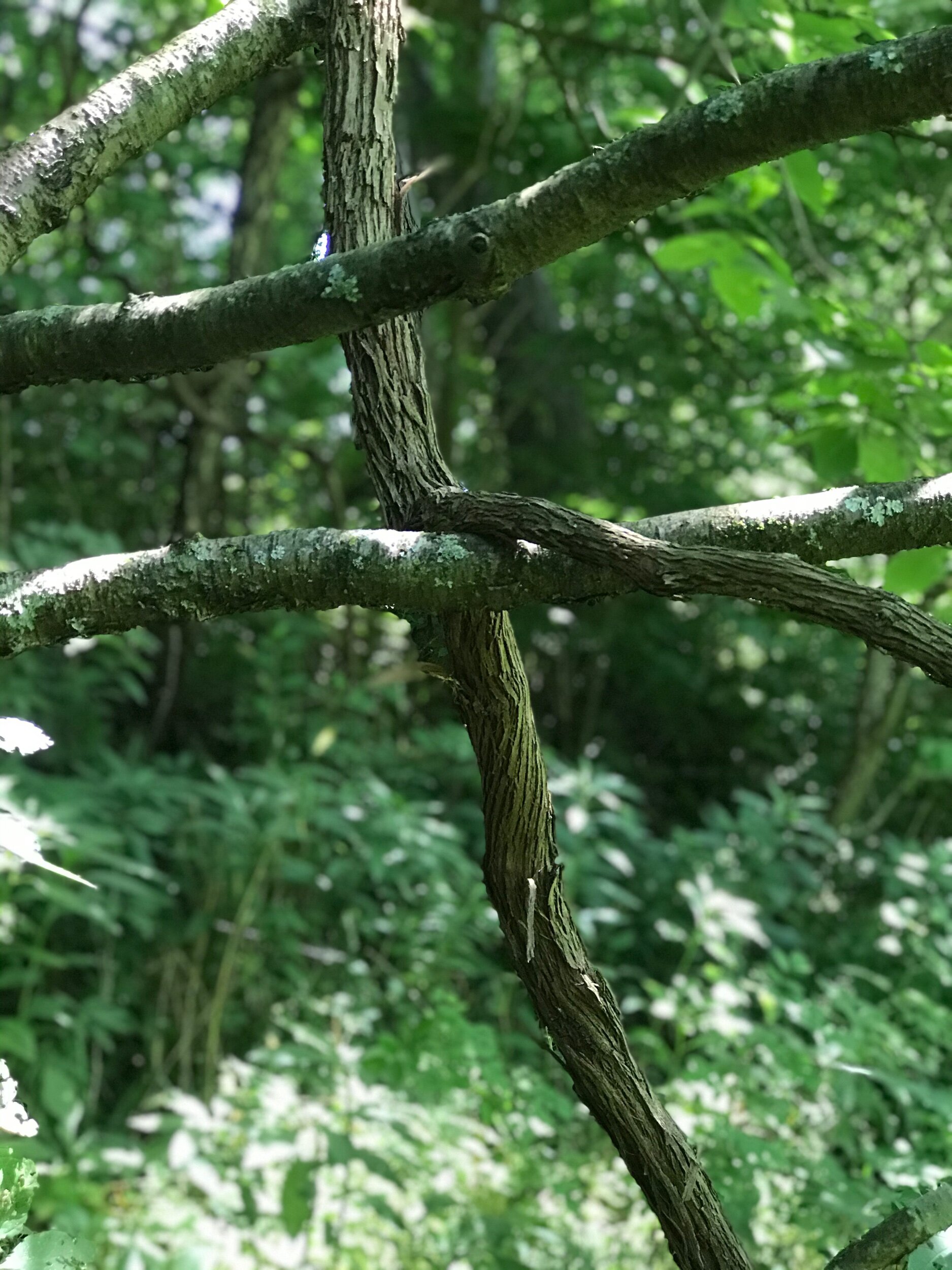
But here we are in 2020, and I thought for sure we’d have tramped along the west side of the creek at least a few times by now. Instead, the rich soil there has no memories of our footsteps, grapevines have established themselves in near Tarzan-swinging thickness and strength, and we gaze at its wildness from the east side of the creek banks, standing still as a four-point buck makes his way north toward the black swamp woods for even better cover. I remember one conversation years back, when Patrick and I thought it through out loud to build a bridge across a more narrow section of the creek, all curved and Japanese garden-like, made from cedar or cherry, treated to withstand the elements. The first flood in the meadow later that year left those plans to rest in the dreamiest corners of our minds, and on this Sunday in late July, the creek still runs free of any such overhead interference, save for the essential truck-worthy bridge that lets us leave for work and groceries every week.
It’s good to stop for a few moments and reflect on what else I’ve not explored or touched or seen, not just on the land but in other aspects of my life. I won’t mention it all here, but I assure you it’s a sizable list that grows with every choice I make. And I need to be ok with that. But as I keep taking trips around the sun, I do listen to that inner urging to try something new, not necessarily a bucket list sort of quest, but more from simple human curiosity. Why not take a different way home from the office, turn right onto that gravel road I’ve always passed every other day for the past eleven years, or stop and buy cheddar popcorn at the Fredonia Mall (a sweet but misleading name describing a convenience store/gas station nestled between a couple of cornfields. But they serve deli sandwiches and elbow macaroni salad, which I now know since I stopped in for that popcorn). Life-changing? Depends on your interpretation of that phrase, but I can now say I’ve been there if someone asks.
Admittedly, much of what I haven’t done or touched is the result of convenience trumping quality. It’s easier not to hack my way through the overgrowth on both sides the creek to get to that place where we think the saw-whet owls live and hoot each night toward the end of summer. If I want to stand where the deer stood, all tawny and peaceful, I’d need to make an effort to walk across two acres of uncut and furrowed field, brushing thistle and burrs from my sleeves. I think I’ll just stay here where the grass is cut and watch from a distance. As I say it, I feel unadventurous and coddled. But I can also argue that it’s best to leave all that undisturbed ecosystem alone and unsullied by my two-legged homosapien ways. That feels just as valid and more than a bit noble.
From my place at the edge of the field, I can still imagine what it would be like to brush my open palm along that tawny fur, to see the impressions their hooves made in the soil and where they pulled that tender strip of bark from the young trunk of that maple sapling. Perhaps it’s a matter of knowing my place here, and letting contentment live in gentle balance with my curiosity. Theres still plenty to see and do and touch, even from the comfort and safety of the east side of the creek banks.
Earlier, I felt like I needed to be outside under the canopy we set up on the other side of the mulberry grove just off the front deck. I didn’t overthink it—just took myself out the door and settled into one of the lawn chairs beneath the pole-framed canvas and faced the meadow in all its sunny afternoon glory.
I am currently twelve feet from a goldfinch perched on the limb of a black walnut that sends its shade across the feeders. Her pale yellow feathers are the same color the maple leaves will be sixty days from now.
If anyone asks, I can tell them I saw her.
Comfort at the End of a String
It’s good and breezy today, a most welcome addition to the unblocked sun as it pulls the red line of the thermometer upwards toward the low 90’s. Perfect kite conditions.
I found a kite, in its original packaging, under the bed last week.
That explains the flying dreams.
I can’t recall the moment in time long ago (still well into my adulthood) when I thought I needed one, or where I bought it, why I picked this particular design and style over others, or how it ended up under the bed. But I think I was supposed to find it this summer, right after Patrick mowed that section of the grass that runs parallel to the uncut and wild old corn field. No electric wires or trees there; just the remnants of a potato garden now overgrown and dotted with hopeful sweet gum saplings that are easily on their way to a small forest (gifts from our friends Mike and Deb five years ago, dug up from their place and transplanted one chilly day-after-Thanksgiving before we sat down to butternut squash soup and sweet conversation). It’s good and breezy today, a most welcome addition to the unblocked sun as it pulls the red line of the thermometer upwards toward the low 90’s. Perfect kite conditions.
I haven’t been on the operator’s end of a kite string since I was still celebrating single-digit birthdays. In those days (triceratops and gigantic ferns only recently extinct, har har) we were glad to make our own kites from long thin pieces of balsa wood and leftover gossamer dry cleaning plastic bags. My brother, Mike, was the supreme kite architect, sometimes taking an hour or two in the morning to actually sketch the design in blueprint fashion before gathering the raw materials and setting about to constructing it. Fidgety and bored with this step in the process, I wandered about doing other youthful single-digit aged things (these did not include folding clothes, cleaning my room or offering to help mom with the breakfast dishes) until he finally put down his pencil and picked up the first slim piece of balsa. I wanted to watch him cut the notch in the spine where the spar would intersect, creating that magical nexus point that would bear the wind’s strong breath and resist it as one of us held fast to the string-wrapped stick dangling at the long and far away end of the kite’s bridle. They’re a bit elusive now, the visuals of this memory, but I think some kind of vaporous glue was involved, squeezed more or less judiciously from a crinkly aluminum tube. Even in a well-ventilated area like the patio out back, we still got slightly buzzed and dizzy (is this where “high as a kite” comes from? I’ll have to look that one up…).
Whatever transpired after that, once the glue had dried and it was Time to test our homemade kite assembly prowess, I remember absolute giddiness and joy, that something we created by hand worked as it was intended. Even if it snagged on a tree branch a while after takeoff, it was worth it.
I wonder what other precious and cherished childhood pursuits I’ve pulled out from under the metaphorical bed, dusted off and set in motion again in my adult years? There’s a lot of that going on lately, as we continue to navigate these relentlessly scary days of ours. The almost-panicked and frantic search for comfort is now a daily ritual; we soothe our bad news-saturated nerves with whatever reassured us in our formative years—Dick Van Dyke Show and MASH reruns, baked chicken on Sundays (insert any food here—we’re baking and cooking like it was just invented), and we’re stitching quilts and trinket bags and pillowcases as if our Home Ec teacher was grading us. Every day, we stack these like sand bags against the rushing waters of an unknown future, protecting the one commodity that will see us though to the other side—our individual and collective emotional grit. We’re resilient at our core—we know this—and it’s unsettling to feel the continuous push of everything beyond our control. Our hearts and fingers reach for the familiar (I’ve given up on “normal”) and grab tight for as long as it lets us. Just get me through today. It’s both plea and unflinching directive.
Even threadbare and tentative, I think it’s working most days. I asked a dear friend recently, as she faced down an onslaught of Whack-a-Mole family crises, how she triaged her mental health through it all. Without a trace of shame or embarrassment, she admitted to letting herself fall apart in hysterical, dramatic and cleansing style. Then she picked the crisis most in flames and got on with it. She also sews and has a menagerie of pets to turn to, some of whom sit nearby while she unleashes the storm, which as any pet owner knows, is some of the best therapy around (for the price of a few vet visits and some foil pouch treats. Nice.). I am heartened by her strategy, and grateful for her vulnerability.
For me, in this tiny sliver of The Present Moment, a freshly-mown grassy runway and a nylon kite at the end of a long taut string will do it.
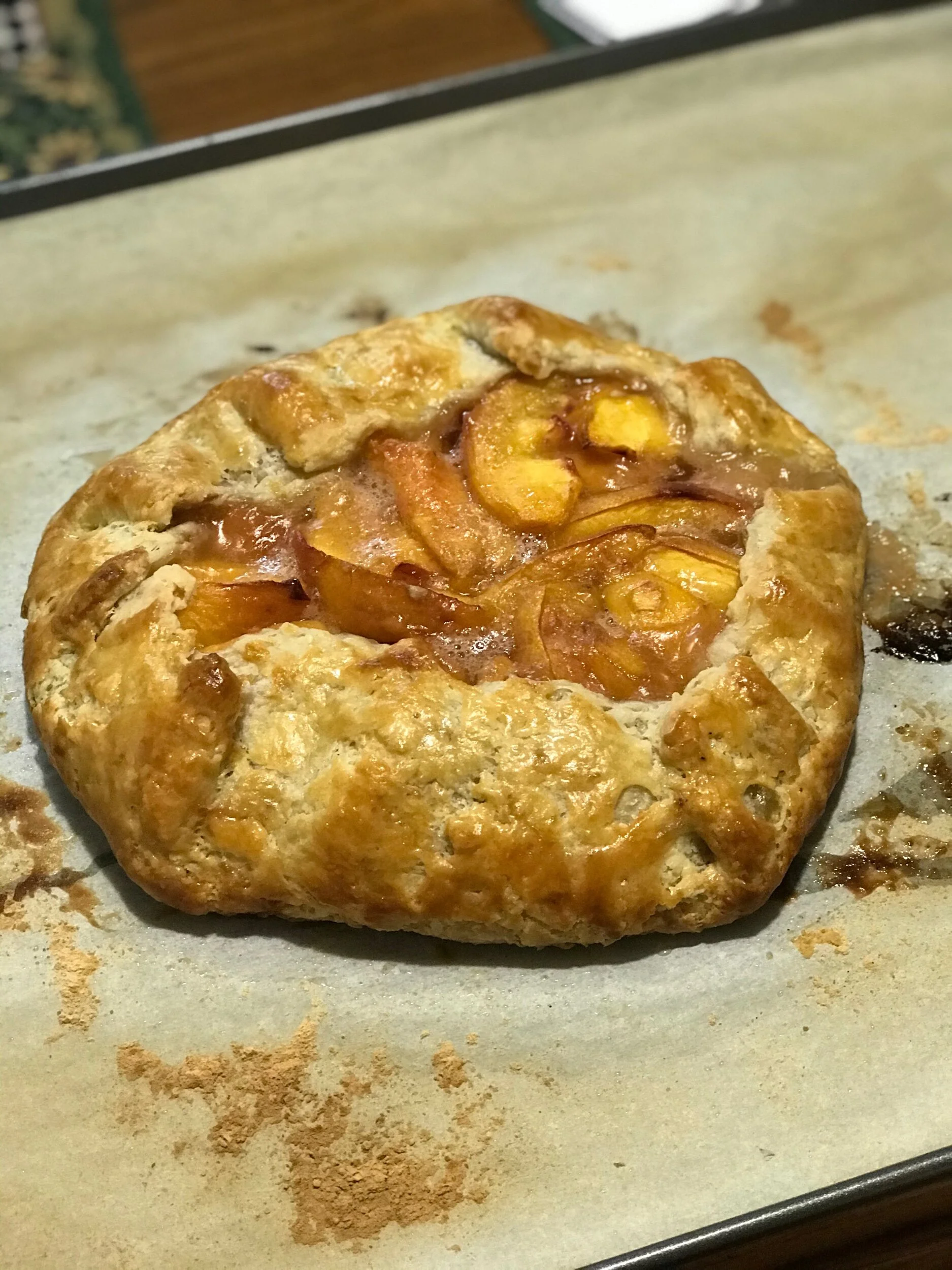
There’s also some leftover homemade peach galette in the fridge.
Bonus!
Last Stars, First Birds
I hope I’m a morning person until my final breath and heartbeat.
Venus was insanely bright in the East this morning at 5:38 when I reluctantly left the cool sheets of our bed and stiffly descended the steep stairs to find the bathroom and my daily dose of levothyroxine. Lucky for us, the bathroom window faces that sunrise direction, giving us plenty to look at while we’re…waiting to finish the first job of the day. I couldn’t stop looking at this bright and shiny last celestial gift of the night sky before a persistent sun bathed the field in yellow. Another star sat dimly just to the right and down a few steps, and was slowly swallowed in pale blue as I watched. On the other side of the window screen, a mockingbird offered the day’s audible opening act, beginning with a nailed-it impersonation of a blue jay and continuing through a repertoire that included finch, shrike, oriole, catbird and killdeer.
I hope I’m a morning person until my final breath and heartbeat.
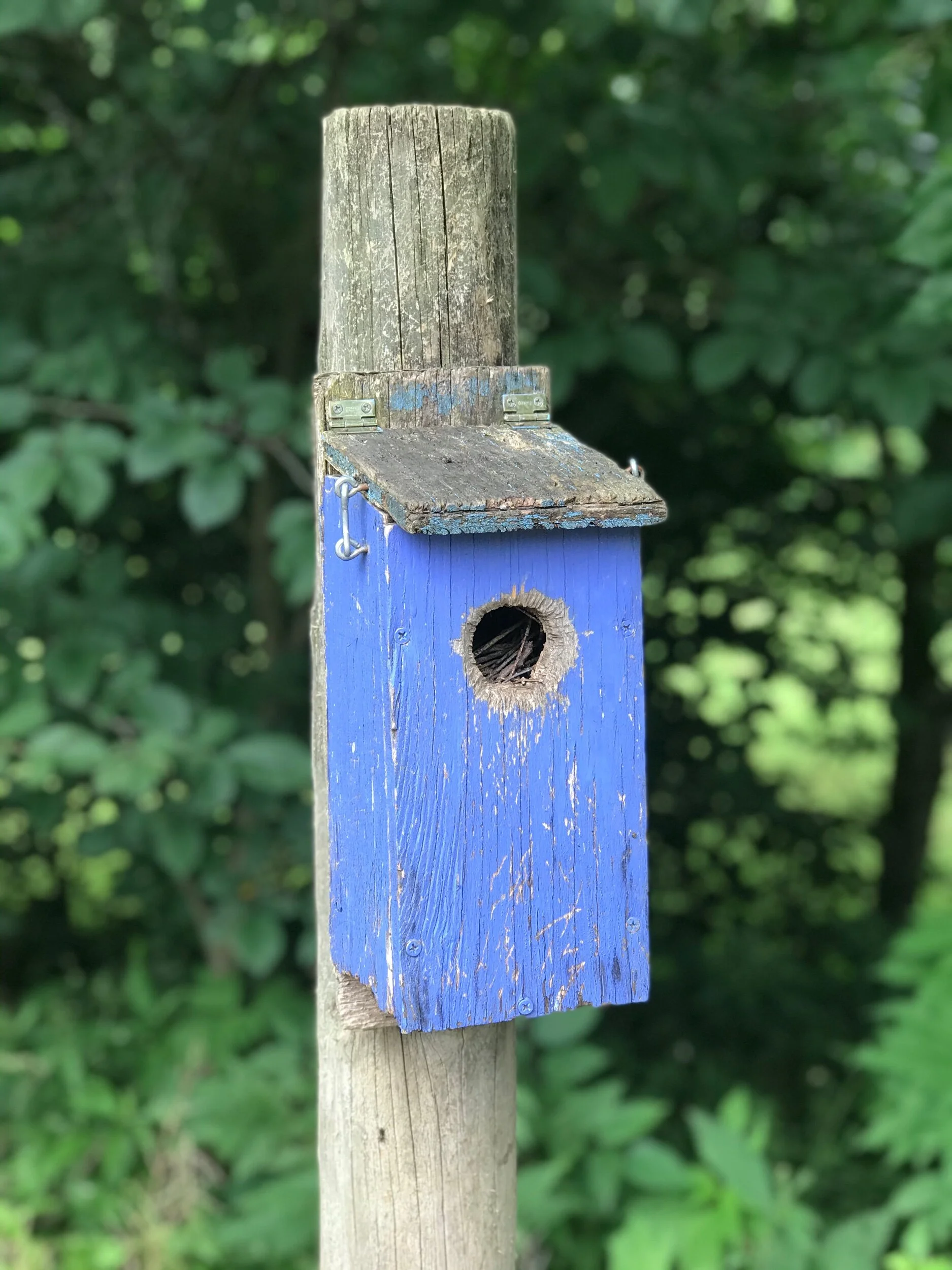
Theres a tender and blurry place in those moments between the sky’s last call for constellations and the hoisting up of dawn’s first light. It feels wistful, having to let the night and all its wonder fade into the background as the day’s sounds and colors emerge. Suspended in this cosmic hammock of not getting quite the sleep I wanted and the upright tasks awaiting me downstairs, I delay being upright for as long as I practically can. Last night’s dinner dishes in the sink can wait as I hear a cardinal (the bird variety, not the cleric) sing its way to the empty shepherd hooks that will soon be dressed with suet and seed feeders (we take them down at night because our local raccoons have been known to scatter them about the ridge during their after-dark feeding frenzies). Joining the cardinals are catbirds, mourning doves, chipping sparrows, titmice and purple martins all noisily telling me breakfast is late and I’d better get a move on. Sigh. I have no alarm clock, and haven’t for years. It’s simply stopped being necessary when the hummingbirds started hovering at eye-level on the other side of the pane, giving us the tiniest of winged admonishments.
But I long for a way to stop time (I have a friend who is able to do this. I’m serious—it’s a gift given to him by some other Being, and I’ve sat in his presence while he has kindly and magically pushed the pause button) and move about unencumbered by the promise of productivity to just be in that middle place, that space of not yet. I strongly suspect there are quite a few of these spaces and opportunities in our lives and days, and lately, I find I’m looking for them rather hungrily. Philosophically, I suppose we could accurately claim that we’re in a constant state of Transition, accompanied by its twin, Transformation, and I welcome your comments if you’d like to noodle off in that direction. For me, the tasty marrow of life is in those in-between places, where we still have a view of what’s about to drift past us and get smaller behind our shoulders and can also see with emerging clarity what’s approaching, growing ever-bigger right in front of our eyes.
Someone far wiser than I’ll ever be told me at precisely the best teachable moment that “every choice is a loss, every choice is a gain”, and while it didn’t bring me immediate comfort as I faced down a dilemma of Great Discernment, having that phrase handy in my toolkit has soothed many a furrowed-brow situation, as I chose to embrace the gain and not mourn the loss any longer than was necessary. I’m sure we’d go mad if every option was clear and visible to us during our waking hours. I’m glad for the simple choices of eggs or yogurt for breakfast and a rumbling stomach urging me to pick one and get on with it. Today it’s yogurt (with strawberries winning out over peaches or blueberries). Maybe tomorrow I’ll put eggs on the plate. If the sun comes up again, I’ll do my best to be mindful of that gift first. Time spent mindfully in the “in-between” helps me make better choices, especially when the options weigh considerably more than eggs or yogurt.
So what’s it going to be today, now that the sun has arced its way to mid-point in the sky? The wrens are chattering happily, full of millet and sunflower seeds, and the stars above do whatever stars do as they wait behind the blue and yellow curtain for tonight’s encore against a velvety black backdrop. I think I’ll keep swinging in that cosmic hammock fastened to bright Venus at one end and the unstoppable joy of a mockingbird at the other.
For once, this choice is all gain.