
By Hand
Like running confidential but no longer useful documents through a shredder, there’s instant gratification pulling weeds from the ground.
The weeds have found their opportunity—small narrow crevices where the wooden sides of the raised beds don’t quite meet the edges of repurposed cardboard boxes flattened out and placed all around each bed like sashing on a quilt top. Greenery I don’t know by name is pushing up with Herculean determination, ensuring I’ll still have my gardener job when the sun comes up tomorrow. I could harvest the kale, of course, but two people can only eat so much of that in a week before we’d buy more shares of the company that makes Imodium. Between planting and harvesting (and we’re talking weeks-sometimes-months) it’s all about the weeding.
We do own a gas-powered monster affixed to the end of a two-handled pole designed to lay them out flat in a blink, and watching Patrick suit up to use it brings to mind a climber preparing to ascend Everest. I’m sure I’d enjoy its efficiency, but I grab my stained leather garden gloves and an old kitchen throw rug (to use as a kneeling mat) and flex my fingers as I walk the distance between the mudroom door and the scraggly-fringed boxes that hold our hopes for pasta sauce and chutney.
The quackgrass and plantain had best put their affairs in order.
Like running confidential but no longer useful documents through a shredder, there’s instant gratification pulling weeds from the ground. I know they’ll return, and I don’t have any delusions about one day being unemployed in my gardening role that way. But I can clear a patch by hand in less than thirty minutes, cover the bare earth in cardboard or grass clippings or a cartful of old straw from the barn and feel like I’ve earned the right to sit outside with a glass of Cabernet in my hand, showered and smelling better before dinner. It’ll be a while before a tiny shoot of something bright green shows itself again, and with the tan dried grass as contrasting background, I’ll spy it and pluck it out by the roots. The soil will let it go easily. Another glass of Cabernet please.
It’s also rhythmically meditative, kneeling on the ground (I mentioned a mat but that’s truly optional), the scent of good rich dirt reaching my nostrils as I rock back and forth tugging at a tenacious plug of tall fescue. I learn patience at the feet (rhizomes?) of a plant whose only crime is location. My goal is the same; I simply adjust my time frame to accommodate this tender battle of wills . “Winning” is redefined, and humbly so, especially when I have a go at it without my gloves and a rough-edged blade of grass slices my palm like an office paper cut. The nearby cherry tomatoes will be grateful for the absence of competition for water and sunlight, which in the garden is the whole point of being down there on my knees in the first place. While I’m in that reverent position, my thanks drift upward where two mature bald eagles catch a summer’s day thermal. No amount of gas-powered convenience could have matched the glory of that now-indelible image.
I know you know this already: in our “gotta-have-it-now” existence, convenience trumps quality, and we’re in such a hurry to get into the Next Important Thing, we don’t look over our shoulders to see what we might have missed. I’m as caught up in it as everyone else most days, but when I choose a slower path to get where I want to go, the rewards always—always—exceed the fleeting satisfaction on the other side of speed. It’s the difference between a plate of buttery sautéed fiddlehead ferns and a Cup o’ Noodles (artificially flavored with “shrimp). I’ll wait while you decide.
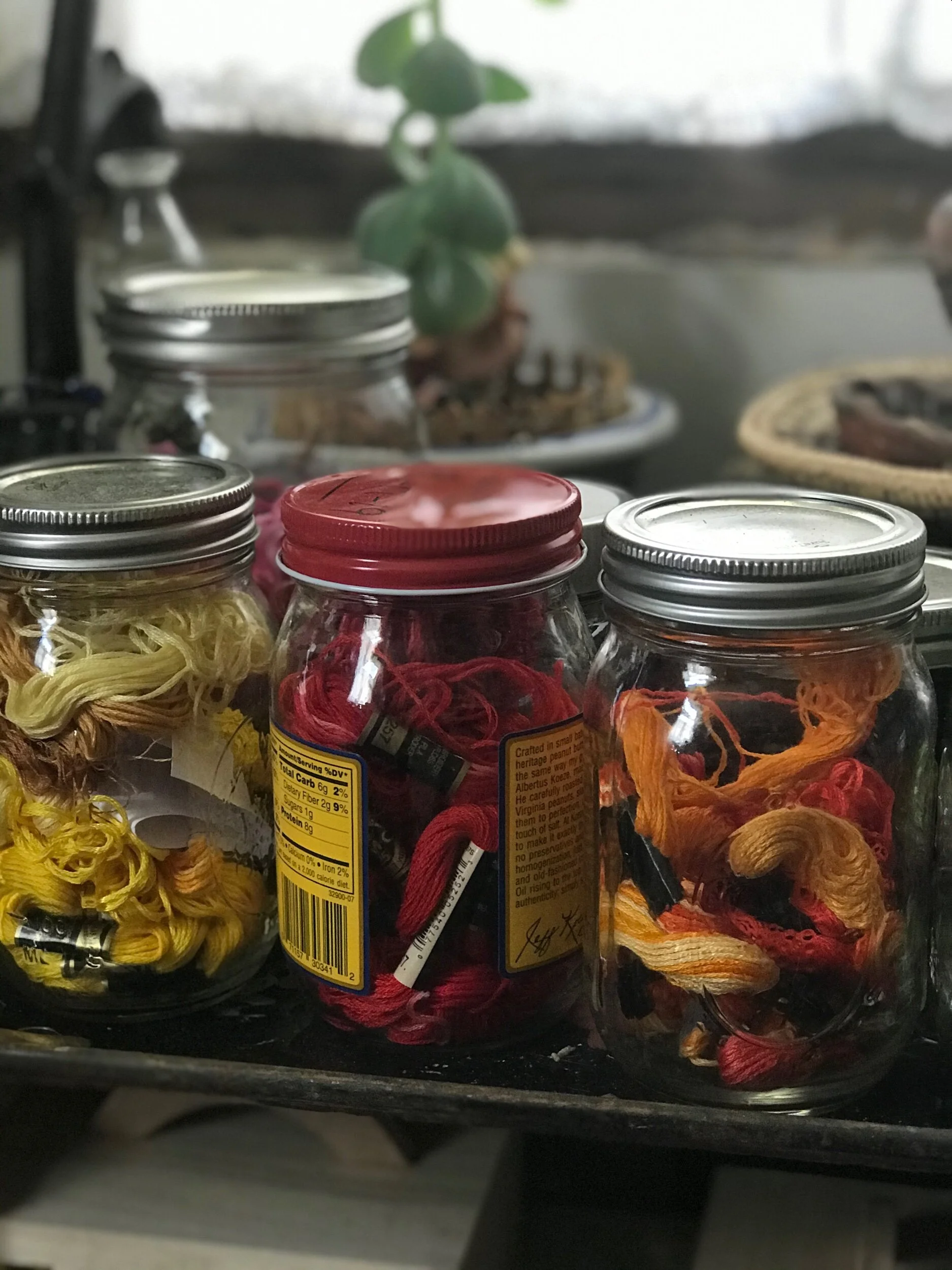
As my recent vacation transitioned me back to work, I’d left one rather large to-do list project unfinished—reorganizing my studio. A collection of various media for creating quilts and hand-bound books and beadwork and watercolors had wildly outgrown their respective containers. I plunged into it with great energy the first day, disgorging cabinets and storage totes of their contents, sorting by type and color and even age. By the second day, I admitted defeat, grateful I could close the door against the disarray until I caught my third, fourth and fifth winds. I’ve been chipping away at it since, discovering rare and discontinued cotton prints, bits of sparkly vintage jewelry, and a half-finished hand-embroidered panel depicting a seashore scene with sand-colored beads painstakingly sewn to a scrap of upholstery fabric one at a time. Who was I when I started these projects, and who have I become since putting them away for another time? Clearly, it wasn’t about production line assembly or speed. I have a sewing machine and I love it, but there are some things that just do better with the touch of a patient and dream-filled hand. Tending to the weeds indoors, I whispered to myself.
Theres no convenient work-around to that, no gas-powered puce if equipment to flatten it in a blink. Not one that I’d trust, anyway.

Time, Off
It’s a strange feeling to disconnect from a routine that involves so many other people, and tasks that really can’t be accomplished in the company of bees and trees.
When the first day of your vacation starts with a massage/acupuncture session, the remaining eight days are fragrant with new and unexplored interpretations of the word “relax”. To be unstrapped from the clock and a schedule is a most delicious state of affairs for which one might almost need a confessor. Or a cigarette. Or both. I’ll get back to you on that.
Driving home that first day, muscles and pathways improved and cleared once more, I looked my agenda-less day square in the eye and let loose the hedonist within. Which means, I had a popsicle for breakfast alongside a handful of blue corn chips dipped one at a time in salsa, and thought about hand-pulling some of the weeds that fringed the raised beds’ burnt wooden frames. I thought about it. Then I lost track of time until just a few hours ago, having promised our granola customers I’d be waiting for them in a grocery store parking lot an hour from our home for a no-contact drop-off of their pre-paid orders. A slight creeping back in of a work agenda, but it did not involve a copier, conference call meetings or drafts of documents needing to be proofread or spell-checked. The purist in me stamped her approval of this humble business transaction and let me get on with it.
It’s a strange feeling to disconnect from a routine that involves so many other people, and tasks that really can’t be accomplished in the company of bees and trees. Over time, I’ve learned how to do it immediately or, like a high school senior at the beginning of May, divest a bit early but still retain some sense of productivity. We prepare in advance for so many life events; can’t vacationing be one of them? I don’t mean packing or making hotel reservations or changing the oil in the truck. Those will get done, of course, but what about the gear-shift of the mind? The mental calisthenics of putting down and turning away from the undercurrent of others’ expectations and letting a day stretch out in front of yourself so wickedly random, so free that it resembles, well, nothing comparative in your current existence so far? I can only speak for myself—I have stringently few days like that, and I’ve clocked in for a few decades now. Relaxing into an open-ended day is a bit unsettling at first, but it gets easier to slide into with practice. Which is why the first thing I do my first day back at work is submit my next time off request. It’s a shrewd and practical self-care strategy I recommend to everyone still framed by a clock, some HR policies and an office (or cubicle). Doing so keeps one’s outlook wider than the computer keyboard and monitor waiting for our obedient (and recently-massaged) fingers to do their duty. Please hear this clearly: I’m grateful every day to still be employed and have all the faculties necessary to be successful in my field and my office, but it’s not the core of me. It’s not what plunges me happily down the wooded paths of promise that today might actually be the day I spot a cedar waxwing eating a berry from a branch hanging over the creek. Work makes vacation possible, and vacation makes work the proper size in one’s life. It’s important to remember that.
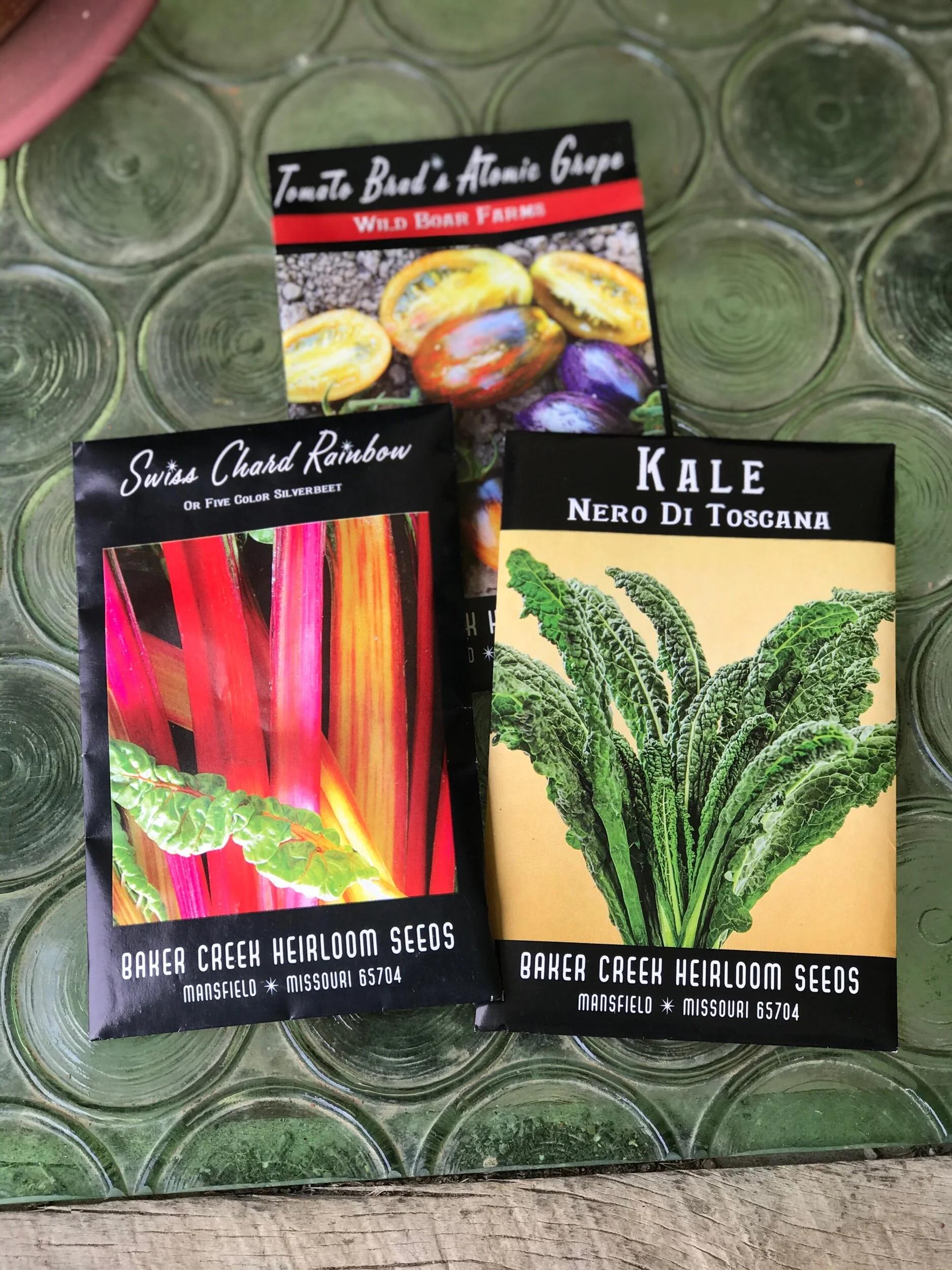
Now fully six days into my vacation, I’m trying to call up some of the things I’ve done, and so far, most of them involve food. Day one is a happy blur, and I’ve mentioned the culinary high points (popsicle, blue corn chips, salsa). Day two involved a call to a possible new dentist, a modest attempt at downsizing all the fabric in the sewing corner of my studio and then leaving piles of soft color underfoot for sorting tomorrow (does that day ever come?), and a spectacular dinner made from our own Lacinato kale and five-color silverbeet leaves (chard) wrapped spring roll-style around sesame-ginger seasoned TVP and plant-based meat crumbles, minced onions and garlic, cabbage, carrots and zucchini, dipped in a spicy peanut sauce. How we managed to have leftovers, I can’t tell you. Days three through six are back to somewhat blurry, but if I sat still long enough, I might remember setting up our market canopy outside and falling asleep under it. Several times. I have forgotten what my office looks like, and recall mostly first names of co-workers.
Given the history of Alzheimer’s and cognitive decline in my immediate family, I realize that someday, being unaware of what day it is will not be intentional nor paid for by the company that signs my checks. If it comes to get me, I can only hope to spend my final days pleasantly confused and mildly entertaining to the nieces and nephews who come to visit. For now, I am completely and blissfully immersed in the unfolding of time as experience, not numbers on a clock, and sense I’ll be better for it when Patrick reaches over in the middle of some gentle yellow and blue sunrise to remind me that I was supposed to be back at work yesterday.
I’ll have my apology rehearsed by the time I cross the parking lot.
The Daily "Lucky"
For seventeen mornings I looked at the top half of that blue spruce through the rectangular frame of our upstairs bedroom window.
When we cut down the diseased and dying blue spruce just off the front deck three years ago, I knew the gaping hole it left behind in the sky would make me all melancholy and wistful. It had been well-established by the time we unpacked and moved our stuff inside the closet-less rooms of our new-old bungalow farmhouse. The tree anchored the front yard and stretched its spiny arms beyond the metal roof. Our first and beloved kitten, Scout (god, we miss him still, after five years gone) figured the view was better from the top, so up he went until he ran out of branches. He perched, wobbly but brave, amidst the gray-green needles, mewling until we noticed and brought him down on the business end of a long-handled straw broom stretched out via Patrick’s arm. He jumped, slid along the handle to our waiting hands, and trotted off to his food dish by the stove. One of many Scout adventures that year (remind me to tell you about the time a turkey vulture almost carried him off. Or have you heard that one already? No matter—it’s just as good as a rerun).
For seventeen mornings I looked at the top half of that blue spruce through the rectangular frame of our upstairs bedroom window. I watched sparrows disappear into its thick-needled protection, saw snowflakes land soundless and still until enough accumulated to soften those needles’ points with frozen fluff. It was good for the soul to wake up to green—evergreen—every day of the year. While we still had a wood burning stove, I’d have to look around and past the silver cylindrical chimney that ran up the side of the house and exactly in the center of the window’s view on its way past the roof, but I didn’t mind. I was warm and could still see the branches move as one in a blizzard.
Five years ago, it started to look thinner and sickly—lower branches lost their needles completely and the nakedness spread upward rather quickly. We knew what was coming. If you’ve ever cut down a tree this size, it’s not something you tackle in between breakfast and lunch, or after a few moments of post-workday decompression. You plan, you prep the tools and equipment, you take time to consider everything that could go wrong, you recruit your team of helpers, and then you suit up: long sleeves and long pants (this is not a job for shorts and the favorite gardening t-shirt), thick gloves, sturdy work boots and a distressed ball cap you purchased while vacationing in the Badlands one hot July. All done thoughtfully and with great respect for the weight of the massive trunk, and a keen eye on the landing place. We moved both trucks to the other side of the chicken coops some 200 yards away.
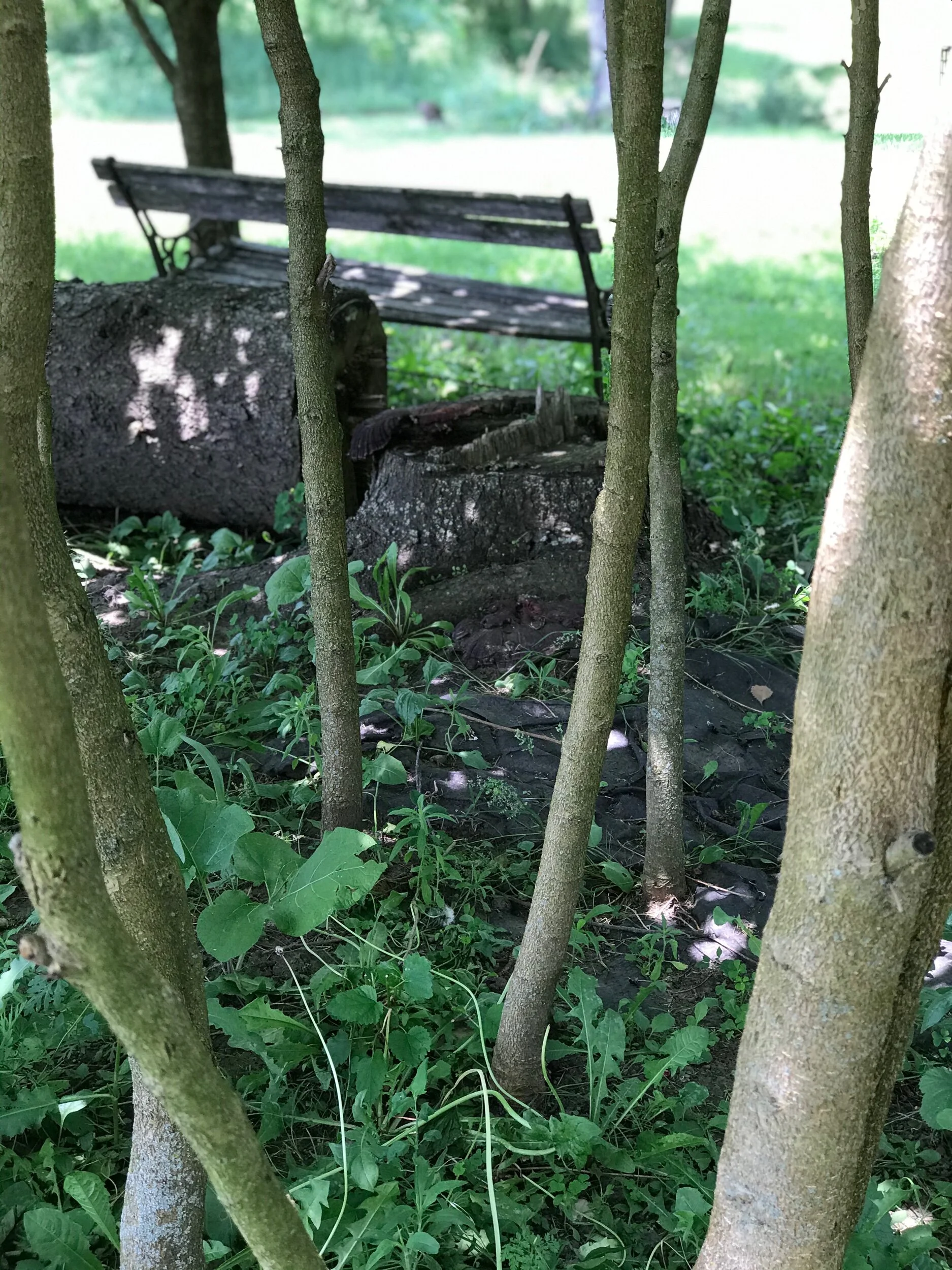
The old guy came down easily, exhaling its own version of tree relief, and we let it be for the rest of the season that year. Patrick cut most of the trunk that landed to the south of its original standing place into chunky slices and left the pieces for me to repurpose into the current landscaping, but the remaining nine feet of trunk still rests close to the stump, a bit weathered and sporting a most spectacular maroon cap of fungus. We placed an auction-scored wooden bench next to it, facing the west and the mouth of the sprawling meadow. The kittens stretch out full length in the summer and nap there for hours.
It didn’t take long for the mulberry saplings to claim the space at the feet of the Great Fallen, forming a near-perfect and almost reverent circle around the pine’s final resting place. Resembling a more cheerful band of professional mourners, they left the wooden bench alone, not trying to grow up through it or anything, which I considered good form on their part. Mulberries are the rabbits of the arboreal world for their proclivity to reproduce and plant themselves in any open patch of grass or untended field. They’re not the sturdiest of trees over time, and we have several in the wooded part of the meadow that are clearly dead, waiting for the right wind to come along (or at least Patrick and his merciful chainsaw skills). But while they are young and green and loaded with fruit, it’s the best part of early summer to walk beneath them, barefoot (so the overripe drops in the grass can stain the bottoms of your feet a splotchy and glorious purple) and reach up to pluck the darkest and sweetest ones from the branches in front of your face. Our wild birds lay claim to the ones beyond our grasp, and leave us post-mulberry “calling cards” on the deck of the palest and prettiest lavender. A five-gallon bucket and scrub brush take up residence on the porch for the better part of the season.
Yesterday morning, just as the early light of the longest day of the year hoisted itself over the sycamores to the east, the view out the bedroom window was a study in lush green; the topmost branches of those fruited saplings now filled the space where gray-green needles had once lived. Heart-shaped and still a just-unfurled fresh, the leaves could not hide the orange and black of an oriole having his breakfast while I contemplated mine. A familiar prayer filled each chamber in my heart, I get to live here…I get to live here.
Every day, something changes here. Everything that dies makes room for its successor. Last year’s leaves compost the garden and nourish us eventually in the kale we’ve grown and sautéd for dinner. The milkweed in the fields doubles in size and quantity, and the monarchs will find it, I promise. The sheer abundance of life that continues in both the gentlest and harshest of circumstances pauses our steps and our minds so that our hearts can take it all in and hold it close. We dance happily in the tension between the reliability of the seasons and the impermanence of every living thing. Every day, I feel lucky. Every day, I grow in my ability to take fewer and fewer experiences for granted.
For as long as they last, I will enjoy the mulberries.
The View From Here
Food that good ought to be eaten with reckless abandon for all the work it took to get it to the table.
There are some days you can’t see from where you were standing three months ago.
On our plates last night were the first harvested tender leaves of kale and chard from the garden, softened a bit by steam and wrapped spring roll-style around a tasty melange of shredded cabbage, tiny carrot pieces, onion, seasoned TVP, and chunks of plant-based protein all stir-fried with sesame oil, minced garlic and ginger, and crowned with a Korean BBQ-spiced peanut sauce. Oh, and brown rice and charred red bell peppers found their way inside those rolls too. Spilling out the ends like just-popped British Christmas crackers, the filling made it to its final destination without fork or spoon. I’m sure we’re more cautious about eating with our fingers these days, but my hands were CDC-inspection clean so I risked it. Food that good ought to be eaten with reckless abandon for all the work it took to get it to the table.
Back in March, those gorgeous dark green leaves were but an idea buried within a hopeful tiny seed sunk into a rather chilly soil-and-compost mix, side dressed with our imaginations and dog-eared pages of reliable cook books. I’ve always leaned toward a life guided by preparedness—before Field of Dreams gave us the brilliantly quotable “If you build it, they will come” line—because I want to be ready for what could happen, and give myself the best possible chance for success. That works well mostly when the combined elements of any plan are within my control, or at least responsive to my influence. But it rained and rained and rained this spring, pushing our spring planting goals well into the end of April and creating a small muddy moat around the most viable of our raised beds. All the seedlings would need to stay put for a couple more weeks, and they grew impatiently leggy in their confining pots. We distracted them with repositioning toward the gray light of day, and sang to them only the most hopeful and positive of songs. Kale and chard spring rolls in June weren’t anywhere on the horizon; we didn’t even know such a meal was possible. But we kept true to the plan to at least have a garden.
Winter-into-spring tests the depths of our trust and optimism that the ground will indeed dry out enough to put the potatoes in or walk the field line without plunging one foot into the soggy and camouflaged front door of a groundhog’s den, pulling off one’s boot in an attempt to keep walking (sending a few well-rehearsed oaths into the air, hoping said groundhog understands what we’ve come to call “barn words”). No matter what the setback, the disappointment, the unmet expectation, we push aside the strongest of our doubts and send all our hope into the very heart of a seed, aligning our dreams with its tiny power to use what’s given to it—a dark blanket of dirt, water, warmth and eventual light—and become something so spectacularly huge by comparison, it makes the wise and observant person sit down in silence and awe. That’s why I sing to our garden at sunset. There’s just no other appropriate response to such well-designed magic.
Three months ago, I figured I’d have come down with the Virus before spring was over, and I didn’t let my imagination go much past that point. On this particular day in June, I’m fine. In fact, I’ve been fine every day this month and the three months before that, save for the requisite anxiety and edgy-ness that any global pandemic will bring. The remedy is to not saturate myself with news and speculation-based op-eds. So far that approach, and keeping up with well-established wellness routines (fistfuls of the right supplements, fresh air, exercise, gratitude for at least five things every day, laughing at Carol Burnett Show blooper reels) have kept me on the kinder side of this whole ordeal. Masks and physical distancing seal the deal and are not negotiable. And while I probably entertain too many thoughts and imaginings of where we’ll all be by October, I work hard to limit such mental meanderings, letting my eyes rest on the freshly-cleared ridge by the house, or watch as some hidden vacuum within the vintage camper-style birdhouse seems to suck the wrens inside just as the kittens swipe their paws from a precarious perch on the branch above.
It’s been a hard and sometimes breathless dance, balancing our current horrors and heartbreaks with those sweet present moments that are innocently detached and free of worry. I feel guilty for taking a break while others sweat on, and then I remember that my shoulder will be to the wheel soon, and the respite I give myself is yet another healthy strategy to keep my core values in play. What matters deeply to us requires the effort to sustain it. Perhaps your mileage is different, but I’ve not yet found a way to enjoy the good stuff without working for it.
There’s one raised garden bed that’s struggling. The tomato plants look hearty enough, but the zucchini and okra look pale and resigned. I suspect the soil isn’t giving them the nutrients they need, and consider gently transplanting them into a better mix. When I close my eyes, I see them thriving, putting another sublime meal on our plates in August. What do they need today, to get them to that future?
Indeed. Where do we want to be in three weeks or two years? And what will get us there?
Hmmm…imagine.