
The Rich and Storied Life of Things
I don’t want to live in a museum or a storage unit, buried among the detritus of the ages.
In the summer of ‘88, I bought a jute hammock at an open market in Managua, Nicaragua. At the time, my west side apartment back in the states offered no perfectly spaced trees from which to hang it (and the neighborhood was dicey; I wouldn’t have felt safe to recline al fresco as I watched the local youth put their cigarettes out on the hood of my new Honda Civic). I packed it carefully in my carryon bag and unpacked it when I got home, tucking it away for Later.
(Note: In addition to the hammock, I brought back two bottles of rum purchased at the duty-free shop in the Managua airport terminal. What else should a 25-year-old daughter bring back for her parents who slept not at all during the two weeks I spent documenting the war between the Contras and the Sandinistas? I can happily say those two bottles are tiny specks in the frame of my life’s rearview mirror, their contents drained shortly after I handed them over. I also bought my mom a rosary. Prayer takes many forms).
Thirty-six years Later (last week, to be precise), I added it to the growing pile of items both cherished and forgotten, all on their way to the local Goodwill up the road for the next leg of their journey. It never knew the strong and secure grasp of a tree’s trunk nor the weight of my relaxed body swaying gently in a hypnotic summer afternoon rhythm. I thought I’d wince more than I did, handing it over to whatever new owner might claim it as treasure from the crowded shelves of the thrift store. They’ll have no idea where it came from, how old it is or what I was feeling when I pulled out a fistful of cordobas for the vendor to make it mine. Since 1988, it has moved with me to four apartments and two homes, perhaps sharing my dream that someday, it would be useful as the maker intended. I have unfolded it and stretched it out, even took it on a few walks with me to find those perfectly spaced trees from which to hang it, but they never revealed themselves. It was time to honor its purpose by moving it along. I have no regrets. My time in Nicaragua was a life-changing event that no hammock could hold.
In the coming year, we’ll be moving our upstairs sleeping arrangement down a flight, swapping places with the guestroom-slash-studio that is in SERIOUS need of purging. That is my task for the months ahead and I’m pleased to say I can now see the walls in two of the room’s four corners. Out the front door went a quilt frame from the ‘40s in its original box, never opened and employed, along with a pair of retractable shower curtain rods, rolls of fusible stiffened batting and bubble wrap style insulation (I was planning to make lunch bags), several unfinished quilt tops and bags of vintage handkerchiefs (given to two dear friends whose sewing machines never get dusty), science and psychology books from the ‘70s that graced the shelves in my dad’s den, over thirty antique promotional yardsticks from various local businesses, and miscellaneous bits of craft supplies. I hung onto my mom’s portable sewing machine in its heavy black carrying case and my dad’s Smith Corona manual typewriter (robin’s egg blue). I’ll tackle the shallow totes under the bed and finally frame the abstract spatter-painted piece of thick posterboard I made in a summer school art class between 4th and 5th grades. I don’t want to live in a museum or a storage unit, buried among the detritus of the ages. If it resides in our home, it will be useful and enjoy a life of purpose until the end (and yes, works of art count as useful, soothing our news-weary souls on a daily, sometimes hourly, basis).
Driving through our agrihood over the Memorial Day weekend, we noticed there were fewer garage and yard sale signs than we’ve seen in previous years. I wonder if the pandemic motivated folks to downsize and now there’s not as much to sell. I remember in our antiquing days when the thrill of the hunt pulled us out of the truck cab to inspect a curbside pile of wood or forlorn furniture and some wire storage racks. Much of what we found we sold or put to use—the wooden platform bench that now sits beneath the stand of young mulberries off the front porch with a grand view of the meadow, the trash-picked and still sturdy pine green wicker loveseat disappearing into a brambly alcove just off the walking path near the creek and half a dozen shepherd’s hooks from which dangle the bird feeder circus on the ridge. I’m inspired right in this moment to paint the hummingbird and dragonfly that adorn one of them, adding pops of color that will make us happy on some gray and chilly February day.
I don’t need to ask how two people could accumulate so much after 30+ years together; I was there for every purchase and acquisition and the stories are part of my DNA. I think that’s what makes the inevitable letting go of our things so liberating and joyous. In my passionate and determined downsizing these past several weeks, I’ve set aside certain treasures to pass along to cherished friends and people I know will appreciate the story that brought them to us both. Given with no strings attached, these bits and pieces from my life will keep changing hands and I like the thought of that. I get to keep my memories; someone else gets to add theirs to whatever catches their eye on the thrift store’s shelf. Anything covered in a layer of dust, thick or thin, has its days with us numbered.
What remains within our walls will matter to us until it doesn’t and we’ll start the whole process over again, sifting and sorting, remembering and sitting still for a moment until it’s time to pack something into a bag and head out the door with it to its new pride of place for stranger or friend.
In the meantime, if you need some widget or gizmo, you might wanna check with us first. Chances are, we’ve got what you’re looking for.
Neighborhoods
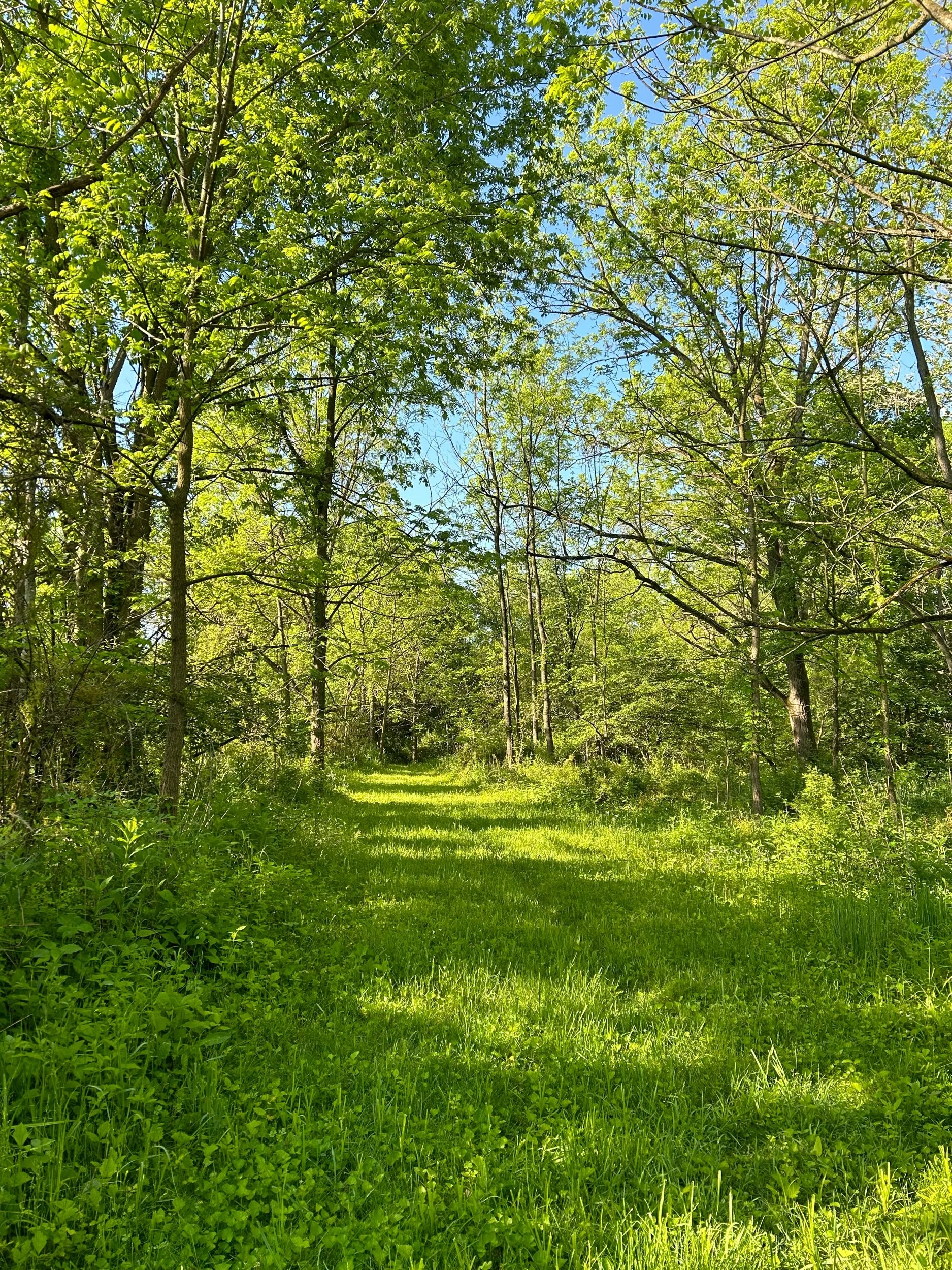
Make a left at the first of the black walnuts and now I can no longer see anything remotely human or civilized.
It’s Sunday morning, just after dawn. In a few hours, I’ll climb aboard the zero-turn mower and head for the high green seas that our lawn and field paths have become. It’s a simple recipe that got us to this point: a couple weeks of 70+ degrees and sun, two rain-soaked days and no time during the workday to get out and tame any of it.
Until today. The meadow is more prairie than lawn at the moment and I’m already apologizing to the random patches and clusters of wild ranunculus and yarrow that will bend beneath the cutting deck (dialed up to the highest setting) and lay sliced in two by the whirring blades. We console ourselves with the fact that there is still plenty of pollen to go around as spring establishes herself and turns her full attention to all things procreative.
If you’ve not had the privilege of surveying any landscape from atop a riding mower of some sort, it’s a grand and unrivaled meditation, cheaper and more effective than any therapist’s couch-and-office arrangement. Nothing between you and the sky, a tidy-ish trail of serviceable compost material in your wake and that glorious feeling of accomplishment as you’re brushing grass clippings from your sleeves while standing on the front porch. A cold cran-razzberry LaCroix plucked from the door of the fridge puts the exclamation point where it belongs and makes you ask if there’s any possible way to move your retirement date up a year or two (there isn’t, but a lot of dreams unfurl out there in the Great Wide Open).
What pulls me forward, though, to suit up and get out there is more than the satisfying outcome (and “suit up” is accurate—long lightweight pants, a shirt with some manner of sleeves, earplugs and noise-cancelling headphones, safety glasses, sturdy boots, gloves that no thorny vine can penetrate, sunscreen slathered on anything that isn’t already covered, cell phone in the well just south of the cup holder and lastly, a deep sense of anticipation that in a few hours, things will look better). Once in motion, the mower and I glide and occasionally bump through an evolving series of “neighborhoods” connected by the subtlest of ecosystems, each a wonder unto itself.
From the old old goat barn where the mower lives, I back into the slope that eases its way up to the house, shift forward and skirt the edges of the eastern field where the goats used to graze their days into dusk. Open and undulating with this season’s goldenrod, Queen Anne’s Lace and thistle still in their infant stage, the sky just hangs there all blue and sometimes cloud-scuttled, a perpetual invitation to look up no matter what you’re doing. Stalwart and grandmotherly, the land’s oldest mulberry tree leans her canopy over the barn roof, offering her thumb-sized fruit in June to the swallows that nest in the barn’s eaves. A fat groundhog has tunneled its way beneath the piles of wood we’ve collected for some unknown project and we’ve learned over time not to open the door on its sliding track after sunset.
Following the field edge north, I’ll make my way past the pallet-enclosed garden with its raised beds that are more or less weed-free. Raccoons and other night marauders have left the garlic and onions alone but we’ll need to fortify the potato and cabbage rows with tall fences and stern looks. Just past the garden (still looking northward) is an open patch where we used to free-range our meat chickens back in the years when we had nothing else to do after work. It’s now home to a burgeoning mini-forest with volunteer maples and sycamores and we’ve added two Montmorency cherry trees and a curly willow to the mix. A little tricky to mow around but worth the effort, our dear late Copper kitty rests beneath one of the cherry saplings, her headstone a curled-up cat made of concrete, missing an ear. I pass with respect and a twinge of melancholy.
The path narrows as it continues past the white pine-encircled sweat lodge where we tried for years to plant all sorts of different pines and arborvitaes and silver maples on the north side of the circle, but with no luck. They were rejected, eaten and hobbled each spring until we turned our attention to other things and now, suddenly, there are too many sycamore saplings to count, providing our wandering deer with a place to rest their lanky limbs out of sight. They’ve turned it into their own small village and I’m glad for it. Keeps them preoccupied with raising their young instead of grazing on our lettuces and tulips to the south, trying their best to have a season of their own.
Once I’m past the deer village, things start to get more serious and wild as the path slopes downward and the grass thins under the leafy branches of box elders and cherry. Make a left at the first of the black walnuts and now I can no longer see anything remotely human or civilized. I’m in Their Country now, heading west where the foxes and coyotes and skunks all live and move and have their babies and protect them like any living creature does. I straighten up in the mower seat and pay attention. Who’s to say they won’t band together and pile onto this large and snarling machine come to disturb their peace, carrying me away after they’ve turned off the engine and tossed the key into the creek? (The farther I get from the house, the more my imagination runs riot).
But this is where the magic is, dear readers. On walking days, my footsteps rarely stray from this section of the paths and our outdoor roommates get to do things their way. I’ve made it a bit of a rule that when I’m trimming brambles or pulling vines, I keep to the mere fringe of the tree line and leave the lopers behind should I need to venture in further. I come into these wooded sanctuaries unarmed and in peace; my boots and clumsy gait are intrusion enough. A few winters ago, some straight line winds toppled one of the cottonwoods across the path that borders the western edge of the field-turned-woods and I step over each branch (from memory when they’re buried in Virginia creeper and poison ivy). If we ever do get out the chainsaw and finally clear the way for less encumbered future walks, I expect I’ll still lift my feet up and over the ghosts of these limbs out of habit. Muscles have a way or remembering, don’t they…
A diagonal path running southwest to northeast takes me past thick thickets of multiflora roses (from which we now harvest the vitamin C-rich rosehips for tea every autumn) and wild blackberries. When I turn off the mower, the mockingbirds in their wooded grove take up their repertoire of impressions again (blue jay, towhee, woodpecker, oriole. And repeat). Invisible improv coming from the unfolding canopy of fresh spring green leaves, it is enchanting and darn near impossible to get back to the task at hand. At the northernmost tip of this path is a majestic and towering stand of cottonwoods, their seed fluff floating and filling the sky with the feeling of unhurried laziness to which I aspire. I have now forgotten where the house is and feel no compulsion to return, ever. I see the green clusters of unripe wild raspberries and a sea of young plantain—can’t I just live out my days here instead? Sigh…
By now, my ears are feeling the pinch of the noise-cancelling headphones and it’s probably time to finish up this tour and head back to a few conveniences (a shower comes to mind and will be necessary). I’ll do a quick tick-check after I’ve tucked the mower back in its shelter and trudged up the slope to the house. Once on the porch, I’ll turn my gaze to a sweeping view of green velvet that rolls on for acres and watch as the barn swallows pick through the fresh clippings for displaced bugs, relishing the feeling that I’ve accomplished something worthy of the effort. This scene will last until the next round of soaking rains and warm, sunny days pull the grass blades upward again. I’ll dial the cutting deck a setting or two lower and then it will officially be summer.
Choosing Small, Appreciating Humble
Sometimes silence is the most appropriate response, perhaps accompanied by a gentle squeeze of the hand.
We’re about a month out now and I still can’t find adequate words to describe the total solar eclipse that happened in the skies above our slice of the world.
My brother, Mike, traveled from Hawaii for it (and to work on a kitchen remodel job with a dear friend of his) so I took the day off and we drove just forty minutes west from our place to a family farm-turned brewery hosting a watch party in their open-sky surroundings. We arrived early and the field where we parked was already half full. In less an hour, they were turning people away. By mutual agreement, we decided to tailgate the event in the parking lot far from the good-natured crowds with their blankets spread out on the grass and folding chairs unfolded. Official Eclipse Glasses? Check. Water? Check. Ok—bring on the show.
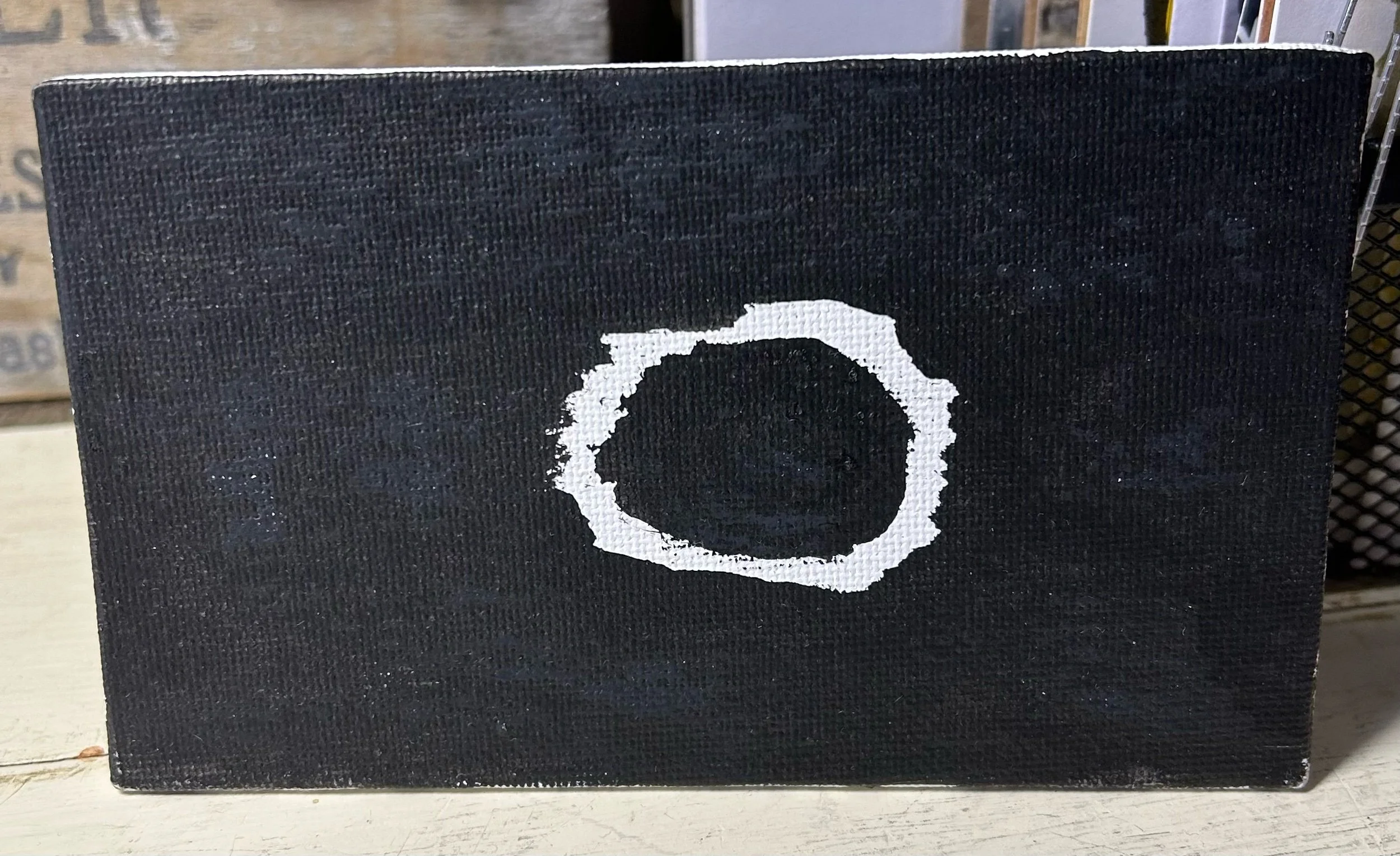
Two days later, I got out my watercolor crayons and a small 3x5” mini canvas and painted my experience of that moment when I looked up safely without Official Eclipse Glasses at a spectacle that has yet to be contained in a sentence or paragraph of the fanciest descriptors (painting is a relief for this writer whose initial go-to is an ever-expanding vocabulary). Georgia O’Keefe I’m not, but I signed the back of it anyway and mailed it to my brother the day before he headed back to the islands. I was so surprised by that simple act of creative gear-shifting that I painted a second one, signed it and now it sits on my studio table reminding me of the day Mike and I turned our gaze upward for the better part of a sunny afternoon in April. The carnitas street tacos we ordered from one of the food trucks there were excellent—we waited over an hour in line for them.
In the days and weeks that have rolled out since then, I’ve asked coworkers and friends about their solar eclipse experience and found that I’m not the only one to go silent, searching for the right words to describe the impact of what we saw. It’s not just me who’s weary of “amazing” and “jaw-dropping” (something our bodies do naturally when we bend our heads back) and all the other overused adjectives our superlative-addicted culture offers relentlessly (see also “stunning”, “awesome” and “incredible”). My brother and I agreed to get back to each other should some appropriate arrangement of words come to mind. Until then, we leave it to “that was great being with you for the eclipse”. and “I’m glad we shared that moment”. Sometimes silence is the most appropriate response, perhaps accompanied by a gentle squeeze of the hand.
Our current situation frequently offers up the chance to reflect on the continuum of grandiose to simple in our lives. I often consider our experience of the two farmers’ markets where we sell our humble kitchen-made granola. One is akin to a bustling street fair in the old downtown section of a suburb north of downtown Columbus. In the summer, we, alongside our nearly 100 fellow vendors, average 4000 - 6000 visitors on a Saturday (as high as 7000 on a peak weekend) and the rain doesn’t deter these stalwart patrons of all things fresh and local. They outfit their dogs and small children in raincoats and hats (I once saw a mixed breed pooch wearing the sweetest paw-fitting rainboots), bring all manner of colorful totes and wagons to carry their purchases, and shun umbrellas as something beneath their dignity. In between downpours, they buy our Blueberry Almond and Vanilla Chai flavors, we swap stories under the shelter of our green 10-foot canopy and reassure each other that we won’t melt. It’s a kind and gentle exchange that boosts us for the restocking granola-baking that the coming week with bring. We are always grateful.
In contrast, the local market just fifteen minutes from our home is a more intimate affair—a good weekend will see maybe 300 pairs of feet walk past the twenty or so vendors who, by market stipulations, must make or grow their table’s bounty no more than 25 miles from the town square. Our customers are neighbors we haven’t met yet and friendly visitors looking for the charm of a slower pace. The local college brings in parents for family weekend activities and they nearly always leave with a bag or two tucked into their student’s backpacks for snacking on in between classes (Mocha and Lemon Blueberry Tahini are favorites). Much to our delight and surprise, this smaller market consistently outsells the larger one and leaves us smiling and scratching our heads a little for their generous support of our small and crunchy venture, now in its eighth year. We’re always grateful here too, and it feels that much sweeter because we’re closer to home. I could see us making this our retirement gig when the time comes.
In between eclipses and farmers’ markets are sunrises that stop me in my ambitious morning-walk tracks to look up and about instead of just down at my feet, middle-of-the-night thunderstorms that mean I’ll be nodding off on the bus ride into work because I chose wonder instead of sleep, and sheer hand-clapping joy at the antics of a skunk family whose little ones tumble playfully down the ridge to the meadow, only to climb back up and do it all over again. How did I get so lucky? I don’t hear music in the background or see angels doing cartwheels across the setting sun (though I’m sure they do most every night). It all just comes and goes in a breath and if I’m paying attention I get to see it, commit it to memory and then walk back up to the house with the day’s eggs in a small-handled bag from the local nursery. Simple stuff, this, gathered and noticed and appreciated.
Until those other words come along, I’m fine with “beautiful”, “breathtaking” and “wow”. That last one will always be enough.
Glue
What divine epoxy adheres to the jagged brokenness of our life’s pieces and sticks them back together?
The mower is in the shop for its spring tune up and the grass knows it.
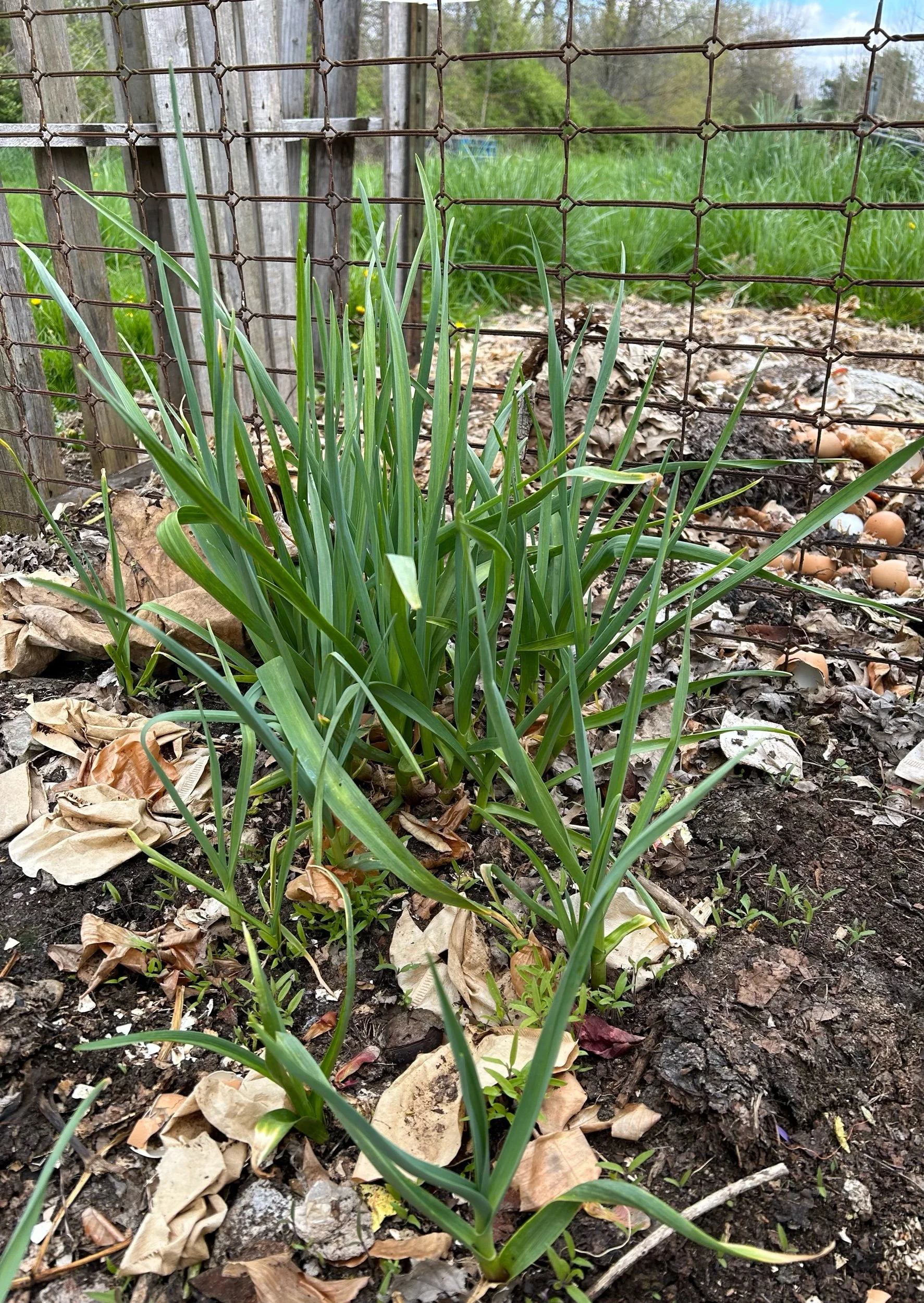
Dressed in her finest 70’s shag carpet vibe, the slopes surrounding the house and the walking paths through the fields are an uneven and cheerfully rebellious carpet of quackgrass, dandelion (in puffball stage now), lamb’s-quarters, knotweed, wild violets and plantain, with flat patches of creeping Charlie and white clover sprinkled in to distract us from the botanical chaos beneath our feet. I was hoping we’d get another bumper crop of wild garlic mustard this year for making pesto but it’s literally thin on the ground. No matter—the plantain and purslane are edible and we’ve got plenty of nettles to keep us in soups and lasagnas well into the summer. We’ve even got green onions sprouting up in the compost pile. Barbara Kingsolver calls weeds “the gardener’s job security.” We also call them dinner when it’s safe to do so. And we know this: there’s no stopping spring.
It’s impossible not to notice the reassuring effect this land-home has on us when new life is bursting forth in every direction. Our place is landlocked and pretty much hidden from the ribbons of traffic that zoom by on the two-lane road a mile and a half west of our driveway. Were it not for our phones and internet (and the need to slide into that traffic a few days a week for work) and a shared curiosity about what the rest of the human tribe is up to, we’d live an ignorantly insulated life, unaware of the headlines that bring the rest of the world to its knees. But…we are aware, we do read and scroll and feel the sharp edges of a global momentum that seems bent on self-destruction. In the midst of all that, it begs the question—why are we still here, all of us? I can only speculate and wonder, with an undercurrent of fierce hope, the kind that makes you clench your face up tightly, press your clasped and intertwined fingers against your lips and send everything you are outward to an unseen force that must be, must be, watching, listening, standing alongside us.
What is holding us together? What divine epoxy adheres to the jagged brokenness of our life’s pieces and sticks them back together? In my 20’s, I traveled with three male friends to a monastery just outside of Atlanta and stayed overnight (disguised as a man since women were not permitted accommodations. Another story for another time). I wondered about their spartan lifestyle, heard their chants at regular intervals throughout the day. I didn’t see a television in the areas we visited, though I didn’t look for one. In the short slice of time that I observed and participated in the rhythm of their routines, I thought of a life so focused, so contained and driven inward, sunrise to sunset to sunrise again. How could there not be some ripple effect on others in spiraling concentric circles that reached beyond Georgia’s state lines into Florida and eventually into Cuba and Puerto Rico? How many more communities of full-time pray-ers are there in the world? And…how could all of that not be helping, in some way?
Then there are the other less formal and less communal acts of intention and compassion that weave and whisper themselves through our days: doors held open as we juggle sacks of groceries, artists who paint messages on flat stones and leave them on beaches for searchers and fellow travelers to find at just the opportune moment, farmers’ market vendors who give away whatever product is left at the end of the day to local food pantries or a customer who’s short on cash, simple eye contact with someone next to us at the bus stop, held for longer than a flash, a reminder that we’re in this together. Whenever we dig into our recycling to find a piece of something that will keep us from having to run into Lowe’s and buy brand new, we’re helping. Any and all inner work that lovingly tries to tame the ever-churning “figure it out” thought cycle we get pulled into at the expense of our peace…that helps too. And bending down to feed the cats, the dogs, the ferrets, or sprinkle flakes of fish meal and spirulina into the aquarium by the front door. More glue, more adhesive to strengthen the bond between us all as together we rise and push back against despair and insist on love. Shifting one’s view away from the headlines like this is not just a good idea, it’s good medicine, water for parched throats. We mustn’t minimize it or dismiss it as soft, ineffective, Pollyanna folly.
I’m counting on these simple acts of continuance and connection. Just as sure as spring means a shaggy lawn and unbridled growth, I believe in the power of glue.
Join me.