
Outpouring
Whatever I might have considered an inconvenience, even on the mild end of the scale, has evaporated.
I was kinda dressed like my Dad last Friday at work. After he passed, I inherited one of his comfy button-up (button-down? What’s the difference? Direction? Does it matter? To someone, I suppose) cardigans and paired that with a soft black V-neck shirt, brown twill pants and a cool pair of red velvet Van’s that look like slippers. It nudged the line between “business casual” and “way too casual to leave the house”. No one noticed in a way that required remark or dress code reprimand. Welcome to the new workplace tolerance.
Dad’s been on my mind a lot these past two weeks. Mom too. I’m registering a strong need for their comforting presence, like I used to feel as a child when I’d have a bad dream and would wander down the hall in the middle of the night to crawl into bed with them (always on Mom’s side. She’d let me in; Dad was too sound a sleeper). Dad’s been gone ten years now, Mom seven. I’ve had good dreams and bad since then, but nothing like the nightmare we all have access to via scrolling and flat screens since February 24. And there’s no waking up from this one anytime soon.
In the two-plus weeks since then, I’ve felt an uncomfortable detachment from all illusions of safety that had held me prior. Walking the land in the morning, numb not from the cold around me but the chill within me, I blow on a fragile ember of hope that the fighting will just stop, mothers will come and pick up their young soldier-sons to take them home and feed them, wherever home might be. We’ll wake up to headlines of sanity and began planting the tomato and cabbage seeds for this year’s garden. I’m hungry for the comfort of any parent—human or earthly—whose lap is large enough for us all to crawl into and settle for a long, long time. In the meantime, I adjust the sleeves of Dad’s sweater to cover the burn marks on my left arm (a bread-baking incident from last Sunday), pulling the buttoned and buttonhole sides in closer to wrap me tightly, cocooning the ache I can’t shake. Somewhere in my fabric stash are some summer shirts Mom used to wear. I’ll cut them up and make them into a quilt this week and curl up beneath it. Maybe that will help, a little.
It’s taken me two-plus weeks to even find those words. Nothing I think or attempt to write can touch this present horror and so I’m going to stop trying for eloquent or inspiring. Strong talk for an introvert with perfectionist leanings but where else can I go? The war in Ukraine is everywhere I look, even when my phone is dark and we’re temporarily distracted by Corner Gas reruns on Amazon that we watch while we eat dinner. I can’t begin to imagine what it’s like to sleep in a subway with sirens going off or carry on my back what I could grab on a last frantic run through the apartment and still hold my squirming toddler child in my arms, walking for miles to cross into a country I’ve never even visited on holiday. Stay or leave? I’ve never faced that decision in moments of relative calm, much less the chaos of relentless violence. At the market yesterday, patrons were subdued and kind. We exchanged pleasantries and currency, and once or twice I’d hold onto someone’s gaze just a few seconds longer, as if to say, “I know…I feel helpless too”. Yellow and blue ceramic hearts dotted our table’s display, with colorful cut-out sunflowers for anyone to take, free of charge. I wanted people to know and remember what was happening over there, just for a pause in their shopping. And it still didn’t feel like anything near enough. We were all safe and warm, had money in our pockets and homes and families more or less intact. Paradise.
Whatever I might have considered an inconvenience, even on the mild end of the scale, has evaporated, transformed into a desperate and piercing gratitude my bones cannot forget. The biting wind cut through our coats as we loaded the car with totes of granola and our two folding tables, our noses running but no spare hand to grab a tissue. This morning, the chicken’s watering pan was frozen, so I carried two gallon jugs of water from the house, one hot, to loosen the ice and one cold to refill. Our living room floor slants in places, bows in others and we know the joists below are not up to the task of supporting the whole structure much longer without some help; repairs will be costly and require some significant heavy lifting—literally. And I recently learned I have a hole in my right eardrum, so surgery is somewhere on the horizon. It all still adds up to nothing in the face of millions whose lives are now unraveled and dangling above the gaping hole of the Unknown, torn and bleeding. Whatever used to matter to me has been reorganized, with no expiration date or a return to before-the-war thinking. Rightly so.
Like so many others, I’m reaching for what I can do that will help, though whatever I imagine feels like tossing bricks into the Grand Canyon. But beneath that is a persistent voice insisting I not talk myself out of the modest and the small. I must believe that all acts of kindness unite to push back against the evil that roams about the earth, seeking the ruin of souls (to paraphrase an old Catholic prayer to St. Michael the Archangel. Mustn’t discard everything from our past…). I must trust in the fact that I’m still repulsed by violence, that this ache I’m carrying, cocooned in my late father’s sweater, means I have a heart anchored in peace. I must do what I can with what I have for whoever is in front of me or all will be lost. Maybe some of that will make its way across the seas, through borders and fences and reach a fellow weary soul who just can’t go another step. I don’t know how such things work exactly but I’m going to send it anyway. Love knows what to do and does it, against all odds and cynical advice.
The Mom and Dad I miss and long for taught me that.
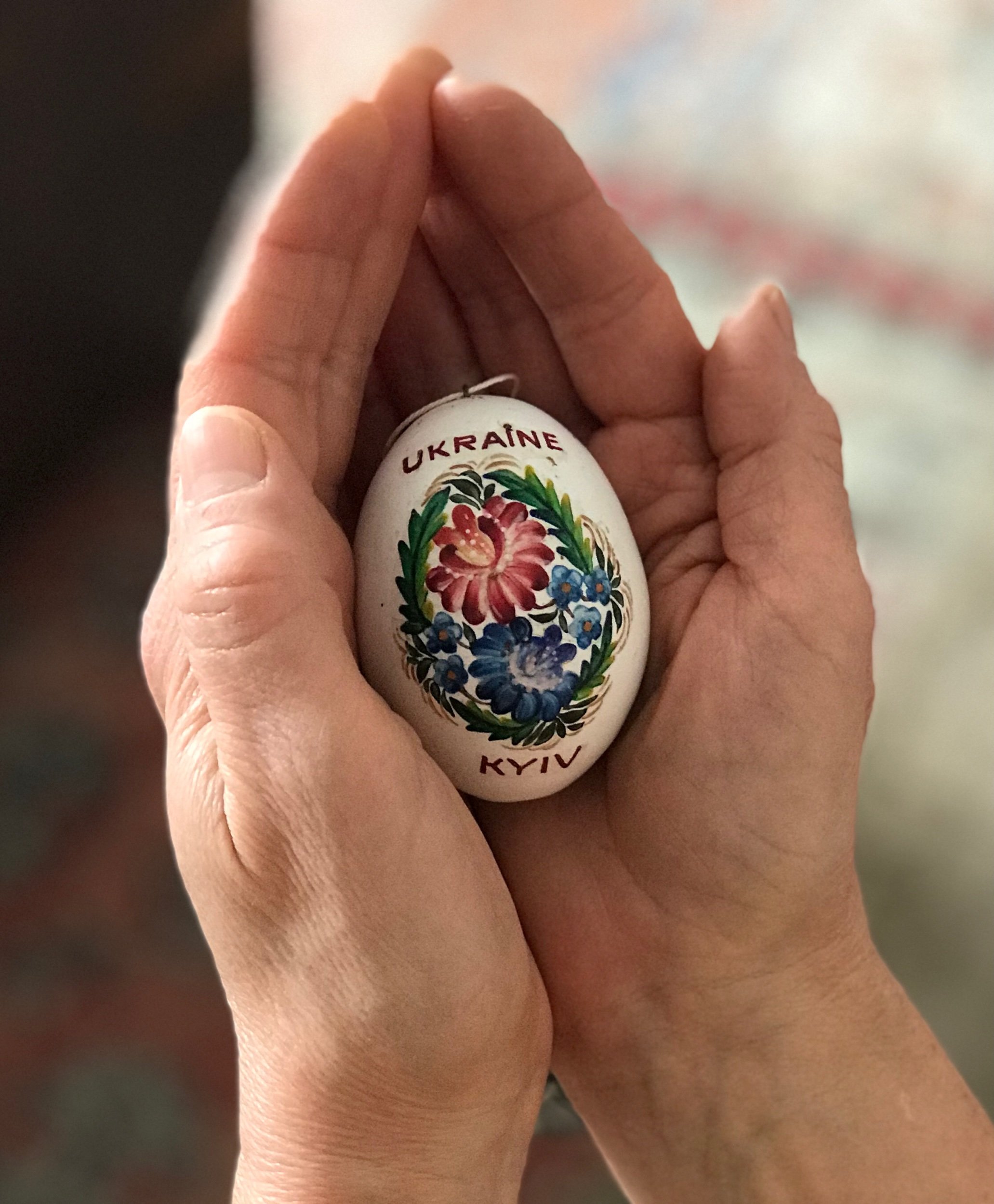
(The painted egg in the photo that accompanies this post was a gift from my late friend and mentor Mary Merrill. Her daughter, Ann, has spent the past seventeen years in Ukraine working with nonprofits and more recently as a self-employed English-Russian translator/editor. She shared this link a few days ago, a list of reliable and trustworthy organizations helping Ukraine and Ukrainians. I encourage you to do what you can with what you have where you are. Your love and support matter. They always will.)
https://ukrainewar.carrd.co/
A Place to Get Mail
Would anyone hear the grunting and giggling group as they wrestled a 4x4x6 post from the ground?
I remember that late July morning, back in the days when my daily walk would take me down the quarter mile driveway, past our “up front” neighbor Sherry’s place with all her interesting and exotic chickens and a quail or two and out into the then-gravel two lane road (now asphalt, with yellow lines, even!). Once in a while, Sherry’s rooster would take a swipe at me, flying low with his spurs in the attack position and I’d use my walking stick to (gently, I assure you) send him on his way. It livened things up in those first few minutes of the walk when you’re trying to get your heart rate elevated, and I suspect the rooster thought it great fun to watch me continue down the slope of the driveway, head bowed and looking humble (I humored him). Character-building for both of us and a reminder that I really didn’t live in the suburbs anymore.
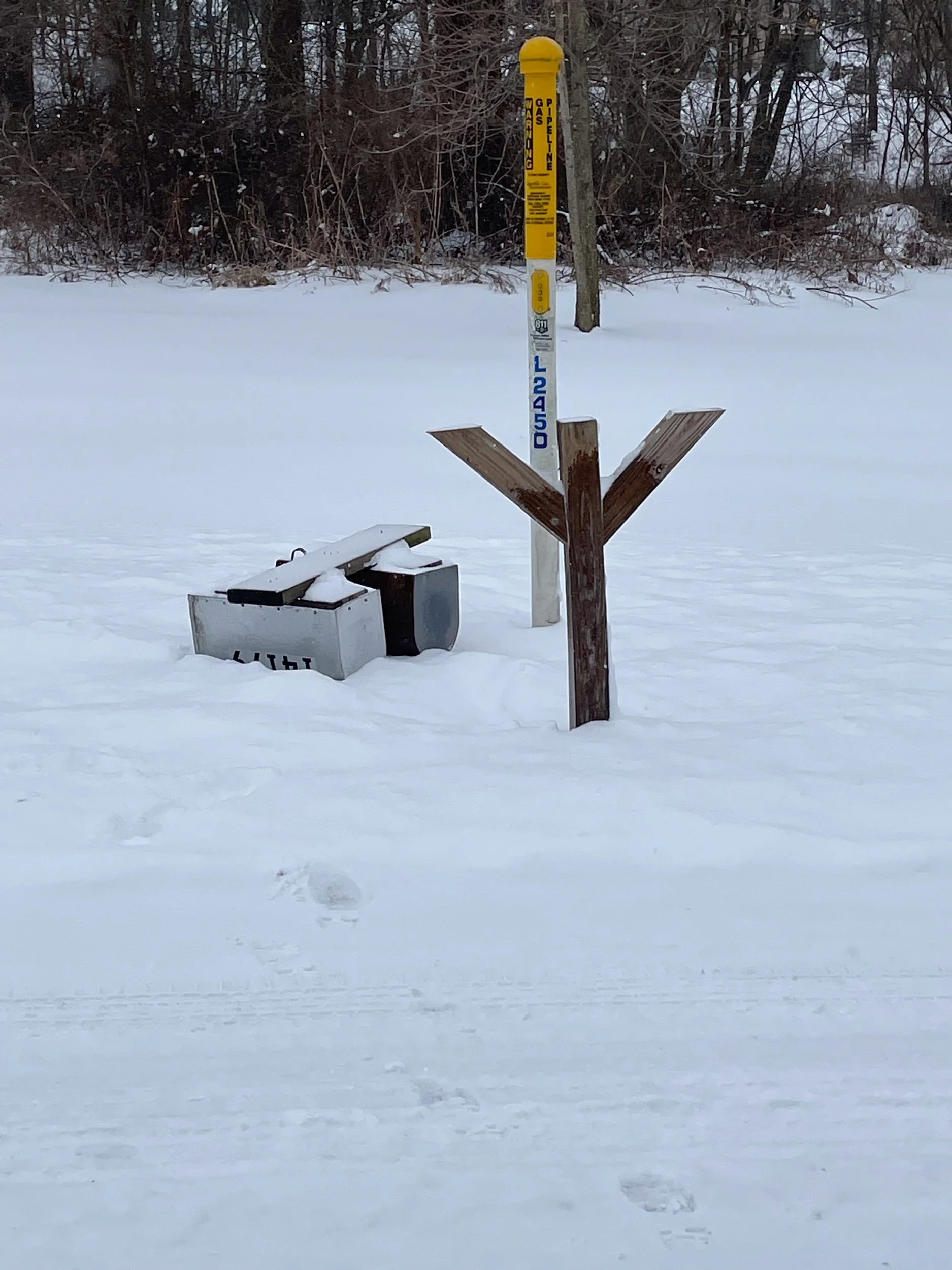
It was a Sunday, that summer morning in July, pleasantly cool and just before sunrise when the woods and sky are still deciding whether to give up their secrets. I was keeping an eye out for the kingfisher who usually perched on the electric wires that stretched across the creek when I noticed our mailbox, wooden post and all, smoldering in the grass on the other side of the road. Pulled clean out if the ground and set aflame by Someone in the wee and mischievous hours of the night, probably on a dare or part of some rural rite of passage for being the new kid in school. As I examined the remains of our mail, scattered and burnt on the edges (no great loss, truly. Just postcards from local logging companies promising to make us rich if we’d let them harvest the straightest of our lovely grooved-bark black walnuts. A hard “no” on our side of the offer), I pushed at the charred and still smoking post with my toe, turning it over in the dewy thick grass. This prank was no small feat and probably took more than a few minutes, with the perpetrators no doubt keeping one eye on the darkened windows of our street-side neighbors whose homes were in full view of the road’s traffic and activity. Would anyone hear the grunting and giggling group as they wrestled a 4x4x6 post from the ground? We older folks all slept through it, apparently, adding another task on Patrick’s to-do list that week.
A couple of years before this episode, we experienced our first snowplow vs. mailbox meet-up, glad for the clear path to our daily commute but wishing the driver had steered about six inches to his left, sparing our only connection to creditors and relatives sending birthday wishes from afar. We showed up at the local post office in Homer next morning to rent a safer place to receive our mail and as the postmistress handed over the keys, we felt as if we’d settled one more inch into our rural life. I didn’t know anyone in the suburbs or city who had a post office box and if any letter had such an address in the upper lefthand corner of the envelope, I would have thought it suspect. I had a locked mailbox on campus in college at the student center where we also took our meals and danced at the fall homecoming event, but that was different somehow. The cashier at the bookstore doubled as postmistress, commenting warmly how much our parents must miss us, to send us such regular missives and packages. But real people, grown-up people, the ones who paid bills and had mortgages also had metal repositories nailed to the clapboard of their homes or drilled into the mortar between the bricks. A PO box was a symbol of being untethered, unfettered and not quite belonging to any community.
Fortunately, the Homer postmistress, Ruth, who discharged her duties at that small office just a mile up the road from us, was friendly and welcoming, giving us bits of background about our new rural neighborhood each time we stopped by to drop off or pick up. Before long, we were sharing more than just bits about our own lives and exchanging views on current events and local happenings. One summer, I asked her to help me sew a jacket from scratch and I remember how she talked me through each step instead of doing it for me. I respected that. And I still have the jacket.
So here we are, eighteen years into sending and receiving our mail at an office I could walk to (it’s that close if I’m up for it), and we come to find out that this sweet little hub of local news and communication commerce is marked for closure by the Powers That Be in a couple of weeks. I’ve rented a new box at the slightly larger post office serving the small town four miles east of us, filled out the requisite forwarding order postcard and now it’s dawning on both of us just how many folks we’ll need to notify of our new address. Banks, healthcare providers, magazine subscriptions, Amazon delivery… Smart, then, that the USPS thought this through before we did, making the forwarding order on any mail good for a year unless otherwise noted by the requestor. It’ll take me that long to remember who all we get mail from and how to track them down. Since the current office in Homer is still open, this change doesn’t feel real. We’ve started to receive mail at the new location but it feels temporary and a little reckless, like a sleepover at a new friend’s house. I wonder if I’ll stop by the old one after work one day with my keys in hand and reach for the door, finding it locked and then remembering our letters don’t live there anymore.
I’m sure we’ll get used to the new place over time. Everyone is as kind as can be and our creditors will find us (of that we are certain). We may even get a few birthday cards. But Ruth has long since retired and I don’t know if anyone at the new office knows how to sew.
I guess I could ask.

Abandoning Normal
We’re all experimenting with what works to get us through a rough day, to not feel guilty about laughing or detaching ourselves if only for the afternoon.
I took a nap yesterday.
It was a rich, spontaneous and indulgent nap, the late afternoon sun filling the sky with its yellow streamers that slid effortlessly in through the windows. I closed the curtains in the master bedroom, snuggled in next to Patrick and forgot my name for the better part of two hours.
We’re back at the market on Saturdays now, after taking the month of January off (a decision made by the market managers due to some indoor location issues that have now been resolved. A long story I can mention when we meet for coffee sometime). The winter market’s hours are shortened by one on the opening bell side of the schedule, giving vendors the chance to sleep in a bit longer or perhaps pack up product and equipment in the morning rather than in a fatigued Friday night after-work scramble. We take full advantage, leaving the house at 7:00a.m. hauling a more modest inventory and set-up load. Summer hours will come soon enough with an earlier departure time of 6:00a.m., and we don’t grumble about that at all. Year-round, our customers are generous, enthusiastic and eager to see what’s “on the table” as we say in our ads. In case you’re curious, we’re currently testing a new flavor we hope to roll out in June: Raspberry Lemonade. No extract, just pure, fresh lemon zest and juice paired with tart freeze-dried raspberries wrapped around a proprietary blend of oats and other stuff that’s good for you. In the trial runs, folks describe it as almost sippable.
But back to that nap, which Patrick and I chose after discussing other ways to spend our time (making art, cleaning out the upstairs guestroom, laundry. None of those was really a contender). Yesterday’s sharp and gusty winds were busy rearranging the landscape, making the loading and unloading of totes, folding tables, signage and Patrick’s little green wooden stool more physical than it would have been. Heads bowed and hands gloved, we set to it, thankful for the hand truck that holds everything in a tottering but manageable stack as we roll it across the parking lot asphalt and a couple of doorway thresholds into the mall where we all spread out our wares. Since I can’t squeeze in a morning walk on market days, I count this as a workout. Add another four hours of standing to that, plus tear-down and packing up, and you’ve got a hefty fitness routine to rival any of those fancy gym machines that take you nowhere. It’s a wonder we don’t nap every Saturday.
Market Saturday mornings have been woven into our schedules, either summer or winter or both, for going on six years now, with a strange and bumpy interruption during the initial months of pandemic lockdown. In those early days, we’d transport a few orders to the drive-through market set up, not even getting out of our car but handing over the bags to good-natured and hardy market volunteers, who stood in the cold or the rain to close the deal for our customers and everyone else’s. Scaled back, at times meager but always determined, this arrangement worked and eventually evolved into a newly shaped enterprise with all the usual safety protocols in place: masks required, vendors and customers six feet apart, bottles of hand sanitizer on every table. It became the new market Normal and we simply adjusted the straps on our previous expectations. Just like we did with air travel security after the 9/11 attacks. Or the walking paths along the banks of the creek after the first Great Flood we experienced on the land here. Sometimes, even waking up remembering I got a haircut the day before is a change I get to manage, if only because I use less shampoo and cut my time with the blow dryer by two minutes getting ready for work. Since change is the only reliable constant in our existence, from barely noticeable to life-disrupting, aren’t we required to embrace a new “normal” every day?
I do realize the scale of this latest shared pandemic event is different, the impact scarring and indelible for too many in its path. We’re all experimenting with what works to get us through a rough day, to not feel guilty about laughing or detaching ourselves if only for the afternoon. When tomorrow arrives, it will show us new strategies for coping, give us a new problem more tangled than the one we struggled with yesterday, and we’ll dig a little deeper in our toolkits until our hands grasp what we need. It will work or it won’t, and we’ll try something else. The wheel keeps turning.
I’ve decided to give up chasing normal (I thank my friend Rita for giving me that phrase, only she used the word “happy” instead of “normal”. An idea worth exploring, perhaps in a future reflection). I’m putting my heart and what little money I might have on a dogged pursuit of the familiar. It feels like less pressure on my psyche, to look for and find what’s friendly in a given moment, no matter how small or humble, rather than ache through the longing for what used to be however many weeks or years ago that won’t be coming back. I don’t fool myself, imagining a day when we toss our facemasks into the air like giddy college graduates, step into a world where the air we inhale is no longer tainted with COVID droplets and we run toward each other for a solid, full-body embrace. Just being at the winter market indoor location with others is a leap for me, and thanks to that winter storm a couple of weeks ago, the one that thinned out the crowds we usually have on a market day, I felt eased rather than plunged into our return. The smooth cold folding tables felt familiar in my hands as I popped the legs into place, unfurled the tablecloth and unpacked the mason jars filled with samples. Our first customers that day greeted us with cheer and gratitude for braving the elements to help them restock their pantries with Tropical, Maple Pecan and one of our new flavors, Lemon Blueberry Tahini. Their graciousness…more of that “familiar” I’m looking for. And finding.
I’m making note of the familiar that I’ve been carrying around since naps were mandatory for me: steaming oatmeal with apples and cinnamon, a body that does what I ask it to most days, having a soft throw draped over the back of the couch for when it gets chilly, forgiveness, integrity, meditative pauses, creativity, granola and the warmth of Patrick’s hand. In the face of the unexpected, the strange and the unsettling, any of these will take the edge off just for a moment.
I’m living for those moments.
A nap now and then doesn’t hurt either.
Slow Melt
It’s hard to say goodbye to someone when the ground is frozen and you weren’t prepared for the farewell.
Last Friday’s morning walk was more of a skate over the four inches of ice-crusted snow that remained from the Big Storm a couple weeks ago. My boots barely left a imprint, despite the spiked cleats I’d strapped over the soles to give me some traction insurance against a trip to the ER (for all my maternal Dutch heritage, Hans Brinker I ain’t). I was temporarily taller, walking across this mini tundra, and it was unsettling to come upon familiar trees along the path, their smaller branches now at perfect eye-poking height (especially a sweet little apple tree at the northern mouth of the meadow. I greet her each time I pass by, patting her trunk and whispering words of encouragement). I minded my head and honed my ducking skills as the walk unfolded into an amateur remake of The Matrix. I arrived back at the house intact and fall-free, not a bruise anywhere. A helpful ending to a packed week.
Vacation was simply lovely, my first long one since last June. Oh, I’d take the odd Friday off here and there, but nothing like this stretch of eight workdays with a couple of weekends in between. I was the embodiment of unbridled enthusiasm. Save for a brief bout of Sunday night wistfulness and anticipatory land-and-home separation anxiety, I remained in an emotionally steady place of even-tempered gratefulness as Monday’s morning routine crept closer. Not everyone has a job to go back to, much less one with meaning, purpose and hilarious teammates. I landed in a re-accreditation survey my second day back in the office (Joint Commission, for those of you who know this level of scrutiny) with a review of my department’s operations that afternoon. We passed with flying colors and praise for our success in retaining the majority of our volunteer workforce during the pandemic, and the organization received a preliminary overall rating of 96%.
It was a quiet victory though. In the span of two weeks (while I was on vacation), two of our beloved and veteran volunteers passed away somewhat suddenly, leaving distinct and gaping holes in the tapestry of our team. It was—and still is—surreal to return to the office and see the pile of mail Zane would have couriered to our nearby inpatient unit…the volunteer workroom schedule with Fran’s name on the block of time she filled every other week. Slogging through emails, double-checking our Joint Commission binder for evidence of compliance, handling the daily stream of new volunteer applicants…all distractions for a time until a moment of silence would catch one of us sitting down, just staring unfocused but unable to look away from the empty place at the table. When you’re gone from the workplace for that stretch of time, you expect a few things to be different, but it’s hard to say goodbye to someone when the ground is frozen and you weren’t prepared for the farewell. When did I see Zane last? What did Fran and I talk about the last time I saw her? For both of them, I have the comforting reassurance that laughter was involved. I shall hold onto that.
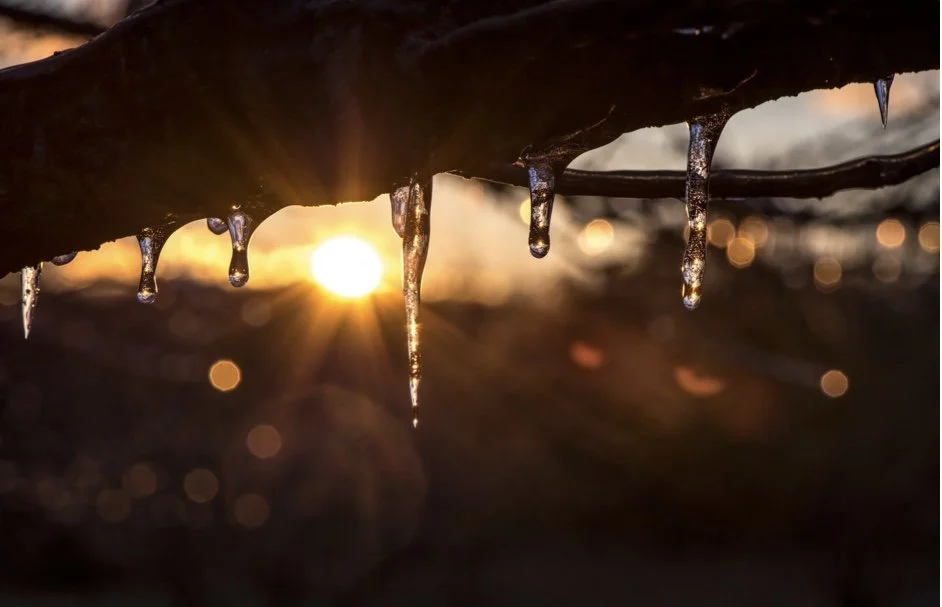
Since that Big Storm dumped over six inches on our chilly corner of central Ohio, temperatures have swung between melting and freezing, leaving our driveway a splendidly treacherous ice rink that’s shrinking daily in barely noticeable increments. Main roads are clear, thank heavens, but stories of impassable sidewalks and driveways continue to pepper our between-meetings conversations at work. I think grief is like that sometimes. We move between extremes in a context of contrasts, searching for that leveled-off place that appears now and then. There’s still work to do, relationships to nurture and walks to take; we navigate the terrain as best we can, relying on our shared memories to provide some much-needed traction as our feet traverse the icy patches. Tumble we will, and perhaps even sprain something, but we’ll get back up and point our hearts toward the next season on deck. Fran and Zane did that, in the small slice of their lives I was privileged to share.
When I make the bed in the morning’s darkness after Patrick has left the house, I watch out the upstairs window to see that he crosses the bridge without sliding off into the half-frozen waters below, and I keep watching as he navigates the hill before his taillights disappear into the rest of his commute.
Somewhere, in the meadow, is a tree, dreaming of summer’s apples.