
The Selfless
I’ve encountered quite a wide and colorful swath of human nature these past four decades and it shows no sign of slowing down.
Just took a batch of Thai granola from the oven, its warm red curry breath filling the kitchen with an unexpectedly pleasing aroma. We’re branching out in the business, stretching just enough to put a toe into flavor palettes that teeter on the line of sweet and savory. With touches of olive oil, coconut and just enough maple syrup to offset the sriracha tones, I think we may have a new hit on our hands.
I should write for the Wine Spectator, yes? If only I knew as much about wine as I think I do about granola. I’ll keep my day job for now.
Speaking of which, I’m looking down the barrel of a tightly scheduled week and feeling rather up to the challenge of keeping all the plates spinning atop their wobbly sticks. Back-to-back meetings and appointments in a healthcare setting don’t allow for the unexpected crisis for which everything else must be set aside. As planful as I try to be (and humbly, succeed most of the time), there’s no wiggle room in the coming five days; even lunch will be at my desk or on the fly and I’ll be pulling into our long driveway past dinnertime at least two nights this week. We’ll see how ragged my self-care practice looks by Wednesday.
But when I take a closer look at the details of those meetings, I back away from the edge of anticipatory calendar frenzy and consider the nature of my work. For nearly all of my forty-plus hours this week, I’ll be meeting with people who want to do something for someone other than themselves, hearing their stories that answer the question “What draws you to want to work in a hospice setting with people who are both living and dying?” We’ve had a flood of applicants these past couple of months, most of them pre-med students from a couple of area universities with whom we have built strong partnerships. It’s hard not to listen to their fresh and eager explanations about why this kind of volunteer work means so much to them without wondering if one of them will be taking care of me in my dotage, delivering my diagnosis or outlining my final treatment plan. Their sincerity is almost too much to witness against a backdrop of headlines that would try to convince us that nothing good is happening in the world. I have strong evidence to the contrary as I look into the eyes of healthcare’s future guardians.
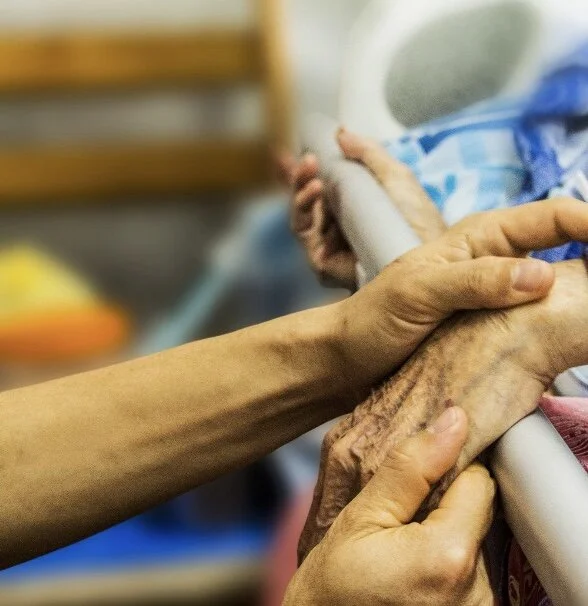
I did some math and can claim thirty-nine years in the field of volunteer resources management thus far (twelve of those in hospice), which adds up to thousands of interviews, thousands of connections between those who need and those who have. I stand in the middle, directing the traffic of selflessness toward the steady flow of humanity humbled by circumstance, a few miscalculated choices or just rotten luck. My colleagues and I in a hospice setting get to see people at their best alongside those at their worst and the gift of transformation that only volunteer service can set in motion. It’s my job and my joy to responsibly bring them through the halls of onboarding requirements and then quickly get out of their way, watching them tend to the final touches of a life well-lived, a bucket list not quite finished and the hard but necessary work of goodbyes. For no pay, these teammates of ours enter the rooms of regret and wistfulness, celebration and relief with equal respect and their undivided attention. In the end, that’s really the best gift anyone can give.
And it doesn’t stop at the bedside. They make gowns and neck pillows, sell hot dogs to patrons at our golf outing, snapping their foursome photos to hang on the company’s philanthropy wall back at the corporate office. They draft sympathy cards for clinical team members to sign and send to family members, and look at far too many spreadsheets to make sure the data they entered into them are correct. They fold letters into thirds and slide them into envelopes addressed to aunts and friends and coworkers who made a donation in memory of a loved one. They sit in a circle with 6-year-olds at a weeklong grief camp helping them glue photos of their grandmothers or siblings or parents to a cardstock cutout angel and send kites with handwritten messages of love soaring to the skies. They submit their timesheets with grace and gratitude for the chance to serve, to ease a burden and lift a heart.
I’ve encountered quite a wide and colorful swath of human nature these past four decades and there are no signs of it slowing down. Respect and a solid code of ethics will continue to keep the specifics carefully wrapped in confidentiality but rest assured, there are far more good souls doing good works than those seeking to sabotage the whole enterprise. I see them every day, the light in their determined eyes and the callouses on their unflinchingly gentle hands. Not afraid of hard work, they are comfortable in the awkward silence of questions that have no answers; they offer up smiles that will convince you hospitality is not a lost art but alive and well on the 12-bed unit where a wife squeezes her husband’s hand for the last time, bringing fifty-nine years of marriage to a close. They sit with her in the visitors’ lounge while the aides bathe his body and comb his hair. On their shoulders and in their hands, the future of healthcare is secure.
I’ll be tired by Friday. But if I’m given all the days in between this writing and then, it will be a rich and rewarded kind of tired.
It’s just the company I keep.

Thirteen Months
Timing is everything if you want to see stuff around here.
If you’re all about the quiet, the best time to walk the land is 10:17a.m. on pretty much any weekday, or Sunday morning around 7:35. In late May. After Patrick has smoothed off the path with the mower the previous afternoon.
As the pandemic subsides and we gradually emerge from our cocooned manner of living, my current paid gig with health insurance and other benefits likes to see me at the main office M - F by 8:30 latest. To get there on time, my daily walking Ritual needs to begin right at the same time the good residents of Mt Vernon come flying down the two-lane road that connects them with their respective employment destinations. We’re tucked back about a mile from this flurry behind a thick wall of tree line and farm fields but for all the tires whining on the asphalt in rapid succession, occasional horn-honking and jake-braking, you’d think I was running alongside. I don’t mind. I’ll be joining them right after I shower and pack my lunch, earning an honest living that lets me begin and end my days in a landlocked lap of beauty that just keeps on giving.
But on the weekends (Sundays only during farmers’ market season) I let the first light of day pull me from beneath the covers and away from Patrick’s steady breathing to move my feet gently through the grass and join the silence of the woods on the one day of the week I’d be allowed to sleep in. It’s worth it.
I’m coming up on a full year of walking the land nearly daily (see “Survival” from February 7 for a more detailed account of the knee-deep snowfall that kept my orbit smaller for about five weeks) and have committed to memory the subtleties of how she unpacks and arranges her day. Before the sun’s shoulders lift the sky’s cover of darkness (on the clock that would be around 5:20a.m.), the birds are already at it, trying to out-sing each in relentlessly cheerful fashion and I can barely hear my own thoughts so I suppose it’s best not to think at all and just be drenched in their sound (I haven’t used an alarm clock for going on ten years). Any straggling raccoons wrapping up their night’s activities are making their way through the creek as I pass by and barely register the swish of my footsteps through the sawgrass that’s too close to the banks for Patrick to mow safely without tumbling into the drink. A tawny doe raises her head and looks right at me, daring me to move. Had I slept five minutes longer or lingered over the morning dishes we’d have missed each other. Timing is everything if you want to see stuff around here.
Then, around 7:12a.m., as if muted by some hidden universal remote, the full-chorus cacophony is replaced by the random calls of towhees and mockingbirds in a polite back-and-forth discussion about the current events unfolding on the forest floor. Observed from their perch in the growing-ever-more-lush canopy, their commentary is succinct and accurate. I walk carefully beneath their conversation with my head down and my ears on high alert, grateful for the surgery I had back in 2004 to replace both stapes bones (a stapedectomy, if you’re wondering) with delicate platinum prosthetics that would fit perfectly on the tip on my pinky. Thanks to those 4mm lengths of metal, I can hear what matters to the birds.
This morning I stood at the place by the creek where it bends and slopes through the meadow on it’s way toward the bridge and remembered the snow that just two months ago thickly covered the leafless arms of the towering black walnuts and sycamores along the banks. The clear cold water had sung itself across the rocks as I rested my hands on my hickory walking stick, eyes closed and following the sound with my heartbeat. Can this really be the same place? Tall stalks of wild grasses and hogweed have now turned the scene Jurassic and the water has slowed to a trickle; I have to strain those well-placed platinum filaments to hear it. But I do because that’s the arrangement we have each morning. She whispers and I listen.
For thirteen months, I slowly knitted my day’s activities and routines to hers, working from home as advised and allowed. Such a gift, to witness the unspooling of the days from both sides of the windows of our humble home. Her rhythms intimately became my own and we learned much about each other. Winter felt longer because I had a 24/7 front row seat for its performance, interrupted by sleep and daily work-focused screen time. But even as I replied to emails, I knew what she was about. It seeped through the walls, poured in through the curtains and filled each room right into the corners where the spiders napped between meals. I came to know what the stand of volunteer mulberry saplings looked like at 10:17a.m. and 2:30p.m., saw the sun slowly shift its rising position as the earth rotated and turned its face toward another spring equinox. For the first time since we lived here, I really lived here, inhaling the days’ work and exhaling the nights’ peacefulness. I can’t recall feeling more attentive and awake. The only other living being who gets this much of me is Patrick.
It’s going on six weeks now, commuting again to my windowless office only eighteen miles away, but it feels like the other side of the world. I know the land gets along quite well without me, but I hope she misses me a little. I imagine the towhees and mockingbirds swapping stories while I interview volunteer applicants and print copies of their TB test results for their files. Salamanders I can’t see are darting across the wet stones of the creek bed where it bends through the meadow and the ebony wings of a laughing crow catch the sun’s rays, turning them iridescently purple and midnight blue for a flash of a second. Between virtual meetings and Medicare reports, ants move miniscule bits of soil and oak leaves transform sunlight into food, hoping the locusts arriving this year will pass them by. We’ve all got work to do, don’t we?
Until I no longer need to leave this place to pay for this place, I will hold in my full heart thirteen months’ worth of sacred images and sounds that have forever changed the way I understand the pulse of creation. I can’t tell where she ends and I begin, and so I’m going to stop trying.
It’s far better to just wake up, put on my boots, and keep walking.
Spring Cleaning
Our home life back then had many moving parts and as children, we just presumed it was up to the taller humans in the room to take care of keeping those parts aligned, easy to find and working properly.
I’ve been brooding about the chicken run.
It’s a mess—stones scattered everywhere, bits of branches from last fall’s tree trimming project strewn from one fenced wall to the next. Random divots pockmark the dirt and an uneven stubble of nettles, burdock and young blackberry vines fill in what’s left. Every morning on my way to toss a scoopful of grain on the ground and release the girls into the day, my foot will connect with one of those stones or branch cuttings and I’ll wobble a bit off course, stopping short of twisting my ankle. The hens burst out the door, unaware of the squalor that has become the three-season porch to their painted plywood home. Well, perhaps “squalor” is a bit harsh. They’re chickens. They’ll burrow and sit for hours in the dry dusty soil for their summer dirt baths and eat leftover spaghetti right off the ground where we tossed it, without complaint. I should be so low maintenance.
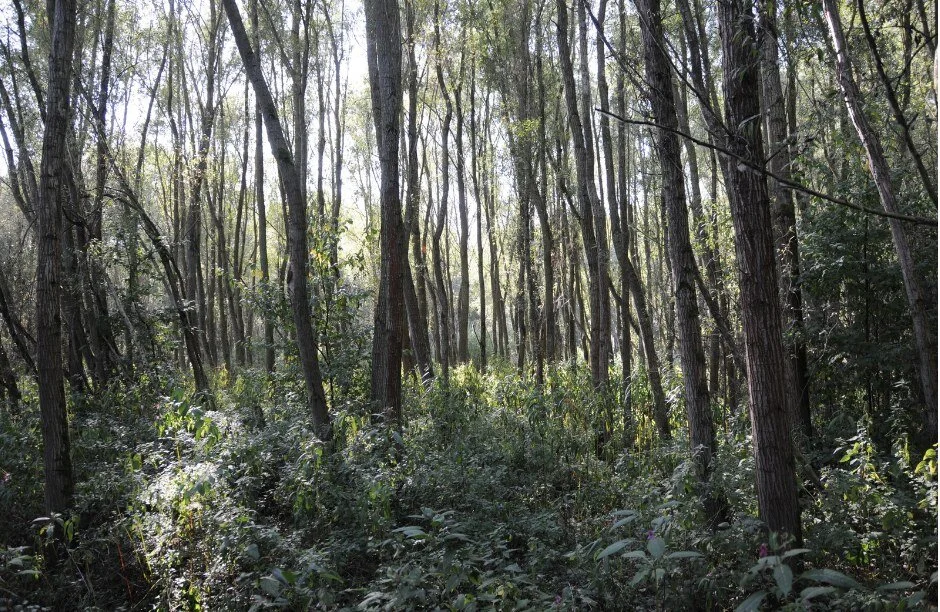
There’s something in me that wants to tidy up around here though, and the chicken run is only the beginning. On my daily walks through the field, I make note of brambles gone wild, reaching their thorny arms well past the established boundary of the cut path. Fallen limbs lurk beneath the forest floor’s thickening new growth of mayapples, trout lilies, miners’ lettuce and the just-born saplings thrown from nearby shagbark hickories and blue beeches. I don’t want to disturb this delicate nursery, but shouldn’t those limbs be gathered up and stacked for heaven’s sake? It would look neater. I hesitate to say anything but think it nonetheless as I stand in the midst of such untamed space: clean this place up! My mother’s voice echoes and swirls to become my own. The Liz apple didn’t fall far from the tree and of course I’m going to reach down to pick it up. Dropped things can’t just stay there now, can they?
Mom and Dad raised five of us for several years before adding our maternal grandmother to our household census. That’s eight people and their things under one roof. Keeping a ranch-style suburban dwelling tidy demanded group participation on a regular basis, and with four of us navigating our way through adolescence at the same time, collaboration toward the “tidy” goal was episodically successful at best. Dad was quietly meticulous about his own stuff—he had a den with a door that shut so he could pay the bills and make notes on his client’s files in peace, and none of us kids dared to cross the threshold without permission (he also had a workshop in the basement. Sawdust was allowed to sit, but his tools were always put away after each job). The den was the room of Serious Importance, and much of what took place within those sacred walls was a mystery until we moved out and understood the weight of paying our own way through life. We came to appreciate the necessary gift of solitude when it came to contemplating and managing one’s future. It’s a lesson I still cherish to this day.
Our home life back then had many moving parts and as children, we just presumed it was up to the taller humans in the room to take care of keeping those parts aligned, easy to find and working properly. Mom wasn’t having it, though, and said as much: “two people can’t clean up after five!” (the maternal grandmother was exempt from clean up duty, though she’d wash your plate mere seconds after you’d scraped off the last bite). Saturday mornings were all about folding laundry (Mom allowed some cartoon-watching in the family room while we did this chore, calling out motivational reminders from the kitchen when our hands would stall and hover over the basket of warm-from-the dryer towels as we fixated on Bugs Bunny’s antics), dusting and polishing the antique furniture (my favorite was the baby grand piano—it was so shiny) and scrubbing the tub in the big bathroom. We may have grumbled our way through some or most of those assigned tasks, especially on particularly bright and beckoning summer mornings, but even we learned quickly how good it felt to see the sink sparkling clean and a full drawer of clean underwear to get us through the week ahead. I’m sure Mom smiled smugly offstage as she watched each of us develop our own self-directed cleaning practices, all the while reaping the benefits of having five semi-professional maids-in-training helping ease her daily housework burden.
Let me say clearly that Mom was no rigid drill sergeant. We had plenty of time to play and ramble about with our own budding youthful agendas, and she indulged any request for a musical sit-down next to her on the bench of that baby grand piano, no matter what she had been doing when we asked (dishes, resting, crossword puzzles, talking with Mrs. Schwartz over the backyard fence). Were any of you to come visit my home today, you’d draw a few sharp conclusions about how faithfully I’ve kept to my own Mom-inspired cleaning practice (I bless the pandemic at times for forcing restrictions on visitors for the past year, but…it shows). To be fair, I think we manage our life’s rhythm and accumulated stuff pretty well for two folks who have full-time jobs and a shared side-hustle of making and selling granola at a nearby farmers’ market. There’s always room for improvement. We make valiant efforts to declutter regularly, almost daily in fact, and yet while we’re asleep our things reproduce or go into hiding and we spend a Sunday afternoon gathering the detritus into bags and boxes for the local thrift store. Some days, we’re content with just having a place to sit; the dust and unfolded laundry can wait.
It’s at times like these that I take my scrutinous eye outside and add to my workload by insisting the forest floor be swept clean, tidied up and made presentable for company. I’m sure the raccoons and tree frogs watching from behind their leafy perches are scratching their heads at my doggedness. Humans…what odd roommates. Of course I don’t succeed and the woods keep growing thick and wild without my help and the residents don’t mind a bit.
That’s when I learn again for the fiftieth time that while the pursuit of order from chaos has its virtue, there’s also a need to embrace the simplicity of letting things go about their business, even for a bit. Leisure climbs easily to the top of our list too, and we need it like the air we inhale. I think if you did come to visit, you’d be far more forgiving than we are about the state of the place. In fact, I’ll bet you’d find it charming and sweet how the tips of the wild raspberry vines along the driveway curl tenderly around the nearby branch of a black walnut, holding fast. We’ll pluck fruits from that vine in a few weeks and I’ll forget that I cared how out of control it looks today. If you’ve ever eaten those raspberries warm from the vine, it can rearrange your priorities pretty quickly.
For now, I give you this verse from Robert Herrick, an 16th-century poet who knew what mattered when it came to keeping things tidy or letting them be a bit out of place. Plucked from my early high school memories, it shall be a work to study as the season of unbridled growth continues to unfold at our bare feet despite my foolish attempts to tame it.
Delight in Disorder
A sweet disorder in the dress.
Kindles in clothes a wantonness;
A lawn about the shoulders thrown.
Into a fine distraction;
An erring lace, which here and there
Enthralls the crimson stomacher
A cuff neglectful, and thereby
Ribands to flow confusedly;
A winning wave, deserving note,
In the tempestuous petticoat;
A careless shoestring, in whose tie
I see a wild civility;
Do more bewitch me, than when art
Is too precise in every part.
The Tall Grass Can Wait
The minute we step outside, there’s a project in every direction, and each one is jockeying for that position at the top of the list.
The lawnmower is broken, so we headed into Columbus today to visit with our nephew and his lovely bride-to-be.
Actually, it’s not that cause-and-effect. We would visit our nephew and his lovely bride-to-be whether the mower was working or not. But we’re at that point in the season when we keep a closer watch on the skies and hope against all odds that it rains during the week while we’re at work. When a dry Saturday rolls around in mid-spring, it sometimes means making hard but understandable choices between time spent with family or being up to our knees is mature compost, a fistful of seed packets tucked into the back pocket of our jeans. A sunny weekend on the land is worth it’s weight in the future carrots we’d like to plant without having to dodge the downpours. In our early days here, we’d invite those beloved family members to come spend the day (we simply imagined them being near, honest. It wasn’t some covert attempt to con them into giving us free labor) and soon they’d be gloved and walking behind us with armfuls of straw to cover the tender ankles of our fifty-some tomato seedlings. We consider it the pinnacle of good fortune and grace that they still agree to come visit us at all.
That’s how it is when you take on a section of acreage miles away from concrete and convenience. The minute we step outside, there’s a project in every direction, and each one is jockeying for that position at the top of the list. We could almost hear the grass begging for a haircut, but the combination of rain and weariness at the end of our respective work days kept the mower dormant in the barn all week. Patrick grew restless seeing the grass getting taller until he finally had the time and energy to start the mower Friday night and nothing happened. After an hour’s worth of mechanical attempts, restlessness turned into outright audible frustration (still catches me off guard how sound travels across the acreage here. A well-placed bit of profanity moves easily up the slope and around the back of the house when I’m taking the laundry off the line) until it was clear the repair was beyond his reach. Might as well pack the car for the market, then, and be grateful for an evening spent together on the couch.
The invitation to spend Sunday afternoon with Robbie and Collin was offered earlier last week and with such enthusiasm, it was impossible to resist. This would be yet another fully vaccinated and unmasked encounter with two people we love and missed sorely these past fourteen months, and if that wasn’t enough, we’d be treated to a delicious meal from the restaurant they’d chosen to cater the wedding reception. We drove into town and opted for carryout orders to take back to their apartment. Since the place was close, we walked through the neighborhood to pick them up.
Both Patrick and I knew the area well, having each lived there in our pre married-to-each-other lives. The slate sidewalks had shifted over time (real toe-stubbers if you’re not paying attention and near impossible to navigate on a bicycle), and the narrow brick streets rumbled beneath the tires of passing cars as we walked past closely-packed houses with barely two feet of space between them. A gorgeous and varied array of irises stood proudly in front yards, their long ruffled-edge petals fluttering in a sun-warmed breeze. One young man was taking advantage of both the sun and the slope of grass in front of his house, using it in place of a bench to press two twenty-pound weights over his head and shoulders while his roommate swept grass clippings from the path leading up to their door. I looked over my shoulder at Patrick, walking behind Collin and me, and caught his eye. Don’t worry, honey. We’ll be raking up grass clippings of our own soon. I promise.
A flood of pleasant memories washed over me as we made our way back to the apartment with our food, taking a different route through alleys and back streets that butted up against the boundaries of the park where I used to ride my bike most mornings. I’d log fifty miles round trip on a path that touched the banks of a river and dripped buckeyes from the trees in the fall. It all came rushing back, that time in my young adulthood when being on my own was precisely what I preferred and I happily paid the bills that sealed my independent way of life. Looking back, I remember feeling content in my circumstance and unable to imagine making any sort of serious commitment to someone else (of course, meeting Patrick was a variable I’d not factored into my future as a happy single person. Let me state freely and with great joy: I have no regrets). Now here I was walking beside my beloved of nearly twenty-eight years, behind two young ones about to step into a similar understanding with each other, in a setting that held different memories and images for each of us. I let the significance of the moment sink in and grow roots as deep as the ones beneath the oak trees that towered over our heads, their freshly unfurled leaves rustling and whispering promises of a cheerful summer filled with more reunions, more hugs and more walks in familiar places.
A broken lawnmower’s unexpected gift to us…
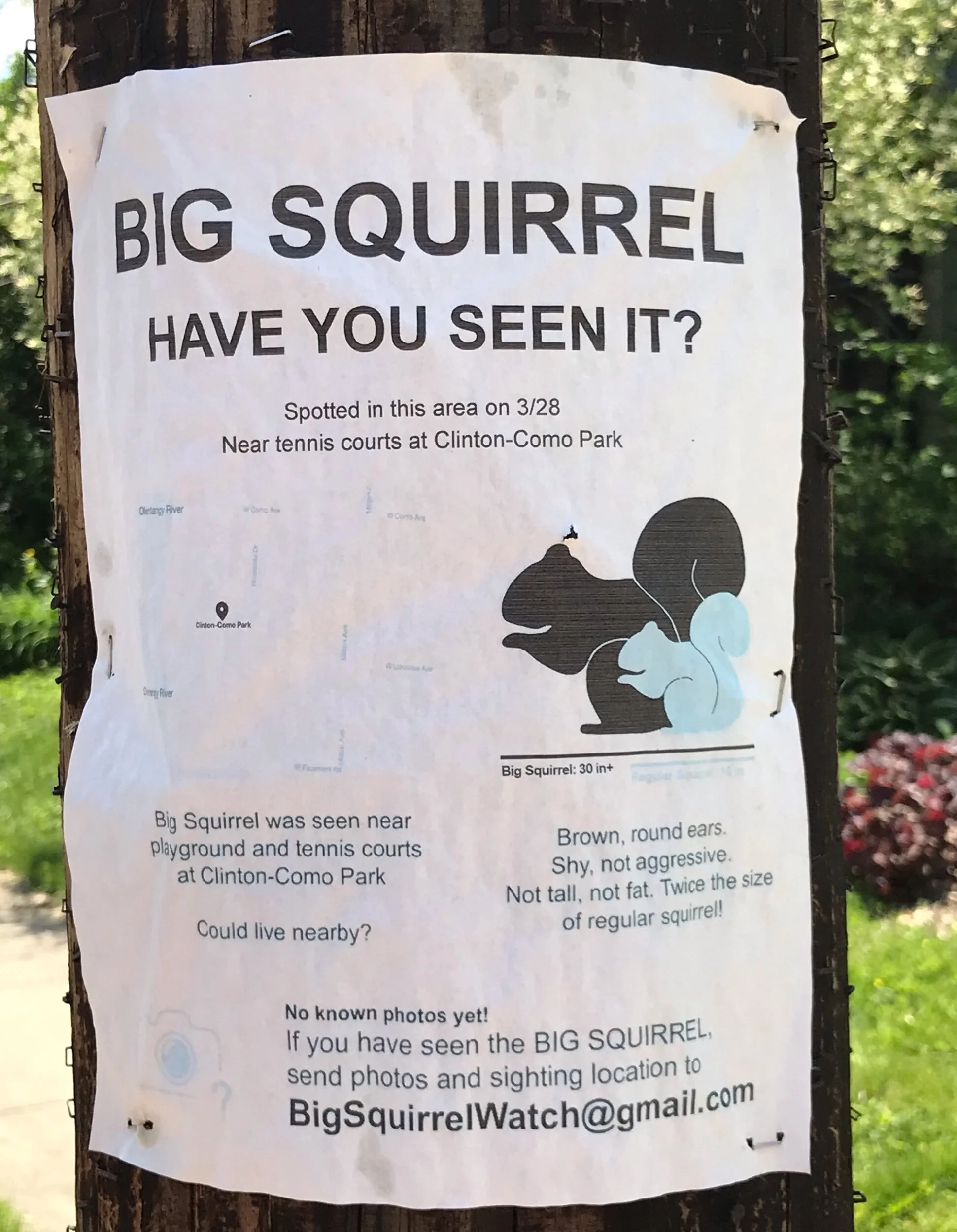
(A word about the sign in the photo that accompanies this reflection—Collin made sure we stopped to read it, filling in details about when it was first posted and how the good residents of the neighborhood wanted simply to record this Big Squirrel’s activity. No hunting expedition resulting in a trophy stuffed and mounted on someone’s mantle. Just a gentle and friendly acknowledgement of this relative’s presence among them. I call that good form and feel confident that if we ever did need to return to a more urban setting, I’d feel safe coming back here and living out my remaining days in the company of such kind and curious hearts. Sometimes, you can go home again).