

Another Sunrise
Do not fear growing older. It is a privilege denied to many.
Through a sudden and thick fog east of the athletic center at Kenyon College I could just make out the shape of my red Tacoma, parked on the flattened grass with a handful of other cars, some with bike racks bolted securely on their tailgates. My niece Andi and I had been up well before dawn; I had the honor of driving her to the starting chute for the second half of her 200-mile fundraising ride for cancer research, and after a cheerful disembodied voice counted down the start, I watched her pedal slowly into a mist-shrouded sunrise, her cycling posture at once relaxed and determined. She and her fellow 300 or so cyclists selflessly greeted the promise of another grueling and satisfying day.
My shoes were dewy wet when I climbed into the truck. I pulled out my phone to send a text message to her ride support group and reassure her mother, my sister, that she’d gotten up and on her way just fine when I noticed the news alert about yet another mass shooting in less than 24 hours—the first in El Paso, Texas and the most recent in Dayton, Ohio. 9 people killed, several wounded; it was too early to know exact numbers, or if there was a second shooter. Headlines started rapidly doing the casualty/victim math for both shootings as I bounced from one news source to another, scrolling for more details. Behind me, 300 or so cyclists might or might not know the what had happened as they pumped their way up a steep and tree-lined hill, cancer survivors and departed loved ones riding tandem in their minds, heavy on their hearts.
Another sunrise. Another chance to do something right and good. Another day unfolding the worst nightmare for the ones left behind with unanswerable questions and now-stinging memories.
As I drove home through the deserted morning streets with the sun burning off the fog, I prayed for the safety—emotional and physical—of the people on those bicycles. My mind hung onto the families and friends of those shot in Dayton who were just learning how bad their loved ones’ injuries were, and I thought of the collective psyches and souls of my fellow human beings, wondering how much more our violence-weary spirits could bear. I know what’s coming: thoughts and prayers from elected officials, social media posts and comments arguing about the Best Way to put an end to this madness, vigils scheduled at local faith communities, the word “enough” forcing its way to the front line of our vocabulary. Again.
I’m writing this, so I was given another day to fill with accomplishments both remarkable and mundane, and as the west glows a burnished gold, I’m redefining “remarkable” in the new and tragic light of this morning’s horrible news. Remarkable now means walking out to fill the busy birdfeeders, making three batches of granola before lunch, and keeping the kitchen clean. I made it to and from my niece’s post-ride celebratory lunch safely, where I sat next to my brother, whom I haven’t seen in over a year. My husband has been outside working with heavy lumber and power tools, and his limbs and digits are still attached and functioning just fine (no surprises there; he’s our household’s self-appointed safety director, which is why I’ve not been on any bike rides in our two-lane curvy-road neighborhood in years).
At this exact moment, I feel deeply the need to renew my inner commitment to take nothing—Nothing—for granted. I’ve seen hard times, scary cliff’s-edge moments and near-misses. There are scars that hide the details of my life’s stories, which I’ll disclose (or not) someday. Yet here I stand, or sit, with another sunrise in my ledger (if I were even keeping track), and another sunset about to be added with humble gratitude. Somewhere out there, a philanthropic cyclist is icing down her muscles and putting away her “in honor of” jersey until next year’s ride. And somewhere out there, an exhausted father is looking for that one photo of his son, the one with the two of them mugging for the camera on that fishing trip, to add to the collage that will grace a table at the funeral home’s calling hours, once the body is released by the local authorities after their investigation and evidence-gathering is finished. Some will know the triumph of crossing a finish line, and some will realize that every good thing they’ve ever imagined and dreamt of has been turned upside down and shaken violently forever.
My niece finished and made us all proud. She rode for those who couldn’t. She cares, like so many of us do. Together we will find our way through this latest darkness. And if the sun rises again tomorrow, we’ll have another chance at the starting chute, poised and ready, and willing to do what we can do.
Get a good night’s sleep, dear ones. We’re gonna need it.
The Bridge to Everywhere
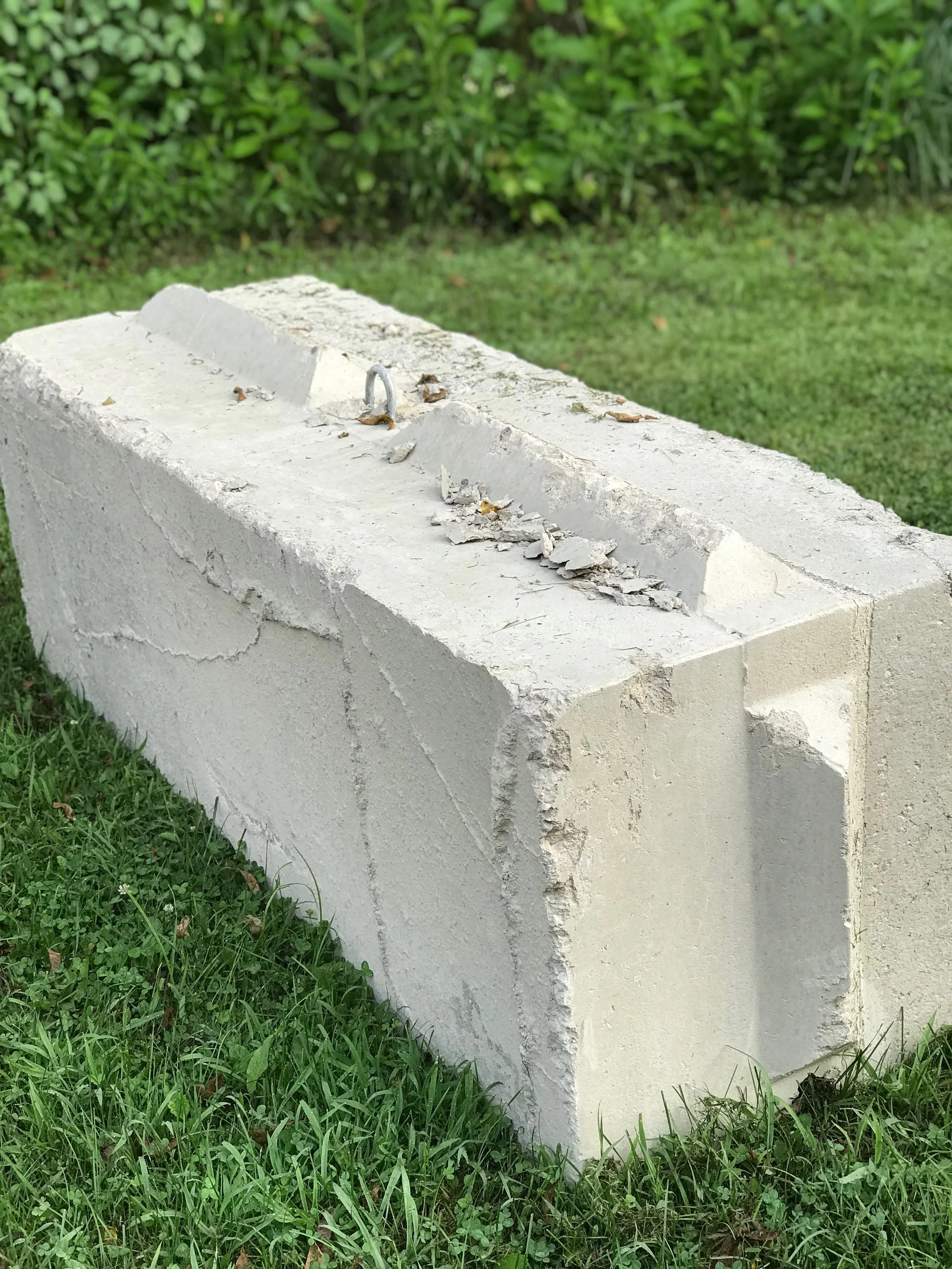
Twenty-two concrete pier blocks were unloaded on the west side of the driveway last week, on the house side of the bridge, and two 24’ steel I-beams sit on the slope between the house and the old old goat barn, scrubbed and painted painstakingly with four coats of rust-proof liquid magic that promises to extend their life into our 80’s. Reflecting on a lifetime of dental appointments in my own rear view mirror, it’s a relief to experience a different kind of bridgework. It’s also a relief to have hired out this latest Big Project to a crew of experts instead of trying to tackle it ourselves (still chipping the excess dried joint compound from the door frame in the mudroom…).
The current bridge is not the original, entirely. Fifteen years ago in the final days of a sunny October, Patrick rebuilt the deck with 6x6’s and rented a Bobcat with a forklift attachment to remove the rotting moss-covered railroad ties that grudgingly received the weight of our trucks for too many years. He let me maneuver it solo as I positioned the pointy ends of the forklift underneath a section of decking closest to the bank, and I felt all accomplished and tough until the machine slid too close the creek’s edge, the now-freed plank teetering precariously in the gap between the forklift’s blades. White-knuckled, I shifted the gears and inched it slowing backwards while Patrick called out encouraging “atta girl!” words from ten feet away—he could do little else, since the cab of this Bobcat was single occupancy only. I climbed out and gratefully registered the feeling of solid ground beneath my feet and well away from the steep creek bank, taking off my gloves (a sure sign that this gig was over). I was glad to relinquish my seat behind the wheel and head back to the house to make pulled pork sliders and coleslaw. If that pushed the women’s movement back a few years, I apologize.
Patrick’s re-build took about two weeks, and I remember how we parked our vehicles on the street side of the bridge so we could still make a living Monday through Friday. I’d wear my farm boots to walk across the make-shift bridge of plywood he’d put down over the sub-deck slats, and change into something slightly more stylish and office-appropriate when I got to work, then reverse the process after I’d backed my truck down the driveway at the end of the day’s commute. It felt cool and inconvenient at the same time.
For this new re-build, the logistics are much more involved (hence the crew of experts who own their backhoes and bucket attachments), and I’ll be wearing taller wading boots as I climb down the creek bank on the north side, traverse the now-shallow run of babbling waters to the slightly-steeper south bank and dodge the poison ivy that clings to the towering black walnuts, change my shoes in the car, and head out to shuffle paper, answer phones and make decisions at the office 18 miles away. When I asked Patrick to run a guide rope across the creek so I’d have something to hold onto, he smiled and didn’t promise anything. Summer being as far along as it is, and the weeds on both sides of the creek well-established, I’m hoping he’ll at least cut a path, but I’ve got my rusted antique scythe propped up by the front door next to the walking stick Jeannie gave me for my birthday (just need to remember where I put my Hello Kitty backpack, and I’ll be all set). We’ll re-purpose those 6x6’s because they’ve got plenty of use still left in them.
In the twenty some years we’ve been here, that short stretch of steel and wood and labor has kept us connected in both directions to aspects of our world that both feed and try our souls on a daily basis. Yesterday as I was helping Patrick take apart the side rails (saving the crew about two hours’ worth of work, and us a couple hundred dollars), I felt my bones and muscles relax into our immediate surroundings: lush leafy tree branches overhead in random crisscross patterns, the local catbirds and finches flitting about taking care of their own feathery to-do lists, and the curves of the creekbanks framing it all like a summer vacation postcard. I realized just how little time we spend actually standing on the bridge as opposed to slowly driving over it to arrive somewhere else. It was pure contemplative luxury to give our hands over to a project that required us to linger on the bridge’s deck for more than a few minutes and gaze more deeply into the narrow wooded waterway that still held so many secrets. Sitting on the tailgate of the Tacoma for a well-deserved break, we traded memories and it felt like being on a date. Sweet.
In previous posts, I’ve described the flooding we’ve witnessed in recent years and so won’t fill space by repeating myself, but in my mind’s eye, those indelible images of not being able to see the bridge deck at all are hard to ignore as we stand securely on those 6x6’s with unconscious trust. These lengths of solid wood were under water, fiercely rushing water that carried all manner of silt and rocks and fallen tree trunks, battered by the force of it all, and yet, here we stand without a wobble. As we unscrewed bolts and carried rail posts to rest for now on either side of the pock-marked gravel driveway, we spoke the words aloud and with amazement. It was at once testament to Patrick’s engineering and construction skills, and unexplainable phenomenon wrapped in a physics we don’t quite understand and magical thinking that makes the story that much more fun to tell.
This humble bridge has taken us places and welcomed us home. From the first few moments of apprehension-turned-wonder when we drove across in the real estate agent’s SUV, to our travels to the grocery store for apples and water softener salt, and longer road trips that involved truck stops in seven states, those wooden planks and steel supports remained in place, offering safe passage to those who cared for our animals while we were gone. It willingly received the weight and wheels of the propane truck in the fall and mid-winter, the grass truck when the barn burned down last summer, and the occasional errant motorcycle driven by a lost tourist who thought our driveway was a secret path to some hidden paradise (he was right, of course, but politely turned around and sped off, leaving behind apologies for disturbing our privacy). I’m sure I could tally them up, but for now let’s say that nearly countless baby chicks made their way in cardboard mailing boxes across that bridge to take up temporary or permanent residence (depending on their purpose) in the field behind the house, and precisely 47 Boer goats made it across at least twice before we closed the book on that livestock enterprise ten years ago. It brought us city friends, siblings and their children, new UPS drivers who didn’t know to leave our packages in large billowy plastic bags tied to the electric pole at the end of the driveway, and our neighbor Jean with a plateful of her peanut butter fudge that we savored for as along as we could make it last. Whatever the flood waters may have washed across that deck, the wood is still saturated with the rich and flowing memories of our comings and goings, twenty years’ worth and counting.
When we christen the new bridge later this week, we’ll do it up right with some carefully-selected adult beverages and well-chosen words of gratitude. There are more journeys to come, we know, and as we cross over those concrete piers, rust-proofed 24’ I-beams and repurposed 6 x 6 planks, the connection between what lies ahead and what waits for us at home will go on, we hope, well into our 80’s.

There’s Something About Summer
I think it’s the blueberries.
Or the way lightning strobe-lights the sky on a humid night.
It could be the almost shapeless sense of time that is July, yawning and suspended in between the radishes we ate in June and the spiral notebooks and backpacks waiting to go on sale in August.
Or days when we’re one gill away from being fish—the ground below us is wet, the air is thick with moisture, and the rain keeps coming down. We’re inhaling water, walking through water, becoming water.
Then there are the fireflies…glittery diamonds on the tall grass, or the newly-mown grass, only slightly diminished in numbers but just as determined to find a date before dawn.
It’s squeezing in another week-long trip with the children in tow, passing plastic cups of juice and Cheerios to the back seat and pointing out a rare galloping horse when most of the cows just stand amidst the scenery in perfect stillness as you drive by.
It’s farmer’s markets in full tomato-y bloom, with Bull’s Blood beets and basil on the heels of a late crop of rhubarb and the promise of sweet corn.
And what about those towering and billowy clouds, defying gravity and unfolding from some secret place within, changing from dragons to bunnies in the blink of a 4-year-old’s watchful and delighted eye.
It’s feet on the grass and the soil, not a flip-flop anywhere in sight.
It’s pool noodles and block parties and yard sales and people being neighborly.
It’s the perfectly-timed breeze that brushes the sweat from a highway worker’s forehead and makes her smile as rush hour traffic crawls by.
And it’s ice rattling in the tumblers that hold colorful blackberry mojitos, or cucumbers and mint floating in a gallon-sized glass jar of chilled water, a silver spout at the ready to offer relief.
Spring’s baby bunnies are now fully-grown and gamboling about the lettuce rows on the other side of the chicken wire fence we thought was rabbit-proof.
Equine and dairy and goat princesses stroll the dirt paths at county fairs in between the Tilt-a-Whirl and the ring toss game stand, in sleeveless sundresses, wave from hay wagons and spoon snow cones into smiling mouths.
It’s toddler and adolescent heads bobbing in the public swimming pool down the street from where you live, munching on pretzel rods during the 15-minute breaks when the grown-ups get the deep end all to themselves.
It’s setting the table at 9:30 and eating dinner at 10:30 because heck, the sun just went down forty-five minutes ago and who cares if we leave the dishes soaking in the sink until morning? What’s the rush?
What summer gives us unrestrainedly is permission to slow down our gait, to dawdle and trail our fingers in the lake of utter relaxation, all entitled and guilt-free after a hard winter and a non-stop spring. The invitation to bare our shoulders to the sun is irresistible and so we do just that, and keep the bottle of aloe gel in the fridge in case we forget to come in before sunset. Surrounded by everything green, and riots of floral colors, we sink in up to our chins and float, watching as our more industrious agendas blur at the edges. They’ll return soon enough, just as soon as we get lunches packed and the kids on the bus.
For now, eat the blueberries and go barefoot. You won’t regret it.
I promise.
Breaking Up With Stuff
Three weeks after my dad died, I went to visit him after work on a Friday, like I had done for more than four years.
Twenty five minutes into the hour-long drive, I remembered he wouldn’t be there. His bones and any remaining unfinished business had been laid to rest more comfortably at a cemetery fifteen miles northeast of the semi-private room at Westminster Thurber Retirement Community, where he breathed his last and we toasted his accomplished life with the last three Coronitas he had in the dorm-sized fridge by his bed.
Grief is a powerful filter that sometimes erases the carefully-drawn frame of reality.
It was three miles until the next exit, so I used the time and distance to consider the new set of options to fill the two hours I used to spend sitting with dad in the dining hall while he ate dinner. I knew of a large antique mall just off that approaching exit, packed with all manner of other people’s memories. The prospect of a slow walk through the narrow aisles felt better than going straight home, and would help me unfold what had just happened. I exited, parked, and walked out of the sunshine into the halls of what used to be owned by folks I’d never known.
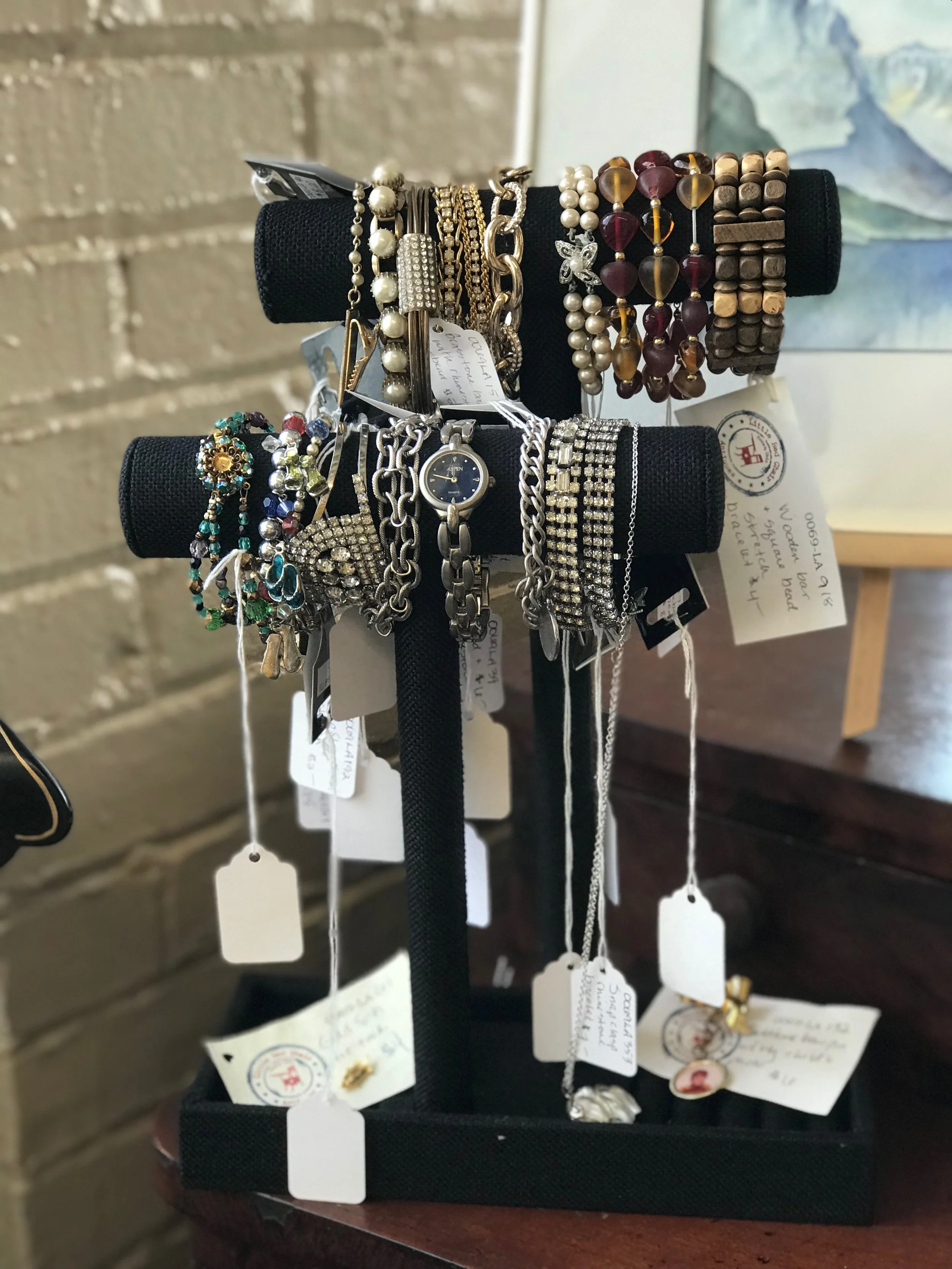
At about the fifth booth, I saw a familiar something or other—hey, we had one of those once. I wonder what happened to it?—a refrain that repeated in my mind until I left the shop two and a half hours later. It was strangely reassuring, spending time among the dust and detritus of once-loved objects both functional and frivolous, bringing my own memories forward into the light of this recent gaping loss. I touched each item for more than a moment, and may have purchased one or two. I can’t remember now. I returned the following week, and the next, and a new Friday after-work ritual trickled into the space where dad used to be.
I grew up surrounded by old things—both living and inanimate—and collected stories right along with rabbit figurines and tiny perfume bottles. In the Shaker-style hutch in the dining room, mom kept little plates with flowers on them, a blue and white tea set she had as a child, two salt-cast lambs (one pink, one tan) and several cups without saucers. Over the years, other treasured pieces found places of prominence behind the wavy glass cabinet doors, and on summer days when we didn’t have anything to do, we’d reach in and touch the past, begging for the stories that brought these items into our family’s story. I can’t recall a time when I wasn’t sentimental about stuff. Those plates and perfume bottles weren’t just from mom, they were mom, or at least a part of her spirit. That was my view for decades, and up until quite recently, my own crowded home reflected that.
After about a month or so of weekly pilgrimages to this and other antique shops, my sisters and I decided to shape an antiques business of our own. That was seven years ago this past May, and in the time that’s transpired, I’ve bought and sold antiques, plucking vintage Pyrex from thrift store shelves and nodding at auctioneers to secure the highest bid on box lots of lace, wooden spools, and soft faded aprons. I’ve learned about period furniture and eaten off of it, amassed an impressive Sadler and occupied Japan tea set collection, and indulged my affection for mid-century modern mosaic tile ashtrays. On Patrick’s and my travels to Savannah, Chicago, Iowa, South Dakota, and the Hocking Hills area of Ohio, we’ve loaded the back of the truck with tottering (yet carefully packed) piles of retro metal kitchen food carts, wooden ammunition and cheese boxes, floor lamps that I’ve taught myself to rewire, and school desks from the 50’s that were awkward for left-handers to use. Some of these we sold, others we added to our daily routines. And that’s because I want to live in a home and not a museum. When considering a purchase, I leaned heavily toward those items that I could wash and dry and hang outside on the line, or tuck into the cupboard with the rest of our dishes, or rest our feet on in the living room. Things, not just people, need to be useful.
One of my dear friends has been inordinately generous, giving us furniture and other pieces whenever she’s redecorated her own space. Every room in our home bears her thoughtful touch, from the Hoosier-style cabinet where that tea set collection resides to the primitive blanket chest that serves as our coffee table and occasional footrest (and jumping platform for the kittens). A solid tiger oak sleigh bed welcomes overnight visiting friends in the downstairs guestroom; they owe their deep sleep and pleasant dreams to Jackie.
Through all these years of collecting, selling, finding and flipping, my relationship with stuff has ebbed and flowed between the shores of “just one more auction” and “let’s see how much we can pack in boxes and give to Goodwill”. We’ve tried implementing the rule that if something “new” comes in, something else needs to leave, with varying degrees of commitment and success. Cleaning out a room in the house was a reliable rainy day activity, and a few times, those boxes of stuff would include a thrift store item with the price tag still stuck on the bottom; we saved the good folks at the Goodwill the trouble. But as I grow older, I find myself longing more for monastic simplicity rather than living in the Antiques Roadshow’s attic. I imagine shaking hands with Mike and Frank from American Pickers, and watching them climb like mountain goats over the mountain of auction booty that waits patiently in the old old goat barn to be adopted by the right forever family.
So, one Friday, after I’d hit my week’s worth of 53 work hours by noon, I turned out the lights in my office and walked toward the truck, ready to head to the antique mall in Lancaster where two booths held as many old memories for sale as I could attractively cram into the rental square footage. As I climbed into the driver’s seat, it dawned on me that without those two booths and the stuff they contained, without the rent I’d paid and the time I spent attaching price tags to each and every Fire King casserole dish, vintage globe and camp lantern, I could be going home, putting my feet up on that primitive blanket chest, or wearing one of those soft faded aprons while I baked that new scone recipe I’d been curious about, or sitting on the old scalloped metal lawn chair strategically placed in the meadow with a full view of the bend in the creek. All of that suddenly felt more appealing than the thrill of the hunt and the hard-earned but meager paycheck stapled to the monthly sales report. It was time to walk away from a life that orbited around stuff, and imagine a new Friday ritual.
Before we headed out to South Dakota last month, I signed the “vacate by July 31, 2019” contract with the antique mall (a 30-day notice is required, and quite fair), put up some sale signs, and exhaled into the prospect of a lighter lifestyle. I don’t know what it feels like to retire, to wake up that first Monday morning of an unscheduled and un-salaried life, but I suspect I’ve just signed myself into a taste of it. It feels deliciously liberating and reckless. I’ve given away some things, not caring about recouping my investment, and look forward to doing more of that in the days to come. Whatever will we do with all this spare time?
The gift in the hands of grieving dad’s death was a short foray into the world of brokering memories and living with other people’s stories. I’ve enjoyed the bulk of it, and will with equal enjoyment not miss the tedium of price tagging or breaking the “touch nothing twice” rule when unpacking a truckload of auction treasures. I look forward to walking into a thrift store for a pair of celery-green linen capris and walking out with precisely that and nothing more.
There’s still work to do at the farm after the lights go out on this business venture: a barn to clean out, an attic with plastic totes that hold what might have sold if I’d kept paying booth rental, and a burgeoning granola business to coddle (we just can’t sit still can we?). I have opened a few of those totes recently and found things that my child’s heart clung to as essential for living. I winced before gently placing them in the bag of Things to Give Away Forever. Sentimentality is adjustable, like metabolism, but it takes time to re-set itself.
I’m ok. Like my time with dad for so many Fridays, I have my memories.
Call Mike and Frank. It’s just stuff.