

There’s Something About Summer
I think it’s the blueberries.
Or the way lightning strobe-lights the sky on a humid night.
It could be the almost shapeless sense of time that is July, yawning and suspended in between the radishes we ate in June and the spiral notebooks and backpacks waiting to go on sale in August.
Or days when we’re one gill away from being fish—the ground below us is wet, the air is thick with moisture, and the rain keeps coming down. We’re inhaling water, walking through water, becoming water.
Then there are the fireflies…glittery diamonds on the tall grass, or the newly-mown grass, only slightly diminished in numbers but just as determined to find a date before dawn.
It’s squeezing in another week-long trip with the children in tow, passing plastic cups of juice and Cheerios to the back seat and pointing out a rare galloping horse when most of the cows just stand amidst the scenery in perfect stillness as you drive by.
It’s farmer’s markets in full tomato-y bloom, with Bull’s Blood beets and basil on the heels of a late crop of rhubarb and the promise of sweet corn.
And what about those towering and billowy clouds, defying gravity and unfolding from some secret place within, changing from dragons to bunnies in the blink of a 4-year-old’s watchful and delighted eye.
It’s feet on the grass and the soil, not a flip-flop anywhere in sight.
It’s pool noodles and block parties and yard sales and people being neighborly.
It’s the perfectly-timed breeze that brushes the sweat from a highway worker’s forehead and makes her smile as rush hour traffic crawls by.
And it’s ice rattling in the tumblers that hold colorful blackberry mojitos, or cucumbers and mint floating in a gallon-sized glass jar of chilled water, a silver spout at the ready to offer relief.
Spring’s baby bunnies are now fully-grown and gamboling about the lettuce rows on the other side of the chicken wire fence we thought was rabbit-proof.
Equine and dairy and goat princesses stroll the dirt paths at county fairs in between the Tilt-a-Whirl and the ring toss game stand, in sleeveless sundresses, wave from hay wagons and spoon snow cones into smiling mouths.
It’s toddler and adolescent heads bobbing in the public swimming pool down the street from where you live, munching on pretzel rods during the 15-minute breaks when the grown-ups get the deep end all to themselves.
It’s setting the table at 9:30 and eating dinner at 10:30 because heck, the sun just went down forty-five minutes ago and who cares if we leave the dishes soaking in the sink until morning? What’s the rush?
What summer gives us unrestrainedly is permission to slow down our gait, to dawdle and trail our fingers in the lake of utter relaxation, all entitled and guilt-free after a hard winter and a non-stop spring. The invitation to bare our shoulders to the sun is irresistible and so we do just that, and keep the bottle of aloe gel in the fridge in case we forget to come in before sunset. Surrounded by everything green, and riots of floral colors, we sink in up to our chins and float, watching as our more industrious agendas blur at the edges. They’ll return soon enough, just as soon as we get lunches packed and the kids on the bus.
For now, eat the blueberries and go barefoot. You won’t regret it.
I promise.
Breaking Up With Stuff
Three weeks after my dad died, I went to visit him after work on a Friday, like I had done for more than four years.
Twenty five minutes into the hour-long drive, I remembered he wouldn’t be there. His bones and any remaining unfinished business had been laid to rest more comfortably at a cemetery fifteen miles northeast of the semi-private room at Westminster Thurber Retirement Community, where he breathed his last and we toasted his accomplished life with the last three Coronitas he had in the dorm-sized fridge by his bed.
Grief is a powerful filter that sometimes erases the carefully-drawn frame of reality.
It was three miles until the next exit, so I used the time and distance to consider the new set of options to fill the two hours I used to spend sitting with dad in the dining hall while he ate dinner. I knew of a large antique mall just off that approaching exit, packed with all manner of other people’s memories. The prospect of a slow walk through the narrow aisles felt better than going straight home, and would help me unfold what had just happened. I exited, parked, and walked out of the sunshine into the halls of what used to be owned by folks I’d never known.
At about the fifth booth, I saw a familiar something or other—hey, we had one of those once. I wonder what happened to it?—a refrain that repeated in my mind until I left the shop two and a half hours later. It was strangely reassuring, spending time among the dust and detritus of once-loved objects both functional and frivolous, bringing my own memories forward into the light of this recent gaping loss. I touched each item for more than a moment, and may have purchased one or two. I can’t remember now. I returned the following week, and the next, and a new Friday after-work ritual trickled into the space where dad used to be.
I grew up surrounded by old things—both living and inanimate—and collected stories right along with rabbit figurines and tiny perfume bottles. In the Shaker-style hutch in the dining room, mom kept little plates with flowers on them, a blue and white tea set she had as a child, two salt-cast lambs (one pink, one tan) and several cups without saucers. Over the years, other treasured pieces found places of prominence behind the wavy glass cabinet doors, and on summer days when we didn’t have anything to do, we’d reach in and touch the past, begging for the stories that brought these items into our family’s story. I can’t recall a time when I wasn’t sentimental about stuff. Those plates and perfume bottles weren’t just from mom, they were mom, or at least a part of her spirit. That was my view for decades, and up until quite recently, my own crowded home reflected that.
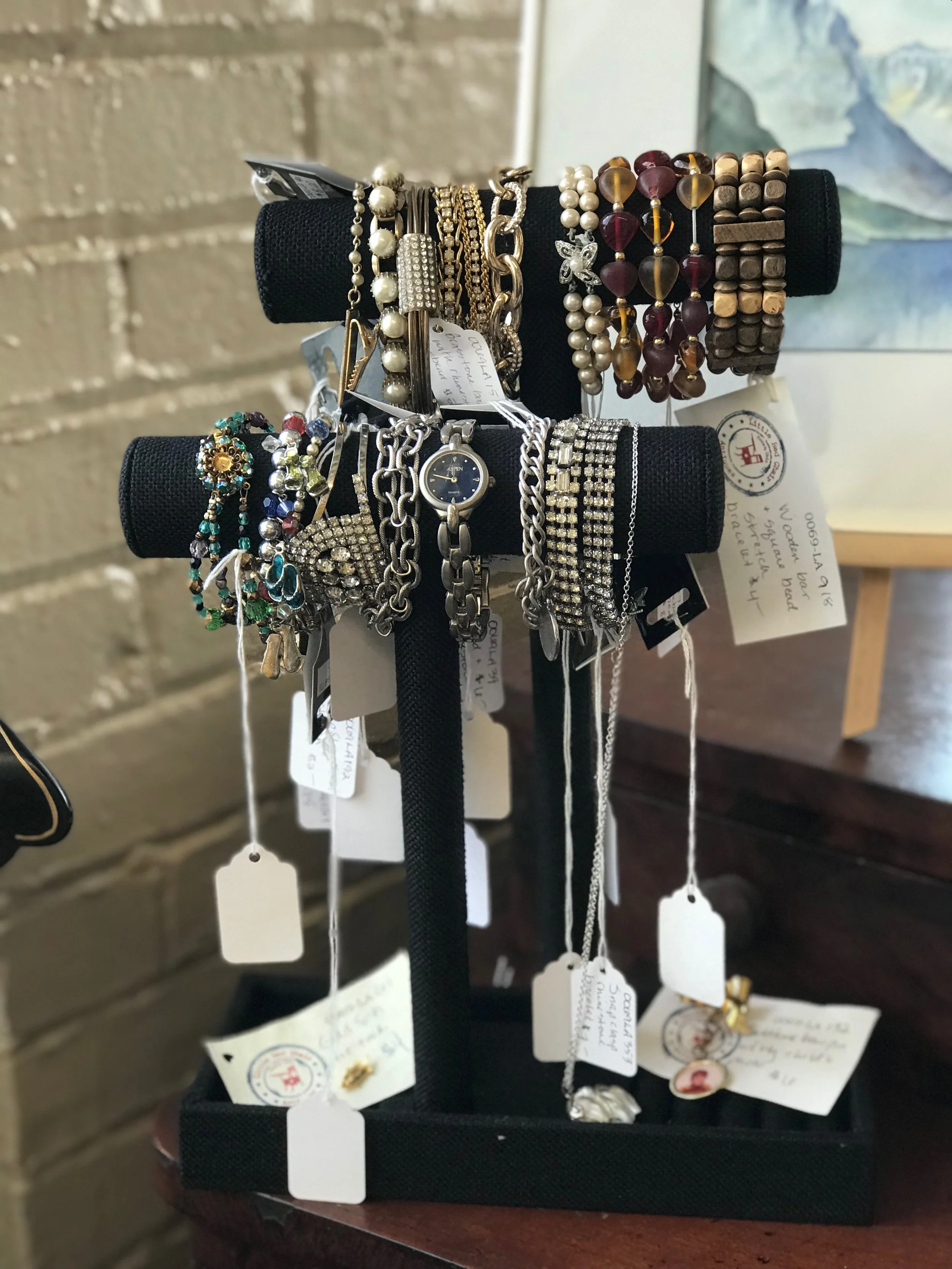
After about a month or so of weekly pilgrimages to this and other antique shops, my sisters and I decided to shape an antiques business of our own. That was seven years ago this past May, and in the time that’s transpired, I’ve bought and sold antiques, plucking vintage Pyrex from thrift store shelves and nodding at auctioneers to secure the highest bid on box lots of lace, wooden spools, and soft faded aprons. I’ve learned about period furniture and eaten off of it, amassed an impressive Sadler and occupied Japan tea set collection, and indulged my affection for mid-century modern mosaic tile ashtrays. On Patrick’s and my travels to Savannah, Chicago, Iowa, South Dakota, and the Hocking Hills area of Ohio, we’ve loaded the back of the truck with tottering (yet carefully packed) piles of retro metal kitchen food carts, wooden ammunition and cheese boxes, floor lamps that I’ve taught myself to rewire, and school desks from the 50’s that were awkward for left-handers to use. Some of these we sold, others we added to our daily routines. And that’s because I want to live in a home and not a museum. When considering a purchase, I leaned heavily toward those items that I could wash and dry and hang outside on the line, or tuck into the cupboard with the rest of our dishes, or rest our feet on in the living room. Things, not just people, need to be useful.
One of my dear friends has been inordinately generous, giving us furniture and other pieces whenever she’s redecorated her own space. Every room in our home bears her thoughtful touch, from the Hoosier-style cabinet where that tea set collection resides to the primitive blanket chest that serves as our coffee table and occasional footrest (and jumping platform for the kittens). A solid tiger oak sleigh bed welcomes overnight visiting friends in the downstairs guestroom; they owe their deep sleep and pleasant dreams to Jackie.
Through all these years of collecting, selling, finding and flipping, my relationship with stuff has ebbed and flowed between the shores of “just one more auction” and “let’s see how much we can pack in boxes and give to Goodwill”. We’ve tried implementing the rule that if something “new” comes in, something else needs to leave, with varying degrees of commitment and success. Cleaning out a room in the house was a reliable rainy day activity, and a few times, those boxes of stuff would include a thrift store item with the price tag still stuck on the bottom; we saved the good folks at the Goodwill the trouble. But as I grow older, I find myself longing more for monastic simplicity rather than living in the Antiques Roadshow’s attic. I imagine shaking hands with Mike and Frank from American Pickers, and watching them climb like mountain goats over the mountain of auction booty that waits patiently in the old old goat barn to be adopted by the right forever family.
So, one Friday, after I’d hit my week’s worth of 53 work hours by noon, I turned out the lights in my office and walked toward the truck, ready to head to the antique mall in Lancaster where two booths held as many old memories for sale as I could attractively cram into the rental square footage. As I climbed into the driver’s seat, it dawned on me that without those two booths and the stuff they contained, without the rent I’d paid and the time I spent attaching price tags to each and every Fire King casserole dish, vintage globe and camp lantern, I could be going home, putting my feet up on that primitive blanket chest, or wearing one of those soft faded aprons while I baked that new scone recipe I’d been curious about, or sitting on the old scalloped metal lawn chair strategically placed in the meadow with a full view of the bend in the creek. All of that suddenly felt more appealing than the thrill of the hunt and the hard-earned but meager paycheck stapled to the monthly sales report. It was time to walk away from a life that orbited around stuff, and imagine a new Friday ritual.
Before we headed out to South Dakota last month, I signed the “vacate by July 31, 2019” contract with the antique mall (a 30-day notice is required, and quite fair), put up some sale signs, and exhaled into the prospect of a lighter lifestyle. I don’t know what it feels like to retire, to wake up that first Monday morning of an unscheduled and un-salaried life, but I suspect I’ve just signed myself into a taste of it. It feels deliciously liberating and reckless. I’ve given away some things, not caring about recouping my investment, and look forward to doing more of that in the days to come. Whatever will we do with all this spare time?
The gift in the hands of grieving dad’s death was a short foray into the world of brokering memories and living with other people’s stories. I’ve enjoyed the bulk of it, and will with equal enjoyment not miss the tedium of price tagging or breaking the “touch nothing twice” rule when unpacking a truckload of auction treasures. I look forward to walking into a thrift store for a pair of celery-green linen capris and walking out with precisely that and nothing more.
There’s still work to do at the farm after the lights go out on this business venture: a barn to clean out, an attic with plastic totes that hold what might have sold if I’d kept paying booth rental, and a burgeoning granola business to coddle (we just can’t sit still can we?). I have opened a few of those totes recently and found things that my child’s heart clung to as essential for living. I winced before gently placing them in the bag of Things to Give Away Forever. Sentimentality is adjustable, like metabolism, but it takes time to re-set itself.
I’m ok. Like my time with dad for so many Fridays, I have my memories.
Call Mike and Frank. It’s just stuff.

Gathering Scents
To get from the truck to the door of our friend’s apartment building, we have to walk beneath a mammoth pine tree. Even though I’m a bit loaded down with our overnight bags, a soft sided cooler from Wegman’s, my purse and a fistful of car keys, I must stop below this conifer’s fragrant branches and inhale deeply, taking in as much of that sharp piney smell as my nose and lungs can possibly hold. Turning slightly, I look over my shoulder at the northernmost ridge of the Black Hills, and finally exhale. Slowly. This moment must not be rushed.
Two hours later, the apartment is filled with the aroma of a full Kentucky Fried Chicken dinner, complete with biscuits, coleslaw, and gravy for the mashed potatoes. I’m immediately flashing back to a childhood memory of us in the car with dad on the way back from our neighborhood KFC, the cardboard bucket of chicken with us in the back seat and dad telling us sternly not to take all the smell out of it. In our tender youth, we believed such a thing was possible (yet suspected he might be teasing) and played along, taking deep lungfuls of those secret seven herbs and spices.
On this weeklong-plus road trip west, our days have been filled with a diverse variety of aromas that our brains are tucking away in the part that links olfactory to memory, waiting patiently to be called forth again the next time someone burns a generous handful of dried cedar or sage, lights up an American Spirit, sautées onions in oil on a propane cook stove, or cuts fistfuls of sweet grass covered in dew. It’s also impossible to forget the lingering smell of a newly-fertilized cornfield as we drive past its vast acreage behind a rumbling diesel-y 18-wheeler on our way through Illinois. I wonder how the nose sorts this all out and make a promise to do the research when we get home.
If you’ve read the last two blog posts, you may recall mention of our initial destination where hand dug latrines we’re part of the camping experience. I won’t be too detailed here or indelicate, as some of you may be reading while eating. But I can say that this year, some genius put a bale of wood shavings in one of the outhouses for us to use after each visit, scooping a large cupful or two (sometimes three, depending on the outcome of that particular visit) into the dark pit to keep the inevitable lingering smells at bay, and darn it if it didn’t work beautifully. As primitive toileting experiences go, I have to say this was the most pleasant one so far. Another flashback: I’m in northern Nicaragua near the Honduran border with my 21 fellow delegates and half a dozen young militia men on the porch of an abandoned schoolhouse. There’s one pit toilet in a small shack and we’ve done it justice for nearly six days. On our last night there, we’ve taken to wearing our bandannas around our faces like bandits just long enough to get in there, get the job done, and hurry out into the fresher evening jungle air. No one thought to bring wood shavings, though our delegation’s nurse did make a valiant attempt to soften the blow with her spray bottle of perfume. Rather futile, like tossing bricks into the Grand Canyon, but we appreciated the effort, and enjoyed the hilarious visual of her rapid masked exit from the toilet shack, pumping that little spritzer bottle for all it was worth. It’s fun when the senses work together like that on a memory.
Add to this list of smells the delicate scent of a steeping mug of green tea, my husband’s spicy shaving cream, the minty blast of that recommended pea-sized dollop of toothpaste first thing in the morning, and the faint drift of someone’s well-traveled socks that need to go to the trash bag holding the rest of our dirty laundry (like, now), and I’d say we’ve done an excellent job noting and tracking this trip’s aromatic buffet.
Its hard to find a postcard to commemorate that part of a summer road trip (which wouldn’t work anyway, unless it’s a scratch-n-sniff), but we’re fine with that. We’ve got all the right memory triggers waiting for us when we get home—dried cedar and sage, diesel-y farm tractors, a KFC in town and a towering blue spruce right next to where we park the garbage bin at the end of the driveway.
Take a deep breath. Aaaaand…exhale.
Ahhh…
First One Awake
Hospitality is a simple and deeply guided art, an expression of a value that says “there is room for you here in our routines. Come eat with us. You need not ask before you open the fridge, or the cabinet above the stove for a mug for coffee. The towels you see hanging on the racks by the tub are yours to use. If you need something, don’t apologize when you ask. You are never bothering us. Not ever. We’re so glad you’re staying with us.” I’ve written about this before, and there’s still more to say.
Our friends Mac and Audrey practice this art. Indeed, they arrange their lives around it.
When we arrived at their home after dinner on Saturday, we were expected to walk right in, not timidly knock for permission to enter. We are family, they say, not guests. And it’s family in the best interpretation—an easy meshing of lives and habits and morning routines and who needs the shower next. For the five or so days we spend together, there is ample picking up where we left off, laughing, shaking our heads at the world’s sorrows, and eating whatever is here whenever the mood strikes you. The coffee pot is never empty.
We make this journey every June, to gather with family and dear friends and the most pleasant of acquaintances on the Cheyenne River reservation to pray for everything and everyone. It really isn’t more complicated than that, and if I waxed on in an attempt to paint you a more detailed picture, it would become more complicated than it needs to be, and more importantly, I’d be handing over stories that aren’t mine to tell. Let’s leave it here for now: we drive 1300 miles to pray our brains out, and leave after ten days, filled with lessons we can’t learn anywhere else on the planet.
Mac and Audrey teach us about authentic openheartedness; we pay close attention and bring it all back home to unpack over the next eleven months. I had no sooner put two of my duffel bags on her living room floor than she came toward me with a Wal-Mart freezer bag filled with items she’d collected at various rummage sales in the past year (she sure knows me, doesn’t she??). And I handed over a similar bag of carefully selected treasures from the Midwest (in a Granville, Ohio Ross Market IGA paper sack), which she immediately unloaded, smiling. I now have more fabric to use for the next quilt idea that hits me, and she has the beginnings of a great dinner—Carfagna’s classic pasta sauce and a pull-apart garlic-parmesan ring of bread that, as of yesterday morning, already had two pieces missing (when something smells that good, there’s no point waiting, and no harm done helping yourself). Sunday morning, we woke up to her signature breakfast—eggs Benedict, served on familiar Corelle plates with purple irises on them.
We spent most of the day sitting at the kitchen table or stretched out like royalty on the couch and recliner in the living room, Gilligan’s Island reruns on the TV. Patrick even nodded off here and there in the conversation, and we only noticed it in the kindest of ways. Let him be; Sundays back home rarely see such inertia. We’ll enjoy it while it’s available to us. Regular chores will overtake us again soon enough.
For now, I’m the first one awake, and moving about the kitchen with extreme slowness as I fill the hotpot with water for tea and oatmeal, trying to keep the fridge door openings and closings to a minimum. Audrey is asleep on the couch and there’s no wall between the kitchen and the living room to absorb the clanking of silverware (try scraping the last bits of oats and strawberries from the bowl in complete silence. I can show you how to do that now).
This soundless space of morning is the perfect time to reflect on what a privilege it is to know and love these two people, and share their way of life for a short five days each June. We’re surrounded by vast horizon-hugging cattle pastures and South Dakota prairies, and can see the weather change in the west while the clouds in the east move across their part of the sky unaware. The spindly-legged but stalwart Dupree water tower stands at the edge of town behind the elementary school’s parking lot, and I ask Audrey how it has managed to survive the brutal winds of winter. Everywhere we look is evidence of survival, of continuing on in a harsh and beautiful landscape. Mac and Audrey have made a good life together in this place, adding their own triumphs and heartaches with grace and generosity of spirit. If we talked less, or cut our stay short, we’d still have an avalanche of wisdom to pick through on our long ride home. It’s that fertile, that rich.
Audrey stirs on the couch, and the fridge hums to life for another cycle. I think it’s safe to move around less silently, to find my bag of sewing projects and heat up more water for tea.
I wonder what she’ll teach me today.