

When Spring Sets the Table
The wild garlic chives are up, which means the garlic mustard won’t be far behind. I’m also keeping an eye out for ramps, though I’ve not recognized these pungent harbingers of spring yet. There are also dandelion greens, and in a few more weeks, purslane, plantain, and stinging nettles. Soon we’ll be putting napkins ‘round our necks and poking silverware into our back pockets before setting off for a meadow walk. We apologize in advance for the smell of our breath these next several weeks.
The best time to pick dandelion greens for eating is before their flat yellow disk-like blooms open up (they lean toward bitter after that). I try to remember that as I walk the distance from the front porch to the truck, or head out the back door, eyes focused on the fresh new grass at my feet on my way to feed the rabbits. One must be able to distinguish between so many shades of edible green, and pick carefully. When we harvest the first nettles of spring, to use in soups or in place of spinach in our lasagna, we smartly wear gloves, plunge them into boiling water for a minute or two, and then get on with the rest of the recipe. There’s just nothing like the taste of fresh spring nettles, cooked to remove the sting, and sprinkled with a bit of vinegar and salt.
My maternal grandmother, Opoe (pronounced “oh-poo”. It’s Dutch. I know. Stop laughing—she was a respectable woman), showed us kids what wild purslane looked like and sautéed some for us once when we were visiting her in Tiffin, OH. I remember it's tanginess and how she didn’t skimp on the butter. I saw some growing in between the cracks in the sidewalk in front of our house a few years later, and tried to copy her recipe. Came pretty darn close, and to this day, the look of its oval leaves on thick but tender stems reminds me of her, standing in her kitchen with the sweetest faded apron around her short torso.
With every step, the land we take care of offers up a buffet that unfolds along with the leaves on the yellow maple behind the house from now until, well, year-round really. When we first got here, we weren’t thinking in that direction, planning instead an extensive network of garden plots, indoor seed-starting and coddling of fragile broccoli and cabbage seedlings until it was warm enough to tuck them into the ground we’d just turned up and over. We pretty much trusted anything we planted ourselves, but not what this Grandmother was giving us for free (well, for the price of a monthly mortgage payment and the effort to bend down and pick). Then, one year, don’t know why or what prompted me, I found a book on edible wild plants that was arranged in chapters by season, with pictures and everything, that showed us what we could harvest safely. It even included which plants had poisonous look a-likes, so we could ease into this meadow grazing practice with the caution of beginners, and gently nudge the boundaries of our comfort zone. Patrick was more hesitant than I (not sure what, if any, purslane featured in his childhood), and looked skeptical when I took over the kitchen one afternoon with my gloved hands pushing nettles into the colander for a quick rinse before their two-minute hot bath. But that apprehension fell away when he sat in front of a plate of vegetable lasagna, the bright green pieces of safe-to-eat-now nettles layered with all that ricotta and homemade sauce. I knew I could put garlic mustard in front of him soon, and he’d be fine.
Spring greens are just the beginning. Our sweet and humble layers are in full egg production now, and those garlic chives are mighty tasty chopped and sprinkled on top of this morning’s omelette. As the weeks continue to unfold, we’ll pluck dark purple mulberries from the trees out in the front yard and in the meadow. Sometimes all it takes is a good shake of the branch and the small grape-like clustered berries fall into our mouths and on our heads. Mulberries are the rabbits of the fruit tree world—they multiply with enthusiasm and quite rapidly, and are also rather fragile; several older trees on the land have been knocked down by the strong spring and autumn winds we get here, and the wood is fibrous and splintery. Patrick puts it on the lathe and makes gorgeous little boxes with lids, and when I store my rings or other trinkets there, I remember my purple-stained fingers in mid-May. The birds adore the mulberries too, as evidenced by the purple splotches they leave behind on our front deck. I’m happy to share (and keep a bucket of sudsy water and a scrub mop handy through October). Last count, there were at least twenty-three of these trees on the property. There’s no way we can eat that much.
Then come the red and black raspberries, their silver-backed leaves and thin, graceful vines bending down along both sides of the driveway and brushing the gravel lightly, and thickets of them randomly sprinkled throughout the meadow, mostly beneath the arms of a black walnut by the creek. Their fruits are tiny and in a good season with the right mix of sun and rain, taste delicately sweet rather than bitter. Of course we have balsa wood and pressed cardboard half-pint berry baskets aplenty in the mud room, but even when I remember to grab one on my way out the back door for a walk, I barely cover the bottom with what I pick. Fresh wild raspberries with the occasional dewdrop clinging to them never make it to the basket, and my hands (and teeth) are purple-stained once more.
It’s a sign of our ignorance that we tend to relegate the word “harvest” to autumn only, when our generous land is giving us food all the time. We could gather at least a salad every day, and with additional studying, add the cooked and mashed roots of spring beauties to our plates (harvested with extreme care, and not all from one patch; once the roots are out of the ground, they’re gone and not coming back in that particular spot), as well as wild asparagus, the coveted and elusive morel mushroom, and an entire family of tea-friendly plants that extend beyond the sturdy mint to include strawberry and blackberry leaf, sassafras root, red clover, may apple, mullein, and yellow goat’s beard. For all kinds of sensible reasons, I’ll not venture down the path of medicinal plant recommendations today. It’s not my area of expertise, and I’d rather you all be alive and well to read next week’s post.
Instead, I’ll encourage you, and myself, to rediscover the re-emerging art and practice of foraging, which is essentially the original Mindful Eating movement of our ancestors who were simply trying to survive, and hope you'll share recipes. Though not exactly bears awakening from hibernation, we are hungry for the life-giving tonics that spring so graciously sets upon her table, in full view of our rumbling stomachs, eager taste buds, and grateful hearts.
Napkins tucked under our chins or draped on our laps, it’s time to eat. Who’d like to say grace?

You're Welcome
There was a clear glass carafe on the armoire that stood to the left of the bed, and it was filled with cool water. The small glass drinking cup fit neatly on top. A metal three-bar towel rack hanging on the closet door held three white fluffy towels, in progressive size order—washcloth, face towel, and bath sheet.
The tiny daffodils on the nightstand to the right of the bed were thoughtfully cut from the garden in front of the house and arranged in a clear glass vase, a gentle and convincing yellow affirmation that spring was indeed here; we needn’t look over our shoulders with weary apprehension into the shrinking winter chill anymore. And the windows above the headboard-less bed framed a treetop view, where branches bore the unmistakable signs of new life in search of the warmer days we’ve all been dreaming of as March faded away into our collective seasonal memory.
When I arrived, before I’d even turned off the truck’s engine, my host had come down the steep front steps of her home, smiling and asking what luggage she could carry for me. A warm embrace and kindly exchanged pleasantries carried us back up those steps into her living room, where I met a new friend and another warm embrace. Behind her in the dining room, a Napa Valley Pinot Noir was breathing on the table, and the aroma of a turkey stuffing bake wafted its way into the living room where I’d just taken off my shoes.
I stood drenched in their hospitality, full-hearted and content.
I was scheduled to facilitate a learning session for a group of fellow volunteer managers, and their monthly meeting started around 8:30a.m. To get there on time from my home would have meant leaving somewhere between 3:00 and 4:00a.m., so did something I rarely do—asked my friend if I could come down the night before and stay with her and her wife. I’d be much more coherent with a full seven hours of sleep behind me instead of a dark-to-dawn journey culminating in the best rush hour traffic Cincinnati had to offer.
The road trip to their home was just shy of four hours, and the phone app that guided me there had made it clear this was the best route to take—no highways. And it didn’t lie. I was treated to acres of open and just-planted fields, a pale blue sky with random thin clouds on the horizon, and freedom of thought in any direction I looked. It didn’t register at the time, but upon reflection, the land was extending her hospitality to me as I traveled those two-lane county and township roads, soothing my senses with color and comfort I didn’t know I needed. Isn’t that usually what hospitality does?
In my short and experience-packed life, I’ve been delighted and humbled and rendered speechless by the generosity of spirit extended to me by others. Freshly-washed sheets, deliciously-prepared and presented meals, cheerful introductions, and sincere “make yourself at home” directives are lovingly tucked away in my elastic memory, teaching me how to carve out an even deeper place for gratitude in my soul, and all I really needed to do was show up. I’ve also recalibrated my view of our home as a place where those “others” would find the color and comfort they need, and provide the necessary details to ensure their safe arrival down the gravel driveway and over the bridge then past the two chicken coops and up the remaining gradual slope that ends where our front porch begins. In this final leg of a friend’s journey, we’re watching from the kitchen window for a few seconds, then crossing the living room floor to fling open the front door and our hearts before they even get out of their cars. That they want to spend time in our company is gift enough, even as they unpack side dishes and Cabernet and a small handmade candle from a crafter in their hometown. Any visit that begins with that sort of reckless abundance is going to be a keeper.
Of course, I initially go to that dark place of unworthiness, that someone—a friend, or an acquaintance, or a friendly stranger—would “go to all that trouble just for me”, and such an automatic response takes time to unlearn. But take the time I must, because even unspoken, this feeling of not being worthy is the emotional equivalent of leaving the gift unwrapped, or worse, taking off the bow, lifting the lid from the box, and smashing the contents in front of the giver. Hospitality feeds itself and is not dependent upon any recipient’s sense of self in order to be genuine or plentiful. Doesn’t that just mess up our balanced ledger tendencies?? Of course it does. And that’s the whole point. So we are taught and encouraged from toddlerhood to say “thank you” each and every time we’re on the receiving end of someone’s generosity, no matter what the size or depth, and we quickly learn that our gratitude won’t have the last word. “You’re welcome” finishes the encounter, and we’re left to ponder what that really means.
It means come again. I enjoyed our time together. Thank you for the Cabernet.
The daffodils were just for you.
Mom Never Did Drywall
The first eight eggs of the new season are washed and tucked away in the fridge; I collected two of those eight this morning after driving the trash down to the bin at the end of our driveway. On the way back I let out the layers, and checked the fluffed-up pine shavings in the far corner of their coop—two light brown unfertilized ova encased in smooth hard shells were resting in a chicken belly-shaped nest. I scooped them up and put them in the right side pocket of my hooded flannel jacket, with some encouraging words for the other layers to match or surpass their co-workers’ morning donation to our breakfast menu. I climbed back in the front seat of the truck (no easy trick with two fresh eggs in that pocket), and finished the short trip up to the house. We’re well on our way to quiche and scrambled season, a stretch of time that lasts through November. Another reason to love spring.
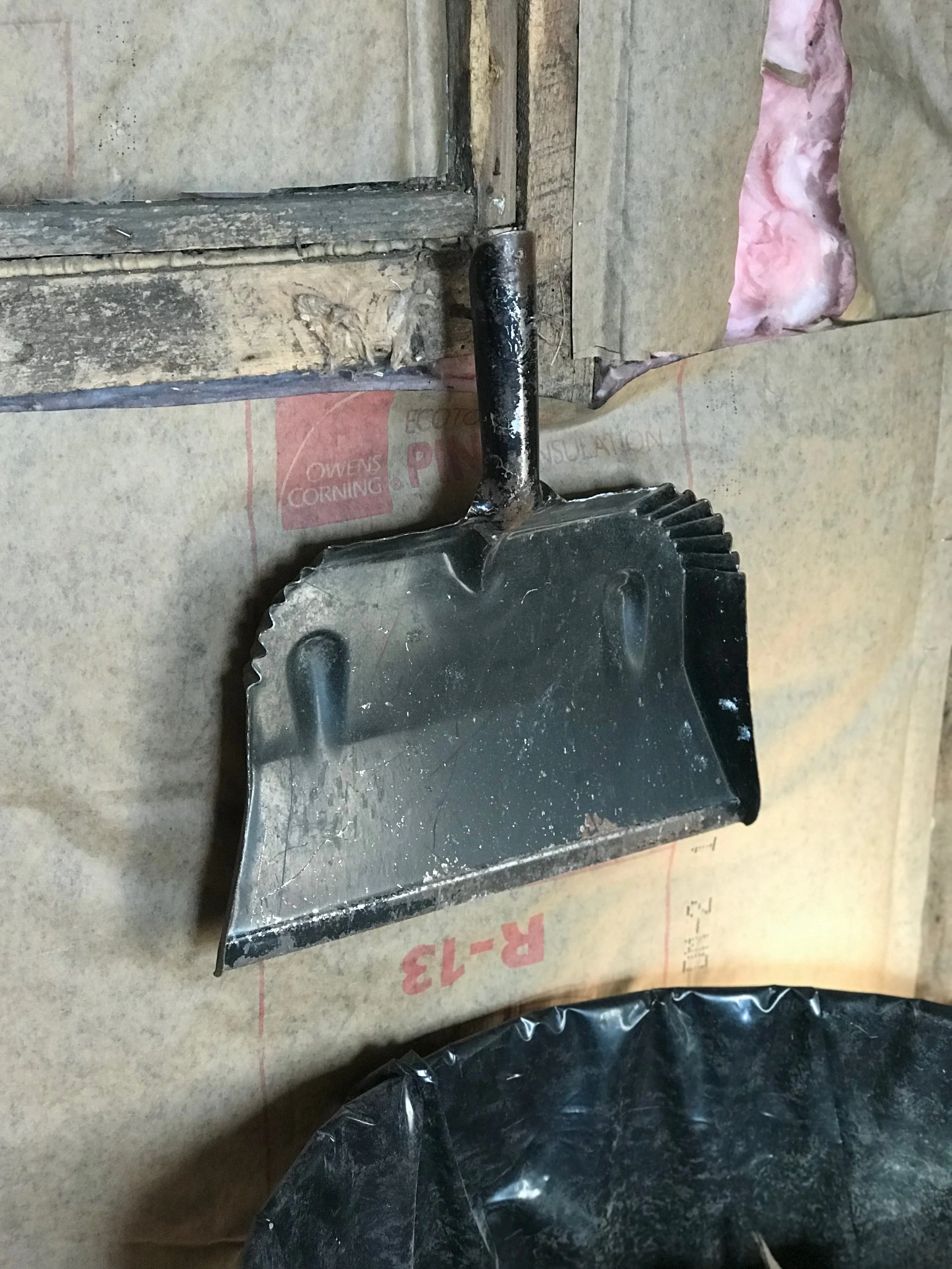
The mud room renovation continues to chug along, with setbacks that include but are not limited to old house bones and the previous owners’ attempts to fix them, and our own old bones that aren’t used to 10-hour physical labor jobs. I’ve renewed my ability to mud and tape, using that necessary feathering technique with the joint compound 6” knife blade, and am noticing that my wrists hurt more than they did when I was doing this in my 20’s. Go figure. Patrick and I have both remarked this past week how nice it will be to go back to our day jobs where we can sit for a few hours at a time, and nothing we put our hands to will require feathering or ladders or a three-Advil slam dunk as our after-dinner cocktail. I’m not looking forward to all the emails that await me at the office, but my desk chair? It has all the anticipation of a first date with Sting.
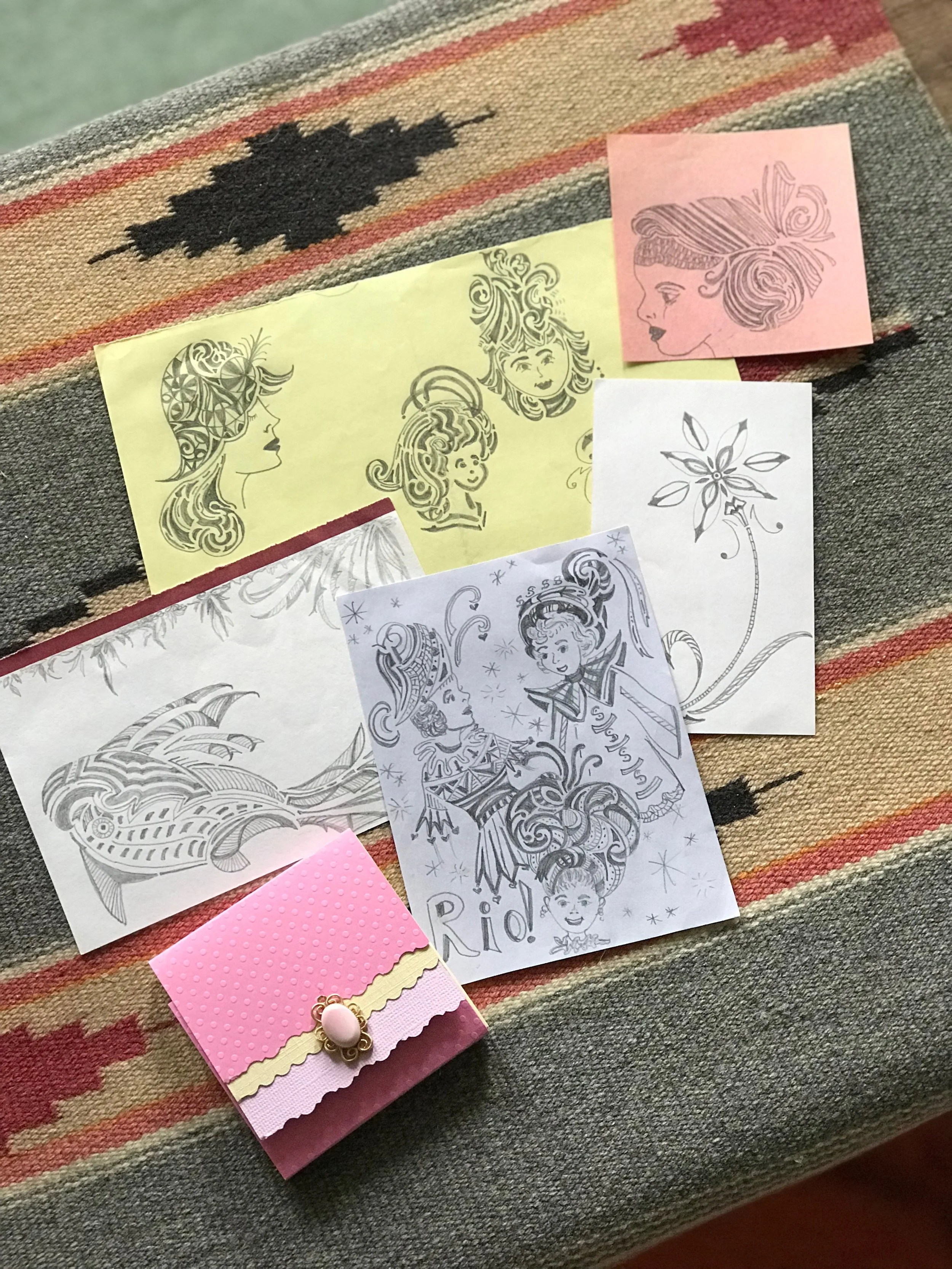
During this whole renovation, whenever I could catch a few 15-minute breaks, I’d wander into the downstairs guestroom which doubles as an art studio, and put my hands to gentler work that had guaranteed faster results. The projects awaiting me there involved colorful cardstock and book board, permanent double-sided tape, decorative-edged scissors, old bits of sparkly vintage costume jewelry, and unlimited imagination. I went easy on myself this week, nothing as elaborate as a full-size Lakota star quilt, and found great delight making little jackets for sticky note pads (a volunteer at a recent training made some and gave them as gifts to all the participants and us trainers too). I embellished them with the appropriate bauble from my stash and sat back to admire the growing pile of accomplishment. It’s an easy craft, and a great excuse to visit both the office supplies store AND the closest Michael’s, a rare nirvanic treat I don’t experience that often in one day. So now I have twelve newly-encased sticky note pads, and am deciding what I’ll do with them.
That seems to be the way with the art I create—what next, after the production line stops and the factory lights are turned off for the day? I tend to give my creations away rather than arrange a scheme to sell them (though I have no values-based objections to doing so. It’s a selling setup and maintenance issue; having an online store is work, as eBay has taught us these past two years), and enjoy amassing a tidy supply of hostess and birthday gifts to have on hand when the occasion arises. But even without that as an outcome, I would still make sticky note covers, handmade journals, bed quilts and table runners, and small canvas paintings to rest on small wooden easels because I get lost in the process of creating. It’s neat to turn an idea into something tangible albeit frivolous or without practical purpose. I have Frasier or Downton Abbey reruns going in the background, or an 80’s playlist with me on vocals, and I know that heaven is real and the mud room can wait another fifteen minutes. Call it economical therapy, or meditation, or your other favorite nurturing word. The outcome drinks from the same river of possibility and satisfaction.
I grew up with the arts within arm’s reach. My mom was a music teacher before she had the first of her five children, dad loved listening to classical music and opera while he paid the bills in his den, and my siblings and I can all sing. On key. Between us, we can play the guitar, drums, mandolin, piano, and if pushed, a rather dicey-sounding harmonica. Almost Ohio’s answer to the von Trapps (almost). Dad was also a huge PBS fan, and mom would sketch in the margins of her crossword puzzle books while her mind wandered around hoping to find that six letter word for “stays away from” (it’s “avoids”, in case you’re working that same puzzle). Mom never claimed her sketches as art, or even talent, and it made no sense to me, as I needed tracing paper most of my childhood to get my version of a horse to actually look like a horse (you should also know that I can’t read a note of music. I learned everything I know on the guitar by ear and hand position observation and copying).
But mom was special and other-worldly, guided by muses I have yet to meet. She could draw on demand or from boredom with equally-stunning results. Once, during one of his many rebellious streaks to vex his more conservative father, Patrick asked mom to create a tattoo template that captured his high school nickname “Running Fish” (don’t ask), and she delivered in spades. In fact, one entire crossword puzzle book seemed to be a study of the many variations of “Running Fish”, with a range of detail from coloring book-simple to stained glass window complexity (Patrick never did get that tattoo, but how nice to know that we have the sketches if he ever changes his mind). What joy it was to find a stack of her artwork after she passed, drawn randomly and with gorgeous precision on the back of an old phone book, or on a scrap of grocery list paper, or an envelope containing a birthday card. On the latter, she would take the first letter of our names and morph them into the most fantastical creatures, then finish the rest of our names with a flourish. We saved the envelopes in addition to the cards; we knew what treasures they were. As I grew older, I spent more time looking at the envelope than what it contained. I think she was fine with that.
Looking back, I realize that creativity was the fertile soil in which I was raised and coached through life. The hand-held lessons were just as meaningful as the more abstract ones (dad was a brilliant psychologist and employed his creative juices toward the rebuilding of someone’s confidence or emotional agility), and there wasn’t much, if any, focus on perfect results. We got the occasional parental lecture on “hard work = satisfaction”, but my folks were just as comfortable with art as play for its own sake. On those occasions when I wanted perfection, I’m sure I was frustrated by my limitations, but thankfully, no one raising me let me dwell in that place for long. It was “climb up and sit next to me at the piano while we go through the Reader’s Digest book of songs”, or watching through the cracked open den door as dad conducted his own private symphony using his check-writing pen as a baton. Those are the memories that fortify my creative impulses, and pull me into the downstairs guestroom/art studio in between snapping scored drywall sections and sanding down the edges.
I’ve honed my mud-and-tape feathering skills this week, and I feel good about that.
And I have an impressive stack of jazzed-up sticky notes if you’re interested.
Flexing Muscles I Didn't Know I Had
In the living room just to the right of the old primitive blanket chest that serves as our coffee table, our window air conditioner unit rests on top of a wooden end table Patrick made during his furniture-as-art phase. It’s a lovely and sturdy piece, and he could tell you better than I about how he painted (stained?) the wood so many different colors, or why the drawer doesn’t have a handle. But he’s sleeping right now, and I doubt I could convince him to interrupt his horizontal morning bliss to add a paragraph or two to today’s post. Let’s be satisfied with the meager description for now, and a promise that I’ll ask him for the construction and finishing details when he’s more alert, and not bracing himself for another 8-hour day of muscle-stretching, marriage-testing do-it-ourselves mud room renovation.
We’re both off work this week, a mutually agreed-upon arrangement that centers on a long-overdue upgrade to the room off the kitchen, where the washing machine, woodworking supplies, and the window air conditioner unit share space with empty egg cartons, most of our plumbing, and all of our boots. Over the years, it has served multiple additional purposes beyond storage and laundry. We have fond memories of keeping day-old turkey chicks there in a round galvanized metal wash tub under a heat lamp until their larger pen was ready, and it’s unlikely we’ll forget the time two orphaned goat babies slept in a large plastic storage tub until they were big enough to rest their front hooves on the tub’s rim and climb out, hilariously startling the cat. I suspect most old farmhouses have a mud room or some other-named equivalent, where the more “works-in-progress” aspects of a family’s daily life could be curtained off when entertaining, or “put it here for now, we’ll get to it later” intentions eventually gathered cobwebs and dust until someone felt inspired to dig in and declutter once and for all. I’m smiling as I write that, because “later” and “once and for all” have yet to take up permanent residence here. They are extended houseguests at best.
I’m fairly certain we moved here unaware of what two people were capable of doing in the realm of home repair, until circumstance forced that card upon us. Now, coming up on our twentieth year as caretakers, I can bring back the right wrench from Patrick’s rolling red tool chest when he sends me on a fetching errand, lift the lid off one of the septic tanks (with assistance, as those are mightily heavy), start a fire using flint and steel and some char cloth, hook up the garden hose to the sump pump in the basement on an especially rainy day and drain the rising water from the crawl space where the furnace lives, and drive in metal screws while sprawled precariously on the roof of the turkey shed as Patrick cheers me on from below. Not enough to sell my services to our fellow county citizens, but plenty of experience to approach the next project with an expanded skill set and some rather plucky confidence. I’m less afraid to be here alone than I used to be.
So while Patrick sleeps, I’m prepping for today’s mud room to-do list: we’ll put drywall on the now-insulated ceiling rafters (really dry old wood that doesn’t take the screws well, stripping them before they rest flush with the beams) and walls, and study up a bit more on what we’ll need to mud-and-tape them seamlessly. In my brief stint as volunteer coordinator with Habitat for Humanity, I do have a blurred memory of watching a group of bankers do this one Saturday afternoon, but it’s less than helpful now, as the specifics of how much to apply and what it looks like when it’s dry enough to paint are completely gone. It goes without saying that I’m not the foreman on this project.
We’ve been at it three days now, and except for a brief case of the cranks yesterday while threading the electric wire through the large holes Patrick was able to drill into that dry old wood, we’ve partnered up well and are getting along famously. The time passes easily between us, we haven’t dispensed with the pleasantries (entirely), and laugh more than brood our way through any setbacks that an old farmhouse will naturally offer up when its secrets behind the warped brown paneling are revealed. I am also pleased to report that we have not uncovered any other relative’s actively inhabited den or nest filled with squirming offspring; only thirty-year-old dust and long-vacated neighborhoods with memories of behind-the-wall midnight scampering and gnawing. It felt good not to be in the evicting new landlord position.
For today, facing the drywall task is plenty. There will be a new floor as well, but one thing at a time. There are at least two levels to the current floor situation—one made of concrete that meets the out-of-square back doorframe, and one wood subfloor above a patch of dirt and gravel, atop which sits the hot water tank, the water softener, and the bladder for our plumbing system. The current plan is to install a floor that’s level with the one in the kitchen. But we’re still thinking through what to do with the wooden subfloor after that. It will be a step down, or at least a slope that comes with any variety of imagined “watch your step!” warnings if I want to make it safely into the living room with a load of laundry on my hip. Again, grateful I’m not the foreman here. I’ll fetch whatever tool Patrick wants as long as he’s wearing the yellow hard hat for this one.
I don’t expect we’ll complete the project entirely before we have to return to our 9 - 5’s next Monday. We have visions and plans to install a workbench below the east-facing windows, and find just the right set of rolling storage shelves to hold bins and totes of the various necessary bits of hardware, zip ties, foam brushes and chalk paint that are temporarily sharing living room space with the window air conditioner unit. There are weekends in our future, and, if the sun keeps coming up, we’ll have the chance to keep getting along famously like a couple of newlyweds as we put the finishing touches in place.
All I ask from the universe for now is that no other projects make themselves known until the walls are painted and that wooden table with the window air conditioner has found it’s way back to the freshened-up mud room without incident.
Sounds fair to me.